URBAN CARTOGRAPHER

MY 2016 VISIT TO GALWAY

MY 2016 VISIT TO GALWAY

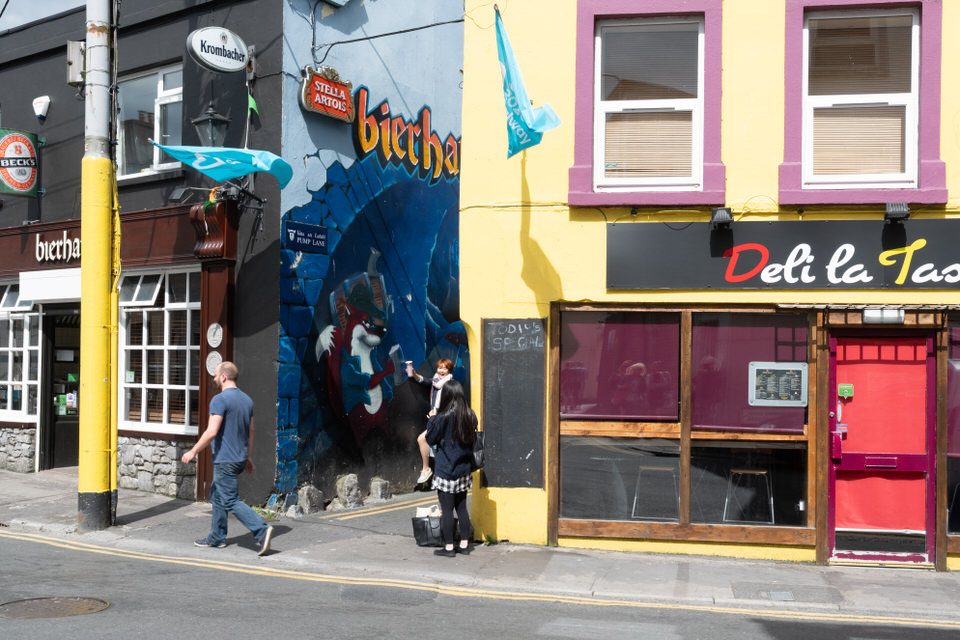
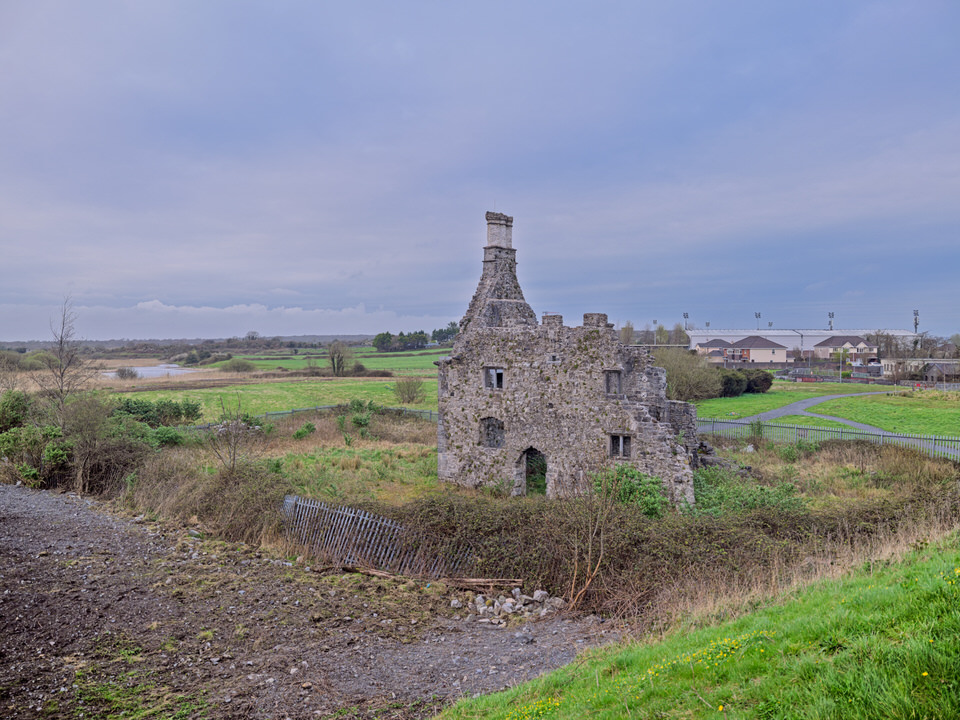
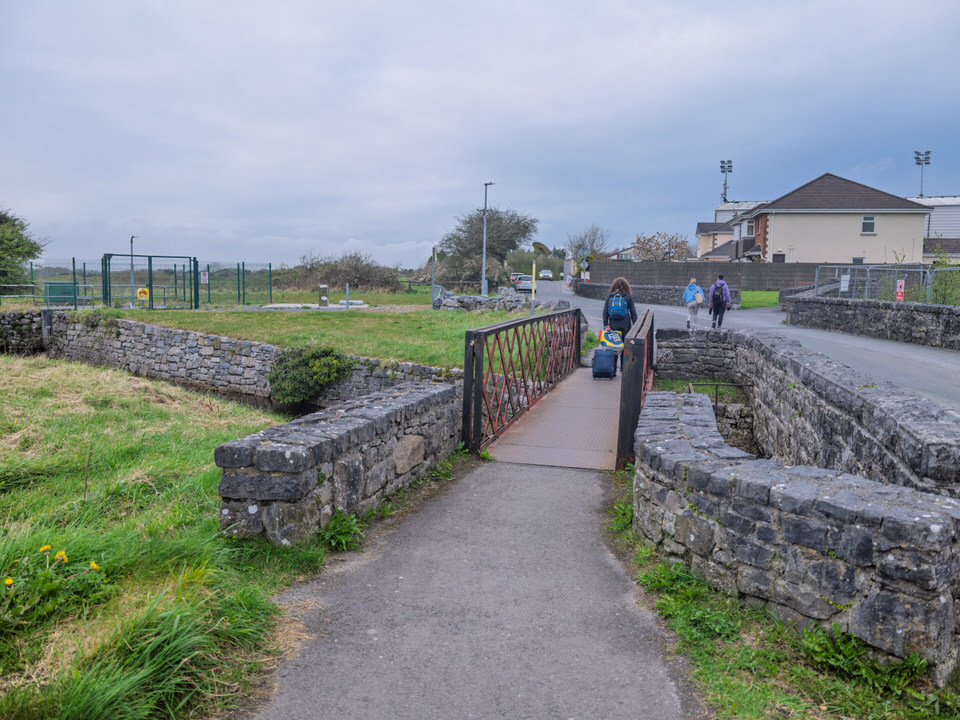
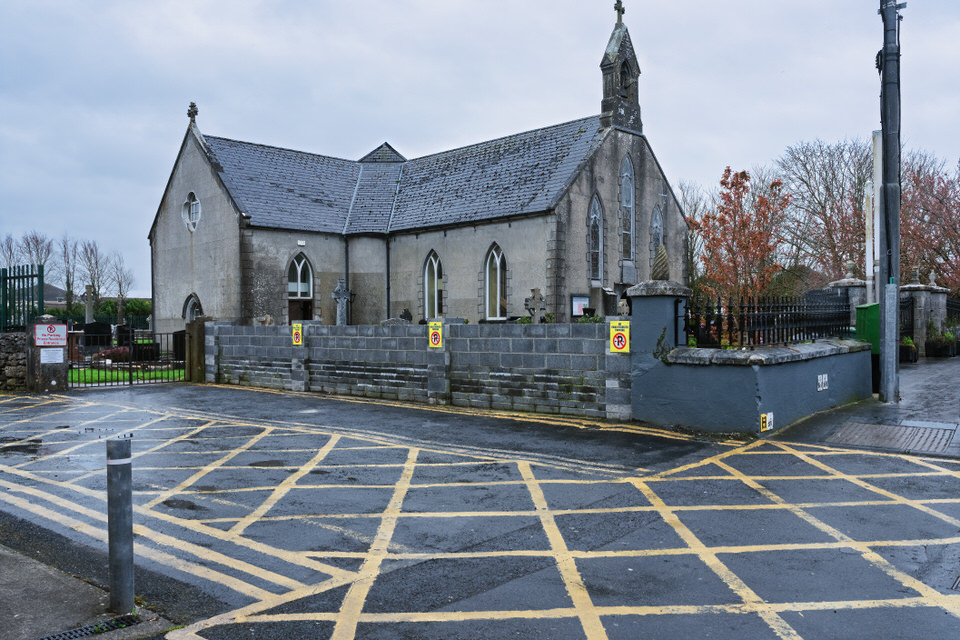
It is a long time since I last visited Galway the main reason being the price of hotel accommodation and the fact that all hotels appear to require full payment in advance and most don't have a stated refund policy. I am now planning my 2026 programme and I suspect that I will not be travelling to the city of Galway in March 2026. Anyway I am now reviewing my catalog of photographs from my 2016 visit because I have obtained some useful tools. When I visited in August 2016 it rained constantly for the duration of my visit.

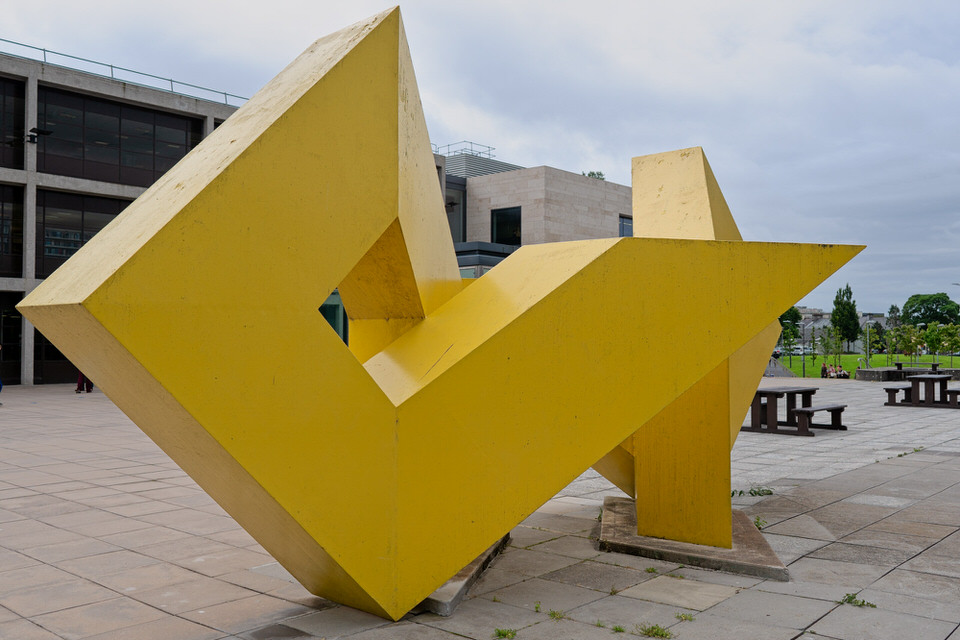
BIG YELLOW METAL SCULPTURE BY BRIAN KING

I photographed this on a very wet and windy day in August 2016

A Big Yellow Metal Sculpture By Brian King

Across the towns and villages of Ireland, a familiar sight often occupies a place of honour, typically at the centre of a roundabout: the ubiquitous abstract metal sculpture. For many, these installations blend into the background, earning the affectionate, if slightly dismissive, local moniker of "the red metal yoke". The term "yoke" in this context refers to a generic, nondescript thing, and the prevalence of a certain shade of red has made this a national archetype of public art.

In Galway, however, things are a little different. Our "yoke" is not red; it is defiantly yellow.

Known colloquially by a spectrum of names, from the pragmatic 'BYT' (The Big Yellow Thing) to the more imaginative student nickname, ‘Archimedes’ Balls’, the sculpture on the University of Galway campus has an official title: ‘Galway Yellow’. A work by the notable Irish sculptor Brian King, it was presented to the University in 1976 by P.J. Carroll & Co. Ltd., in conjunction with the Arts Council.

For many students and locals rushing past on a damp Tuesday morning, it is easy to see it as just another piece of abstract art – "that yellow yoke on campus". Yet this perception belies its true significance. The decision by Galway City Council to place the sculpture on its list of protected structures might seem surprising to those who see it daily, but it underscores a value that transcends its immediate aesthetic appeal. ‘Galway Yellow’ is a significant artefact of its time. As a representative example of King’s early work, it is a potent symbol of ‘modern’ Irish art as it was developing in the 1970s, a period of creative and cultural evolution for the country. Its value, therefore, is not merely in its form but in its historical and artistic context.

And this brings us back to its colour. In a landscape of public art often populated by generic "red metal yokes," ‘Galway Yellow’ makes a statement. It refuses to be the archetype. While it may be a "yoke" in the fond, familiar Irish sense, it is pointedly and importantly not the red one. It is our yellow one, a humorous and bright departure from the norm.

So, while it may be affectionately nicknamed or casually dismissed, Brian King's sculpture is woven into the cultural and architectural fabric of the university and the city. It is a protected piece of Irish art history that, with a dash of humour, reminds us that not all yokes are created equal – some, thankfully, are yellow.
 

MORE PHOTOGRAPHS

AN IRISH RESTING PLACE OF THE VICTORIAN ERA

I used a untra-wide Voigtlander lens so there is a degree of distortion in all of the images and the sky can appear a bit weird.

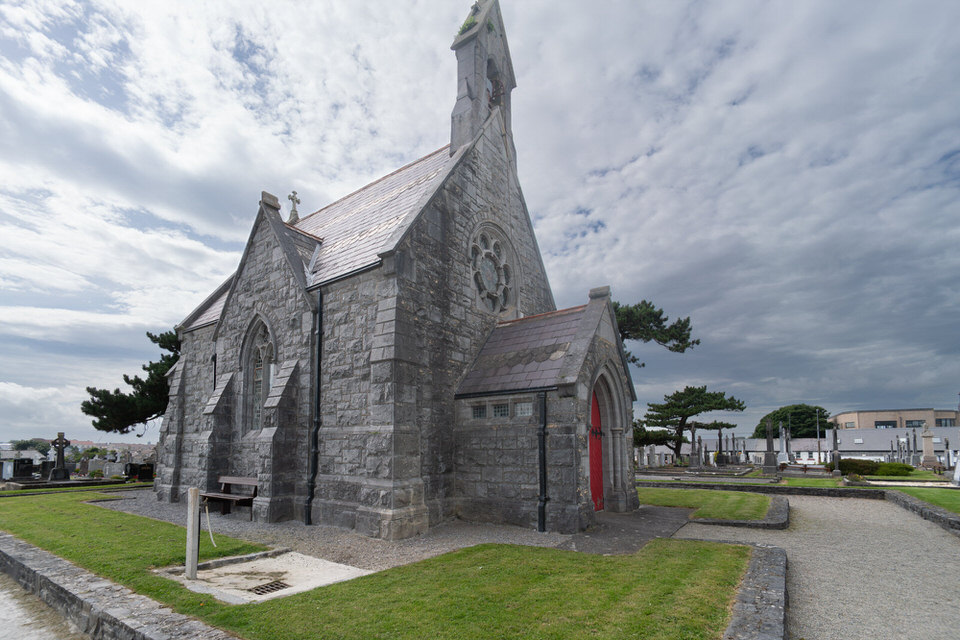
 Bohermore Cemetery in August 2016

The final resting place of Galway's famous and not-so-famous.

When I first published a collection of photographs from Bohermore Cemetery in August 2016, I was met with some thoughtful objections. My description of it as a "Victorian Cemetery" was questioned by a few, who rightly pointed out that it did not possess all the typical attributes they associated with that term. This prompted me to look deeper into the cemetery's history and consider the nuances of such labels.

My discovery of the cemetery was entirely by chance. On the last day of a visit to Galway in August 2016, I was walking at random through the Bohermore area—a name derived from the Irish Bóthar Mór, literally meaning "the big road." I stumbled upon this fascinating burial ground, which was not what I would have expected. In contrast to the romantic, often melancholic disarray of many historic cemeteries, this one was remarkably well-organised, immaculately maintained, and possessed a certain orderly character. This perhaps explains why it is still known locally as the 'New Cemetery' (having opened in 1880 to relieve the overflowing parish churchyards).

The objections to my 'Victorian' description were, I believe, more factual than political, and they touch upon an interesting question: what defines a "Victorian" cemetery?

There are indeed different types. The most iconic is the 'garden cemetery' style, popularised by sprawling, romantic landscapes like Highgate in London or Glasnevin in Dublin. These were often commercial enterprises, featuring ornate Gothic mausoleums, weeping angels, grand obelisks, and winding paths designed for promenading mourners. They were as much public parks and status symbols as they were burial grounds.

Bohermore does not fit this flamboyant mould. It was established as a municipal cemetery in the latter part of the Victorian period (1837–1901), in a post-Famine Ireland. Its design likely prioritised public health, order, and practicality over the opulent architectural styles seen in wealthier centres of the British Empire. This makes the objections factually sound; it is not a classic Victorian-style cemetery.

However, to dismiss its Victorian connection entirely would be inaccurate. It is, unequivocally, a Victorian-era cemetery. Its origins, earliest burials, and the social context in which it was founded are all rooted in that period. The memorials themselves tell a uniquely Irish story from that time, with magnificent Celtic crosses—a powerful symbol of Gaelic revival and national identity—standing alongside the more conventional headstones of the period. It is the final resting place of notable figures such as the dramatist and folklorist Lady Gregory, as well as the infamous propagandist William Joyce ("Lord Haw-Haw"), whose graves tell complex stories of Irish life during and after the Victorian age.

Ultimately, "Victorian-era" is the more precise and respectful term. It accurately places the cemetery in its historical timeframe without imposing an aesthetic style that it does not claim. Bohermore is a product of its time and place: a sober, dignified, and distinctly Irish response to the universal need to honour the dead, created during the reign of Queen Victoria.

MORE PHOTOGRAPHS

21 CAMELOT MILL STREET GALWAY

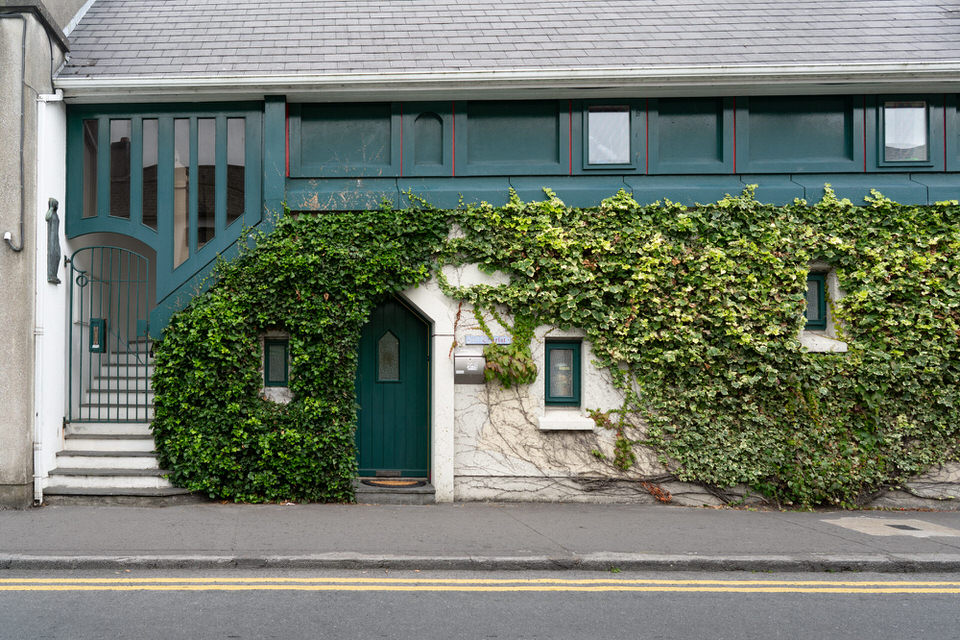
At 21 Mill Street in Galway stands an attractive and intriguing house named 'Camelot'. As these 2016 photographs show, a distinctive bronze relief of the Virgin Mary was once displayed on its exterior wall. This detail, coupled with the building's unique architecture, naturally led to the assumption that it might be part of a nearby convent or religious complex.

21 Mill Street In Galway

A more recent review on Google Maps (October 5, 2025) reveals an interesting change: the religious icon has since been removed. Apart from this, the building's facade, with its memorable ivy and green-painted woodwork, appears largely untouched, suggesting it has not been repainted in approximately a decade.

The house's location adds another layer to its story. Mill Street is situated in a historically rich part of Galway, nestled between the River Corrib and the city's vibrant centre. It is just a stone's throw from significant landmarks such as the imposing Galway Cathedral (The Cathedral of Our Lady Assumed into Heaven and St Nicholas) and the area known as Nun's Island, which strengthens the historical religious connection. This places 'Camelot' at a fascinating crossroads of Galway's spiritual heritage and its bustling modern life, leaving its own small mystery for the curious observer.


MORE PHOTOGRAPHS

Voluptate veniam ullamco?

Lorem ipsum veniam anim ea veniam magna ut esse dolor dolore ex aliquip ullamco. Cillum nisi veniam, aliqua sunt ex voluptate veniam ullamco.

An icecream against the sky
PRESENTED BY THE URBAN CARTOGRAPHER

GALWAY CITY

Galway, a harbour city on Ireland’s west coast, sits where the River Corrib meets the Atlantic Ocean. The city’s hub is 18th-century Eyre Square, a popular meeting spot surrounded by shops and traditional pubs that often offer live Irish folk music.