DON’T FORGET TO UNMUTE
DON’T FORGET TO UNMUTE

Section 1: Executive Summary & Market Context
The compact cinema camera market has long been defined by the Sony FX3, a formidable tool that established itself as the professional workhorse for a generation of filmmakers, documentarians, and content creators. Praised for its exceptional low-light capabilities, robust thermal management, and integration into Sony's mature E-mount ecosystem, the FX3 has been the benchmark against which all competitors are measured. However, the landscape has been seismically altered by the arrival of the Nikon ZR. Born from Nikon's landmark acquisition of RED Digital Cinema, the ZR is not merely a new camera; it is a statement of intent, engineered to unseat the incumbent through a disruptive combination of next-generation features and an aggressive price point that redefines market value.
This report provides an exhaustive analysis of this new market dynamic, examining the core conflict between the FX3's proven, real-world reliability and the ZR's superior on-paper specifications and democratized access to a high-end RAW workflow. The analysis is informed by a comprehensive review of technical specifications, professional critiques, and extensive user feedback from filmmaking communities.
The key findings of this investigation reveal a clear divergence in philosophy and value proposition. The Nikon ZR emerges as a camera offering an unparalleled package for individual creators, indie filmmakers, and those who prioritize maximum flexibility in post-production. Its internal 12-bit RAW recording, groundbreaking 32-bit float audio, and superior on-camera monitoring, all at a price point nearly half that of the FX3, represent a paradigm shift in the industry. Conversely, the Sony FX3 maintains its position as the benchmark for absolute reliability in demanding, mission-critical professional environments. Its active cooling system, legendary autofocus, and unparalleled performance in low-light conditions remain compelling advantages for professionals for whom failure is not an option.
The report also assesses the Sony FX30, an APS-C camera whose market position has been fundamentally challenged by the ZR's pricing, shifting its appeal primarily toward Sony ecosystem loyalists and those who specifically require the advantages of the smaller sensor format. Finally, the analysis looks to the future, evaluating the highly credible rumors of a Sony FX3 successor. The launch of the Nikon ZR has created significant strategic pressure on Sony, making a technologically ambitious response not just likely, but necessary to reclaim its uncontested leadership.
Ultimately, this report concludes that while the Sony FX3 remains a powerful and trustworthy professional tool, the Nikon ZR's extraordinary price-to-performance ratio makes it the more compelling and forward-thinking choice for the majority of new buyers entering the market in late 2025. The ZR has effectively ended the FX3's reign as the default choice, ushering in a new era of competition defined by workflow innovation and accessibility.
Section 2: The Reigning Workhorse: In-Depth Analysis of the Sony FX3
Introduction to the FX3
The Sony FX3 solidified the "compact cinema" category upon its release in February 2021, effectively transplanting the powerful video capabilities of the acclaimed Alpha 7S III into a body purpose-built for filmmakers. Designed for cage-free operation, it features a video-centric button layout, multiple mounting points, and a detachable top handle with professional XLR audio inputs, distinguishing it from its hybrid, stills-focused sibling. Its market longevity and widespread adoption in professional productions—ranging from documentaries and corporate films to event coverage and as a B-camera on larger sets—underscore its reputation as a reliable and versatile tool.
Pillars of Success - Professional & User Perspectives
The FX3's enduring success is built on a foundation of core strengths that directly address the practical needs of working professionals. These pillars are consistently highlighted in both formal reviews and user testimonials.
First and foremost is its unmatched low-light performance. The camera is equipped with a 12.1-megapixel full-frame back-illuminated Exmor R CMOS sensor, a resolution specifically optimized for video capture and light gathering rather than high-resolution stills. This design philosophy culminates in its dual base ISO capability, with a low base of ISO 640 and an exceptionally high base of ISO 12,800 when shooting in S-Log3. Users frequently describe its ability to produce clean, usable images in near-darkness as "insane," a critical advantage for documentary, wedding, and event filmmakers who often have little to no control over lighting conditions.
Second is its rock-solid reliability, epitomized by the integrated cooling fan. While many compact mirrorless cameras are susceptible to overheating during prolonged high-resolution recording, the FX3's active thermal management system allows for uninterrupted 4K recording, even at high frame rates like 120p. This feature is a cornerstone of its professional appeal, providing the peace of mind that the camera will not shut down during a critical, unrepeatable moment, such as a long interview or a live performance. User accounts repeatedly praise this dependability, often citing it as a primary reason for choosing the FX3 over competitors.
Third is Sony's legendary autofocus system. The FX3 inherits the Fast Hybrid AF from the A7S III, featuring 759 phase-detection points and sophisticated Real-time Eye AF and Tracking capabilities. This system is widely regarded as best-in-class for its "sticky" and reliable performance, allowing solo operators and run-and-gun shooters to trust the camera to maintain critical focus on subjects, freeing them to concentrate on composition and movement.
Finally, the FX3 benefits from a mature ecosystem and professional ergonomics. The body itself is designed for the rigors of production, with five 1/4"-20 threaded mounting points for accessories, a durable full-size HDMI port, and dual card slots that accept both UHS-II SD and the faster CFexpress Type A cards. The included XLR handle provides two full-size XLR inputs with phantom power and physical controls, eliminating the need for separate audio recorders in many scenarios. Furthermore, its use of Sony's S-Cinetone color profile ensures that its footage can be easily matched with other cameras in the Sony Cinema Line, such as the FX6 and VENICE, creating a seamless workflow for multi-camera productions.
Acknowledged Limitations
Despite its strengths, the FX3 is not without its weaknesses, many of which have become more pronounced with the arrival of newer competitors. The most significant is the lack of internal RAW recording. While the camera can output a 16-bit RAW signal over its HDMI port to a compatible external recorder, this workflow adds cost, bulk, and complexity to what is intended to be a compact setup. For filmmakers who demand the maximum flexibility in post-production, this reliance on an external device is a notable drawback.
The camera's price premium is another major consideration. With an MSRP around $3,900, it represents a substantial investment. This price point, once justified by its unique feature set, now appears increasingly steep when compared to the aggressive pricing of new rivals like the Nikon ZR, which offers a more advanced feature set for nearly half the cost.
Lastly, certain aspects of the FX3 are beginning to show their age. The 3.0-inch, 1.44M-dot rear LCD screen, while functional, is smaller and has a lower resolution than the displays on newer cameras. Additionally, key professional video features like shutter angle control and user LUT import were not available at launch and were only added later via firmware updates, indicating that the camera's initial software was not as video-centric as its hardware.
The market position of the Sony FX3 is less a function of its individual specifications and more a testament to a holistic package of professional-grade reliability. While competitors may now surpass it in resolution or internal codec options, professional user reviews and forum discussions consistently return to themes of trust and dependability. The active cooling fan is not merely a feature; it is a core design philosophy that prioritizes sustained performance under pressure over the absolute silence or slimness of a fanless design. This "trust factor" is an intangible asset that a new competitor, regardless of its on-paper advantages, must earn over time. It explains why many professionals already invested in the Sony ecosystem are not rushing to switch systems, valuing the FX3's proven track record as a dependable tool of the trade.
Section 3: The RED-Infused Challenger: In-Depth Analysis of the Nikon ZR
Introduction to the ZR
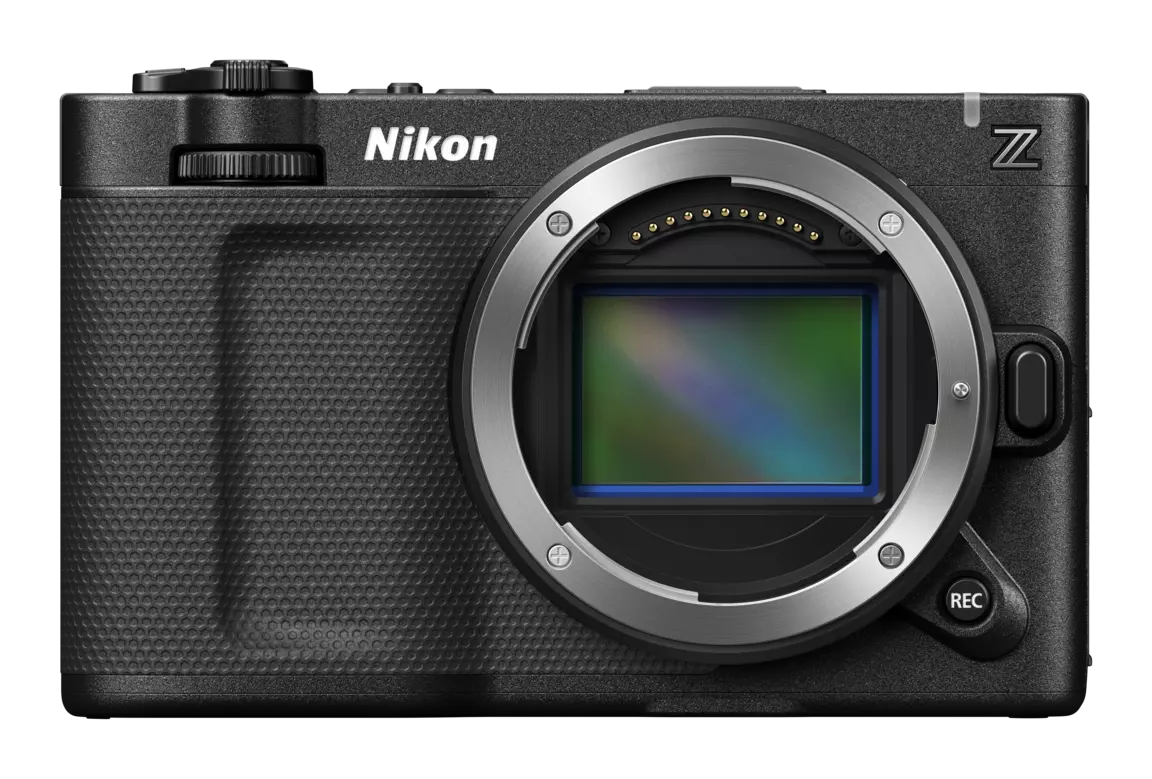
The Nikon ZR represents the first major product to emerge from Nikon's strategic acquisition of RED Digital Cinema, and it has entered the market as a fundamental disruptor. The camera is built upon the formidable foundation of the Nikon Z6 III, sharing its 24.5MP partially stacked full-frame sensor and EXPEED 7 processor. However, it is encased in a new, video-first body and imbued with the DNA of RED's cinema technology, creating a hybrid powerhouse designed to challenge the established order. Its immediate and significant impact on the market, evidenced by its rapid ascent on sales charts, signals a potential shift in the balance of power in the compact cinema camera segment.
Disruptive Features - A New Value Benchmark
The ZR's market strategy is predicated on offering a suite of professional, next-generation features at a price point that dramatically redefines value in its class.
The headline feature is the democratization of RAW video workflows. The ZR offers internal 12-bit RAW recording in a variety of powerful formats: REDCODE RAW (R3D NE), Nikon's own N-RAW, and Apple ProRes RAW. This capability, particularly the inclusion of REDCODE, brings a level of post-production flexibility and image fidelity previously exclusive to cinema cameras costing many times more. The integration of RED's renowned color science, including the Log3G10 gamma curve and REDWideGamutRGB color space, is a significant credibility boost, allowing ZR footage to be seamlessly integrated into high-end professional workflows alongside dedicated RED cameras like the Komodo or V-RAPTOR.
Equally groundbreaking is the camera's audio technology. The ZR is the world's first interchangeable-lens camera to feature internal 32-bit float audio recording. This technology captures an incredibly wide dynamic range of sound, effectively eliminating the risk of audio clipping or distortion from unexpectedly loud sources. For solo operators, documentarians, and run-and-gun videographers, this is a revolutionary "set it and forget it" feature that provides an invaluable safety net and simplifies audio management in unpredictable environments.
Ergonomically, the ZR introduces superior on-camera monitoring. It is equipped with a large, bright 4.0-inch vari-angle touchscreen with a high resolution of 3.07 million dots and a brightness of 1000 nits. This display is significantly larger, brighter, and more detailed than the screen on the FX3, providing a much-improved monitoring experience that, for many shooters, may eliminate the need for an external field monitor, thereby keeping rigs small and lightweight.
All of these features are delivered with an exceptionally aggressive pricing strategy. With a launch price of just $2,199, the ZR offers a professional RAW workflow and next-generation audio for nearly half the cost of the Sony FX3. This has led many reviewers and users to label it an "FX3 killer," as it establishes a new and formidable price-to-performance benchmark in the market.
Potential Compromises and Questions
Despite its impressive feature set, the ZR's design incorporates several compromises that raise questions for professional users. The most critical of these is its thermal management. The camera features a fanless, weather-sealed design, which is advantageous for silent operation and durability. However, the absence of active cooling raises significant concerns about its ability to sustain long-duration recording in demanding formats like 6K RAW, especially in warm environments. This remains a key question mark regarding its long-term professional reliability.
The camera's ergonomics also present some quirks. Its slim, "brick-shaped" body lacks a traditional, deep handgrip, which may be less comfortable for prolonged handheld use. Furthermore, some design choices have drawn criticism, such as the use of a secondary microSD card slot instead of a second high-speed slot, which precludes redundant RAW recording, and the placement of the card slots in a way that may be difficult to access when the camera is rigged.
Finally, while Nikon's Z-mount lens system is lauded for its optical excellence, the native lens selection is currently smaller and less extensive than Sony's mature E-mount ecosystem. For users considering a switch from Sony to Nikon, the availability of high-quality lens mount adapters that preserve autofocus and electronic control is a crucial mitigating factor that makes the transition more viable.
The introduction of the Nikon ZR signals a strategic pivot in the prosumer market. Rather than engaging in a direct feature-for-feature battle against Sony's established ecosystem advantage, Nikon has leveraged its partnership with RED to challenge the incumbent on the fundamental nature of the captured data itself. This strategy bypasses a direct fight over lens selection by focusing on a superior internal workflow. It targets a specific user: the technically-minded creator who values maximum data fidelity and post-production control above the convenience of a compressed codec or the breadth of an existing lens library. This approach suggests that the next competitive battleground for prosumer cinema cameras will be fought not on resolution alone, but on the quality, flexibility, and accessibility of the recording formats themselves.
Section 4: The Technical Gauntlet: A Head-to-Head Comparison
A direct, data-driven comparison of the Sony FX3 and Nikon ZR reveals two cameras built with fundamentally different priorities. While both are compact, full-frame, video-first bodies, their internal architecture and feature sets cater to distinct user needs and workflow philosophies. The following provides a clear, at-a-glance summary of their core specifications, which will be elaborated upon in the subsequent analysis.
Sensor
Sony FX3:
Resolution (Effective): 10.2 MP (Video), 12.1 MP (Stills)
Size & Type: 35.6 x 23.8 mm, Full-Frame BSI-CMOS
Dual Base ISO (Log): 800 / 12,800
Nikon ZR:
Resolution (Effective): 24.5 MP
Size & Type: 35.9 x 23.9 mm, Full-Frame Partially Stacked CMOS
Dual Base ISO (Log): 800 / 6400
Video Capabilities
Sony FX3:
Max Internal Resolution: 3840 x 2160 (UHD 4K) at 120p
Internal Codecs: XAVC S-I (H.264, 10-bit 4:2:2), XAVC HS (H.265, 10-bit 4:2:2)
Internal RAW: No (External via HDMI only)
4K/120p Crop Factor: Approx. 1.1x
Dynamic Range: 15+ Stops
Nikon ZR:
Max Internal Resolution: 6048 x 3402 (6K) at 60p
Internal Codecs: REDCODE RAW (12-bit), Nikon N-RAW (12-bit), ProRes RAW HQ (12-bit), ProRes 422 HQ (10-bit), H.265 (10-bit)
Internal RAW: Yes (R3D NE, N-RAW, ProRes RAW)
4K/120p Crop Factor: Approx. 1.5x (DX crop)
Dynamic Range: 15+ Stops
Stabilization & AF
Sony FX3:
In-Body Stabilization: 5-Axis Sensor-Shift (5.5 stops CIPA)
Autofocus System: Fast Hybrid AF (Phase/Contrast), Real-time Tracking
Nikon ZR:
In-Body Stabilization: 5-Axis Sensor-Shift (7.5 stops)
Autofocus System: Hybrid AF (Phase/Contrast), Deep Learning Subject Detection
Audio
Sony FX3:
Internal Recording: 24-bit LPCM
Professional Inputs: 2x XLR via included Top Handle
Nikon ZR:
Internal Recording: 32-bit Float, 24-bit LPCM
Professional Inputs: 3.5mm Mic/Line In (XLR via optional accessory)
Body & Ergonomics
Sony FX3:
Dimensions (mm): 129.7 x 77.8 x 84.5
Weight (with battery): 715 g
Cooling System: Active (Internal Fan)
Rear Screen: 3.0-inch, 1.44M-dot, Vari-angle Touchscreen
Media Slots: 2x Dual CFexpress Type A / SD UHS-II
Nikon ZR:
Dimensions (mm): 133 x 80.5 x 48.7
Weight (with battery): 630 g
Cooling System: Passive (Fanless)
Rear Screen: 4.0-inch, 3.07M-dot, Vari-angle Touchscreen
Media Slots: 1x CFexpress Type B, 1x microSD (UHS-I)
Price
Sony FX3:
Launch MSRP (Body): $3,899
Nikon ZR:
Launch MSRP (Body): $2,199
Data compiled from sources:
4.1 Sensor & Image Pipeline: Resolution vs. Sensitivity
The choice between the ZR and FX3 begins at the sensor level, presenting a classic trade-off between resolution and low-light sensitivity. The Nikon ZR, with its 24.5MP sensor, captures native 6K video, providing a significant advantage in detail and post-production flexibility. This higher resolution allows for substantial cropping, reframing, and digital stabilization without falling below a 4K delivery threshold. When combined with RED's color science, this pipeline produces a detailed, "film-like" image that excels in controlled lighting environments. Its dual base ISO of 800 and 6400 provides clean performance in a wide range of conditions.
In stark contrast, the Sony FX3 employs a 12MP sensor optimized purely for light-gathering efficiency. This lower pixel density results in larger individual pixels, giving the FX3 a decisive advantage in low-light scenarios. Its high base ISO of 12,800 is a full stop higher than the ZR's, enabling it to produce remarkably clean images in environments where other cameras would struggle with noise. This makes the FX3 the undisputed low-light champion, an ideal choice for event, documentary, and available-light filmmakers who cannot always control their environment.
4.2 Codecs, Frame Rates, and Workflow: The RAW Revolution
The cameras' recording capabilities represent their most significant philosophical divergence. The Nikon ZR's ability to record 6K/60p and DCI 4K/120p internally in 12-bit RAW formats is its defining feature. This provides filmmakers with the maximum possible data for color grading, VFX work, and exposure adjustments in post-production. However, this power comes at a cost: RAW files are enormous, demanding expensive, high-capacity CFexpress Type B cards and a powerful post-production workstation to manage the workflow effectively. Furthermore, its high-speed 4K/120p mode incurs a substantial 1.5x crop, narrowing the field of view.
The Sony FX3 is built for efficiency. It records in robust, compressed 10-bit 4:2:2 codecs like XAVC S-I, which offer excellent image quality and grading flexibility in files that are far more manageable in size. This makes the FX3 perfectly suited for fast-turnaround projects, such as corporate video, news gathering, and event coverage, where editing speed and storage efficiency are critical. Its 4K/120p slow-motion capability is also more practical, featuring a minimal 1.1x crop that largely preserves the lens's field of view. The choice is clear: the ZR is for the post-production perfectionist, while the FX3 is for the efficient working professional.
4.3 Ergonomics and Field Usability: Screen vs. Body
In terms of handling, each camera excels in a different area. The Nikon ZR's 4-inch, high-resolution, high-brightness screen is a definitive winner. It provides a superior on-camera monitoring experience that can genuinely replace an external monitor in many run-and-gun situations, a significant advantage for maintaining a compact rig. However, the body itself presents compromises. It is remarkably thin but lacks a deep grip, features fewer mounting points, and uses a less durable micro-HDMI port, which is a point of concern for many professionals.
The Sony FX3, conversely, wins on overall body design and professional I/O. Its form factor is more ergonomic for handheld shooting, and it is designed to be "cage-free," with five built-in 1/4"-20 mounting points. It features two robust, dual-format CFexpress Type A/SD card slots and a full-size HDMI port, which are better suited for the rigors of professional production. The trade-off is its smaller, lower-resolution 3-inch screen, which many users supplement with an external monitor.
4.4 Audio Capabilities: A New Standard
Here, the Nikon ZR introduces a technology that sets a new standard for the category. Its internal 32-bit float audio recording capability is a revolutionary feature that provides a massive safety net against audio clipping. This allows a solo shooter to focus on the image without having to constantly monitor audio levels in dynamic environments. The Sony FX3 offers a proven, professional solution with its included XLR handle, providing high-quality 24-bit audio and physical controls. While excellent, this 24-bit system lacks the "unclippable" nature of the ZR's 32-bit float technology, giving the Nikon a clear technical and practical advantage for run-and-gun work.
4.5 Autofocus & Stabilization: Battle of the Titans
Both cameras feature world-class autofocus systems. The Sony FX3's Real-time Tracking AF is the established industry benchmark, known for its tenacious and reliable subject tracking. The Nikon ZR, however, leverages the latest deep-learning algorithms from the Z6 III, creating a hybrid AF system that professional reviewers have found to be surprisingly powerful and a significant step forward for cameras with RED technology. In practice, both systems are excellent, and the choice between them is a matter of slight preference.
Where a clear winner emerges is in image stabilization. The Nikon ZR's in-body image stabilization (IBIS) is rated for up to 7.5 stops of compensation, compared to the FX3's 5.5 stops. This two-stop advantage gives the ZR superior performance for handheld shooting, allowing for smoother shots without the need for a gimbal.
4.6 Thermal Management & Reliability: The Deciding Factor?
Perhaps the most critical differentiator for working professionals is thermal management. The Sony FX3 features an active cooling system with an internal fan, a design that has been proven to prevent overheating even during indefinite recording in 4K. This provides an essential layer of reliability and peace of mind on paid client shoots where failure is not an option. The Nikon ZR, in contrast, uses a fanless, passive cooling design. While this ensures silent operation, it introduces a significant unknown regarding its ability to sustain performance during prolonged 6K RAW recording, particularly in high-temperature environments. For professionals whose reputation depends on delivering footage under any circumstances, the FX3's proven active cooling remains a crucial, and potentially decisive, advantage.
Section 5: The APS-C Proposition: Evaluating the Sony FX30
The Sony FX30 was introduced as the accessible entry point into Sony's prestigious Cinema Line, packaging the professional body, controls, and many of the features of the FX3 with a smaller, more affordable APS-C sensor. It delivers high-quality 4K video, oversampled from a 6K sensor readout, along with professional tools like 10-bit 4:2:2 color, S-Log3, and S-Cinetone, making it a powerful option for indie filmmakers and content creators on a budget. However, the arrival of the aggressively priced, full-frame Nikon ZR fundamentally alters the FX30's value proposition and necessitates a new competitive analysis.
The following contextualizes the FX30 by placing it alongside its full-frame counterparts, highlighting the key trade-offs in features and value.
Sensor Size:
Sony FX3: Full-Frame
Nikon ZR: Full-Frame
Sony FX30: APS-C
Max Resolution:
Sony FX3: 4K
Nikon ZR: 6K
Sony FX30: 4K (from 6K oversample)
Key Codec/Workflow:
Sony FX3: 10-bit XAVC S-I (Efficient)
Nikon ZR: 12-bit Internal RAW (Flexible)
Sony FX30: 10-bit XAVC S-I (Efficient)
Low-Light Performance:
Sony FX3: Excellent (Base ISO 12,800)
Nikon ZR: Good (Base ISO 6400)
Sony FX30: Fair (Base ISO 2500)
IBIS (Stops):
Sony FX3: 5.5
Nikon ZR: 7.5
Sony FX30: 5.5
Key Audio Tech:
Sony FX3: 24-bit (XLR Handle)
Nikon ZR: 32-bit Float (Internal)
Sony FX30: 24-bit (XLR Handle Option)
Price (approx.):
Sony FX3: $3,900
Nikon ZR: $2,200
Sony FX30: $1,800 (body), $2,200 (w/ handle)
Key Advantage:
Sony FX3: Low-light & Reliability
Nikon ZR: Internal RAW & Value
Sony FX30: Ecosystem & APS-C Lens Cost
Ideal User Profile:
Sony FX3: Pro (Events, Docs)
Nikon ZR: Indie Filmmaker, Solo Creator
Sony FX30: Sony Ecosystem Entrant
Data compiled from sources:
When compared directly to its full-frame sibling, the FX3, the primary trade-off with the FX30 is sensor performance. The smaller APS-C sensor results in demonstrably weaker low-light capability, with a high base ISO of 2500 compared to the FX3's 12,800, and a slightly reduced dynamic range of 14+ stops versus 15+. The principal benefit of this compromise, beyond the lower initial cost, is access to the wide and often more affordable range of Sony's dedicated APS-C E-mount lenses, which can be smaller and lighter than their full-frame equivalents.
The more critical comparison in the current market, however, is between the FX30 and the Nikon ZR. For a nearly identical investment—approximately $2,200 for the FX30 with its essential XLR audio handle versus $2,200 for the ZR body—a prospective buyer faces a stark choice. The Sony FX30 offers an APS-C sensor, a maximum 4K resolution from compressed 10-bit codecs, and deep integration into the vast Sony E-mount lens ecosystem. The Nikon ZR, for the same price, delivers a larger full-frame sensor, a maximum 6K resolution, a workflow built on flexible 12-bit internal RAW codecs, a superior rear screen, more effective image stabilization, and revolutionary 32-bit float audio.
This comparison reveals that the Nikon ZR offers a significantly more powerful core imaging pipeline and a more advanced feature set for the money. The primary remaining advantages for the FX30 are its seamless integration for existing Sony users and the potential long-term cost and size benefits of building a lens kit around the APS-C format. For a new filmmaker or content creator not already invested in a specific lens system, the Nikon ZR presents a far superior value proposition on paper, providing a direct pathway to a professional full-frame RAW workflow at a price that was previously unimaginable.
Section 6: The Horizon: Rumors, Successors, and Purchase Timing
The competitive landscape for compact cinema cameras has been irrevocably altered. The launch of the Nikon ZR, alongside other new entries like the Canon C50, has shattered the market status quo and placed immense pressure on Sony to innovate beyond the capabilities of the current-generation FX3. This new reality has fueled a vibrant and credible rumor mill surrounding a successor, likely to be designated the Sony FX3 II, making the decision to invest in a current model a complex strategic calculation.
The following, based on aggregated rumors, contrasts the current FX3's capabilities with the potential features of a successor. It serves as a speculative but strategically valuable tool for assessing whether to buy now or wait for Sony's anticipated response.
Resolution:
Current Sony FX3: 4K (UHD)
Rumored Sony FX3 II (Speculative): 6K or 8K
Recording:
Current Sony FX3: 10-bit 4:2:2 Internal, External RAW
Rumored Sony FX3 II (Speculative): Internal 12-bit or 16-bit RAW, Open Gate Recording
Sensor Tech:
Current Sony FX3: BSI-CMOS
Rumored Sony FX3 II (Speculative): Potential Global Shutter (from A9 III)
Audio:
Current Sony FX3: 24-bit (via XLR Handle)
Rumored Sony FX3 II (Speculative): 32-bit Float Support
Ergonomics:
Current Sony FX3: No EVF
Rumored Sony FX3 II (Speculative): Potential for modular or integrated EVF
Autofocus:
Current Sony FX3: Real-time Tracking AF
Rumored Sony FX3 II (Speculative): Advanced AI-driven AF
Release Window:
Current Sony FX3: Released Feb 2021
Rumored Sony FX3 II (Speculative): Rumored for Late 2025 / Early 2026
Price (approx.):
Current Sony FX3: ~$3,900
Rumored Sony FX3 II (Speculative): ~$3,800 - $4,200
Data compiled from sources:
Analyzing the Sony Successor Rumors
The credibility of an imminent FX3 successor is high. Rumors consistently point to a release window in late 2025 or early 2026. This speculation is bolstered by tangible evidence: a recently registered Sony camera (model WW697160) features high-power Wi-Fi 6E capabilities perfectly suited for the data-intensive demands of a professional video camera, such as wireless RAW monitoring or high-bitrate streaming. Furthermore, many analysts view the recent launch of the Sony FX2 as a strategic testbed for a future FX3 II's body design, cooling system, and potential inclusion of an electronic viewfinder (EVF).
The rumored features for an FX3 II appear to be a direct and strategic response to the Nikon ZR's disruptive market entry. The inclusion of higher resolution (6K or 8K) and internal RAW recording is considered a necessity for a new model to justify a premium price tag and compete effectively. A more speculative but potentially game-changing rumor is the incorporation of the
global shutter sensor technology from the Sony A9 III. This would completely eliminate rolling shutter artifacts, providing a massive technological advantage for capturing fast motion. Other expected upgrades include a next-generation
AI-powered autofocus system and Open Gate recording, a feature highly requested by professionals for its flexibility in reframing footage for multiple aspect ratios.
It is important to clarify the query's mention of an "FX30 II as a potential upgrade/replacement for the FX3." This represents a likely misinterpretation of the market segments. An FX30 II would be a successor to the APS-C model, while the FX3 II would succeed the full-frame model. The relevant question for a prospective FX3 buyer is not whether an APS-C camera will replace it, but whether a new full-frame successor (the FX3 II) will arrive soon enough to make a current FX3 purchase ill-advised.
Strategic Advice: Buy Now or Wait?
This analysis leads to a clear set of strategic recommendations based on a user's timeline and professional requirements.
For professionals with immediate, mission-critical needs, waiting is often not a viable option. The decision must be made between the currently available models. The Sony FX3 remains a safe, proven, and highly reliable choice, especially for those already invested in the Sony ecosystem. The Nikon ZR presents a high-value, high-potential alternative for those willing to adopt a new system and manage a RAW-centric workflow.
However, for filmmakers, content creators, and small production companies who are not under immediate pressure to purchase, waiting appears to be a prudent and strategically sound decision. The likelihood of a Sony response in the near future is very high. This anticipated successor is poised to address the primary weaknesses of the current FX3 (such as the lack of internal RAW) while directly countering the technological advantages introduced by the Nikon ZR. Waiting could provide access to a next-generation tool that offers the best of both worlds: Sony's proven reliability and ecosystem combined with the advanced recording formats and features that now define the competitive frontier.
Section 7: Synthesis and Strategic Recommendations
The preceding analysis reveals a market in flux, where a long-standing champion faces a technologically advanced and aggressively priced challenger. The choice between the Sony FX3 and the Nikon ZR is not a simple matter of determining which camera is "better," but rather which camera's specific philosophy and feature set aligns with a particular filmmaker's needs, workflow, and budget. The following recommendations are synthesized from the technical data, professional reviews, and user feedback to provide clear, persona-based guidance.
For the Established Professional / Small Production Company
Recommendation: Cautiously maintain investment in the Sony FX3 ecosystem or evaluate the Nikon ZR strictly as an integrated B-camera.
For this user, reliability, workflow efficiency, and ecosystem continuity are paramount. The Sony FX3's proven active cooling system provides a critical guarantee against overheating on paid, high-pressure shoots—a variable that remains an open question for the fanless Nikon ZR in long-form recording scenarios. Furthermore, for production houses already invested in a suite of Sony E-mount lenses, batteries, and media, the significant cost and disruption of switching systems is a major deterrent. The FX3's consistent color science with higher-end Sony cameras like the FX6 also ensures a seamless multi-camera workflow. The Nikon ZR's primary appeal in this context is as an affordable B-camera for productions that already utilize a RED-based workflow, where its shared REDCODE RAW format and color science would allow for perfect integration.
For the Indie Filmmaker / Solo Operator
Recommendation: The Nikon ZR establishes a new benchmark for value and creative capability and should be the primary consideration.
This user profile stands to benefit most from the Nikon ZR's disruptive feature set. The accessibility of an internal 6K 12-bit RAW workflow provides immense creative control and post-production latitude, previously unattainable at this price point. The groundbreaking internal 32-bit float audio acts as an invaluable safety net for solo operators managing both picture and sound. The large, bright rear screen reduces the need for additional rigging and expense on an external monitor, while the superior in-body stabilization aids in capturing smooth handheld footage. For this filmmaker, the ZR's advanced features and aggressive price point free up crucial budget for lenses, lighting, and other essential production gear. In this context, the ZR's overwhelming value proposition outweighs the FX3's advantages in absolute low-light performance and proven thermal management, which are less critical outside of non-stop, mission-critical environments. The Sony FX30 remains a viable, lower-cost entry point but is now a harder sell when the ZR offers a full-frame RAW workflow for only a marginal increase in price.
For the Hybrid Shooter (Stills & Video)
Recommendation: The Nikon ZR offers demonstrably superior hybrid versatility.
The Nikon ZR's foundation in the Nikon Z6 III platform makes it a far more capable hybrid tool. Its 24.5MP sensor provides more than double the resolution for still photography compared to the FX3's 12MP sensor, allowing for high-quality prints and significant cropping flexibility. While the FX3 can capture reference stills, it is fundamentally a video device. The ZR, by contrast, is a true hybrid, capable of delivering professional-grade results in both motion and still photography without significant compromise.
Final Verdict: Is the Nikon ZR an "FX3 Killer"?
While the term "killer" is often hyperbolic, the Nikon ZR has unequivocally killed the uncontested dominance of the Sony FX3. It has fundamentally redefined the value proposition in the compact cinema camera market, forcing a re-evaluation of what filmmakers should expect for their investment.
For new buyers who are not bound by an existing ecosystem, the Nikon ZR's potent combination of an aggressive price, a professional internal RAW workflow, and a suite of next-generation features makes it the more logical, powerful, and forward-thinking purchase in the current market. The Sony FX3 is no longer the default choice. It has been repositioned as a more specialized, premium option for a specific subset of users: those professionals for whom proven thermal reliability, extreme low-light performance, and deep integration within the Sony professional ecosystem are the absolute, non-negotiable priorities. The king's reign is not over, but the throne is now contested by a powerful disruptor offering tomorrow's workflow at yesterday's price.