Your Story Is Not Over Yet - Presented By The
LET MISTER SCREEN ASSIST YOU
GLOBAL INDEXThe Urban Cartographer
TECHNICAL STUFFAn exploration of the changing social landscape along Ireland’s rivers. From the vital "hope signs" on the Shannon and Lagan to the complex rise of territorial unofficial memorials, we examine the ethics of grief in public spaces.
EXCELLENT PICTURE THIS 2017
Your Story Is Not Over Yet - Presented By The
Your Story Is Not Over Yet
Author:
|
11. Feb 2026
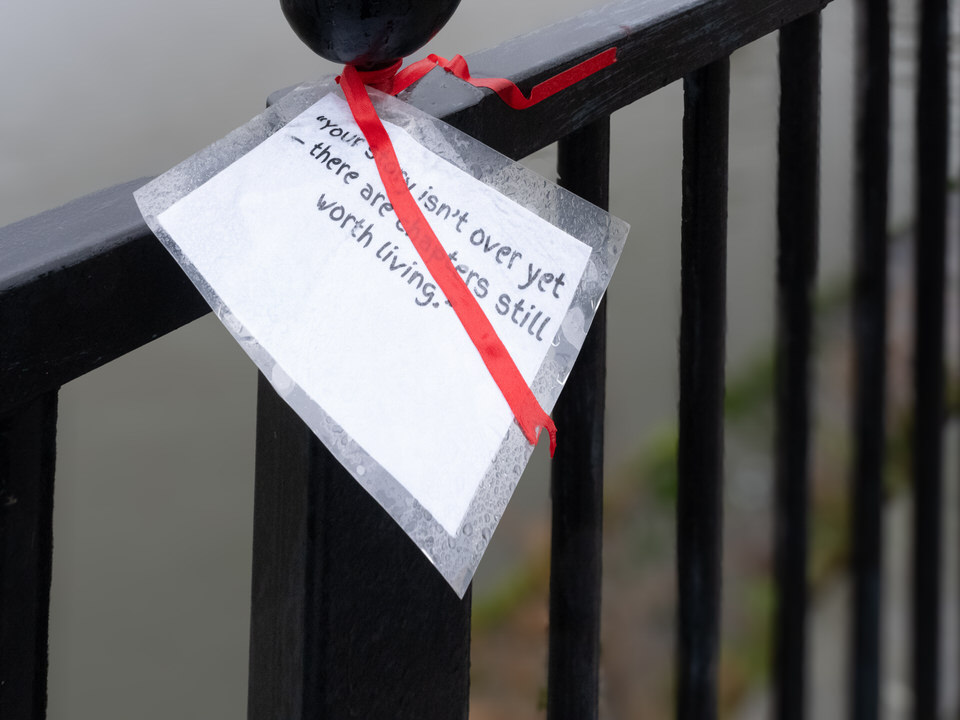
Photographed By William Murphy - Select Image To View Photographs
Between Grief and Governance: The Changing Face of our Riversides
A Reflection on Public Space, Memory, and the Rise of Territorial Shrines
For those of us who document the built environment, the evolution of a city is rarely just about new glass-fronted offices or heritage restorations. Often, the most profound changes occur in the "in-between" spaces: the bridges, towpaths, and railings that line our arterial waterways.
Lately, along the River Shannon and the River Lagan, a new layer of social infrastructure has become impossible to ignore. It is a landscape defined by two very different types of markers: the official "signs of hope" and the burgeoning, unofficial "personal memorials."
The Lifeline: Hope on the Railings
The image in my photograph is a testament to a grassroots movement that has transformed our river walks. These small, laminated messages—"Your story isn't over yet"—are part of a deliberate effort by community groups to interrupt moments of despair.
Unlike traditional state signage, these are "soft" interventions. They are often placed by volunteers from organisations like Limerick Suicide Watch or Lagan Search and Rescue. Their purpose is clear: to offer a lifeline. As a feature of our built environment, they represent a move toward a more compassionate, interventionist use of public space. They are designed to be temporary in material, yet permanent in their message of support.
The Shift Toward "Territorial" Memorials
However, a more complex trend is emerging alongside these signs of hope. There has been a notable increase in "unofficial" personal memorials—permanent or semi-permanent shrines located at the site of tragic incidents.
While these begin as spontaneous acts of grief, their evolution is raising difficult questions about how we share public land. We are increasingly seeing a pattern where these sites transition from a simple bouquet of flowers to what could be described as "territorial marking."
Fixed Structures: The introduction of permanent fencing, paving, or solar lighting can effectively "privatise" a section of a public path.
Social Intimidation: In certain contexts, the scale and style of these memorials—sometimes featuring flags or specific cultural symbols—can feel exclusionary. It creates a "regulatory vacuum" where local authorities are often hesitant to intervene, and the local population may feel intimidated or "pushed out" of their own communal spaces.
The Hallowed Ground Effect: When a recreational area is transformed into a permanent site of mourning, the atmosphere of the space changes. The "built environment" is no longer for the living to enjoy freely; it becomes a site of perpetual trauma.
The Documentarian’s Dilemma: To Photograph or Not?
As a chronicler of trends in our landscape, deciding whether to publish photographs of these unofficial memorials is an ethical tightrope.
On one hand, they are a genuine trend in our social geography. On the other, there is a growing concern that by giving these "territorial" sites a digital platform, we may inadvertently validate a "false cause" or encourage an escalation in size. If a memorial is being used to stake a claim over a public walkway, does photographing it help or hinder the community?
On balance, the purpose of documenting our environment is to foster a healthy, shared space. While the "hope signs" (like the one pictured) serve a vital public service, the trend toward permanent, unofficial shrines requires a more critical eye. We must ask: At what point does a memorial stop being an act of remembrance and start being an act of occupation?
GALWAY CITY
CORK CITY AND COUNTY
GLOBAL MENU
DUBLIN SOUTHSIDE
DUBLIN NORTHSIDE
URBAN CARTOGRAPHER
EXCELLENT PICTURE THIS 2017
Your Story Is Not Over Yet - Presented By The
Who Is Building An Experience Which Is Getting Better Day By Day