What Happened To Love The Lanes - Presented By The Urban Cartographer
LET MISTER SCREEN ASSIST YOU
GLOBAL INDEXThe Urban Cartographer
TECHNICAL STUFFThe landscape of Dublin’s street art is shifting as the iconic Love Lane in Crampton Court receives a permanent tiled makeover, while the lanes parallel to Aston Quay see the departure of the ICON Factory. This blog explores the transition of Temple Bar’s historic alleys and the ongoing efforts to balance urban decay with vibrant cultural restoration.
EXCELLENT PICTURE THIS 2017
What Happened To Love The Lanes - Presented By The Urban Cartographer
What Happened To Love The Lanes
Author: Urban Cartographer
|
16. Jan 2026
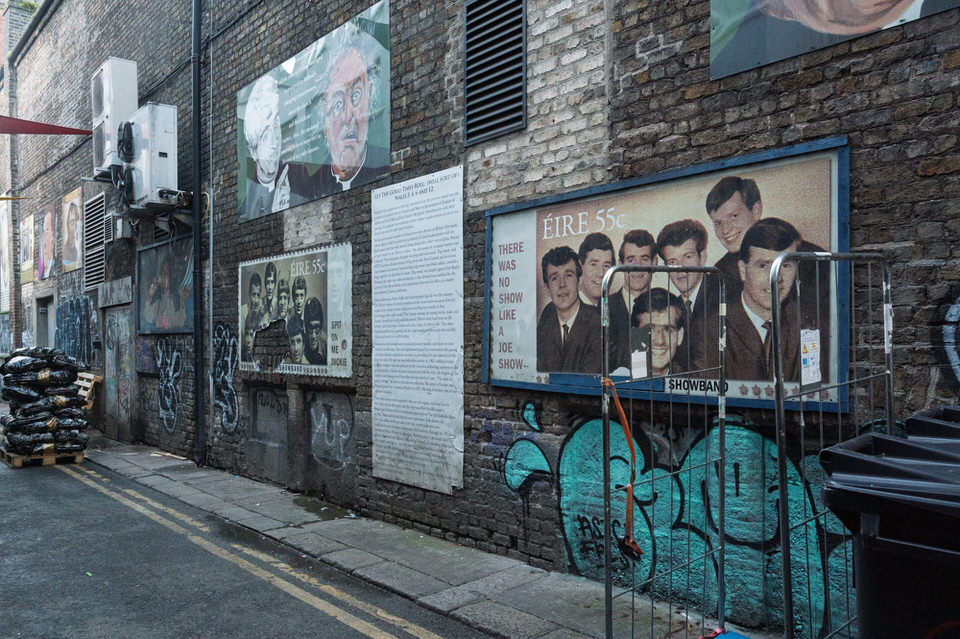
Photographed By William Murphy
The Ebb and Flow of Temple Bar’s Laneways: A Tale of Two Alleys Dublin’s Temple Bar is often defined by its cobblestones and neon lights, but for over a decade, its narrow laneways have served as a canvas for a different kind of story. Recent observations of the arteries parallel to Aston Quay suggest a significant shift in the city’s cultural geography. While some spaces are being meticulously preserved, others appear to be returning to their original, utilitarian state. The Fade of the Icon Walk For thirteen years, the ICON Factory and the associated Icon Walk functioned as a vital cultural intervention in the neglected corners of Aston Place, Bedford Lane, and Price’s Lane. This volunteer-led cooperative successfully transformed derelict alleys into "The Greatest Story Ever Strolled," celebrating Irish cultural figures through vibrant murals and posters. However, the closure of the ICON Factory’s physical premises at 3 Aston Place has left a palpable void. Without the daily stewardship of the artists and the deterrent of an active gallery presence, these lanes are showing signs of reverting to their pre-2010 condition. The absence of maintenance has allowed the "original state" of the urban environment—characterised by weathering and a lack of curation—to reclaim the walls that once championed Irish heritage. The Resurgence of Love Lane In stark contrast to the fading murals near the quays, Crampton Court, famously known as "Love Lane," has undergone a significant transformation. Recognising the fragility of painted street art in a damp climate, a major restoration was completed to ensure the lane’s longevity. The makeover, led by the original artist Anna Doran in collaboration with Dublin City Council and the Temple Bar Company, moved away from temporary materials. The walls are now adorned with: Durable Outdoor Tiles: Custom-made ceramic pieces that resist tagging and environmental wear. Public Contributions: Over 100 quotes submitted by the public, ranging from classic poetry to local Dublin wit, such as "You’re a smasher, two eggs and a rasher." Enhanced Lighting: New installations that improve safety while highlighting the pink-hued aesthetic that has made the lane a global social media landmark. A Fragile Urban Balance The current state of these lanes highlights the challenges of "tactical urbanism." The "Love the Lanes" initiative, launched in 2014, proved that art could reclaim neglected spaces. Yet, the contrast between the polished tiles of Crampton Court and the receding art of the Aston Quay lanes serves as a reminder that urban beauty requires constant investment. As Dublin City Council moves forward with the wider pedestrianisation of Temple Bar Square, the fate of the smaller laneways remains a focal point for those interested in the balance between commercial development and grassroots artistic expression.Select Image To Visit The Photo Gallery: What Happened To Love The Lanes
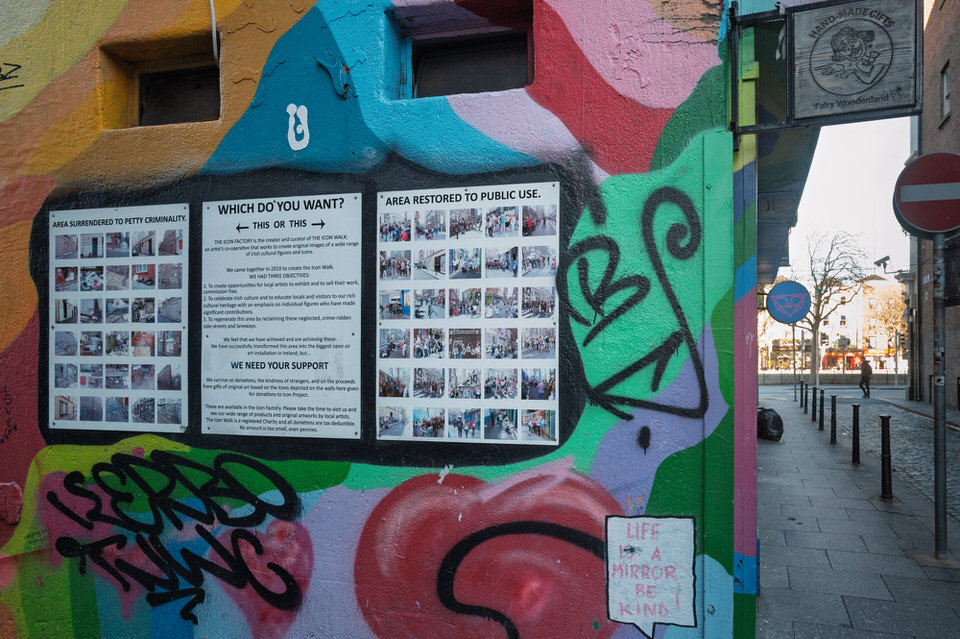
GALWAY CITY
CORK CITY AND COUNTY
GLOBAL MENU
DUBLIN SOUTHSIDE
DUBLIN NORTHSIDE
URBAN CARTOGRAPHER
EXCELLENT PICTURE THIS 2017
What Happened To Love The Lanes - Presented By The Urban Cartographer
Who Is Building An Experience Which Is Getting Better Day By Day