St Stephens Green Was Waterlogged - Presented By The Urban Cartographer
LET MISTER SCREEN ASSIST YOU
GLOBAL INDEXThe Urban Cartographer
TECHNICAL STUFFIs this a death sentence for every tree in the Green? Not necessarily. Species vary in their tolerance to waterlogging. Willows and Alders, for example, are naturally adapted to "wet feet" and can even pump oxygen down to their submerged roots. However, many of the more sensitive species found in the Green – such as Beech, Oak, and various ornamental evergreens – are far more susceptible. If standing water persists for much longer, their root systems may be too damaged to recover when the warmer temperatures and increased metabolic demands of spring arrive
EXCELLENT PICTURE THIS 2017
St Stephens Green Was Waterlogged - Presented By The Urban Cartographer
St Stephens Green Was Waterlogged
Author: Urban Cartographer
|
14. Feb 2026
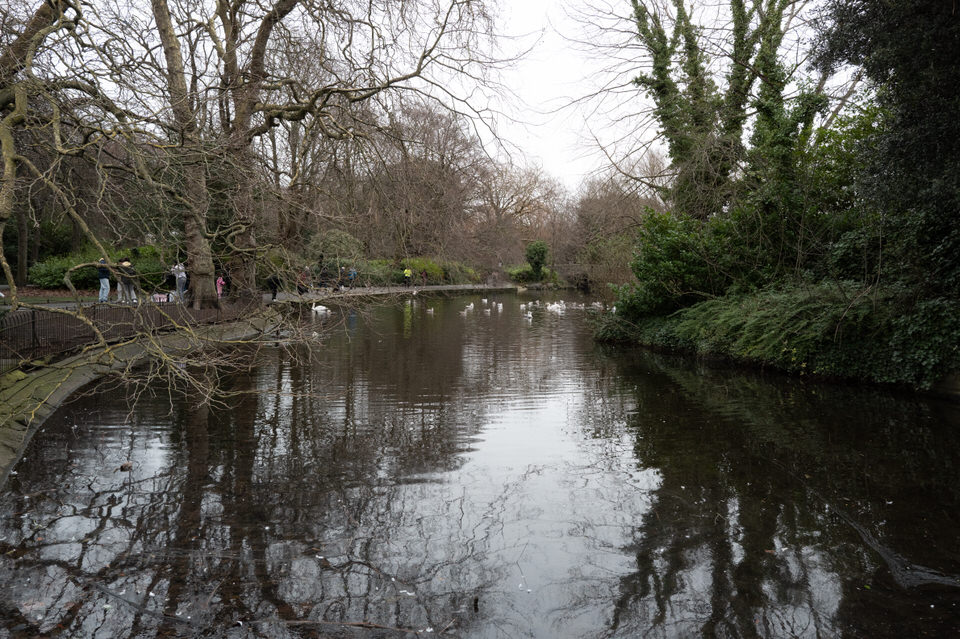
Select Image To Visit The Photo Gallery: St Stephens Green Was Waterlogged
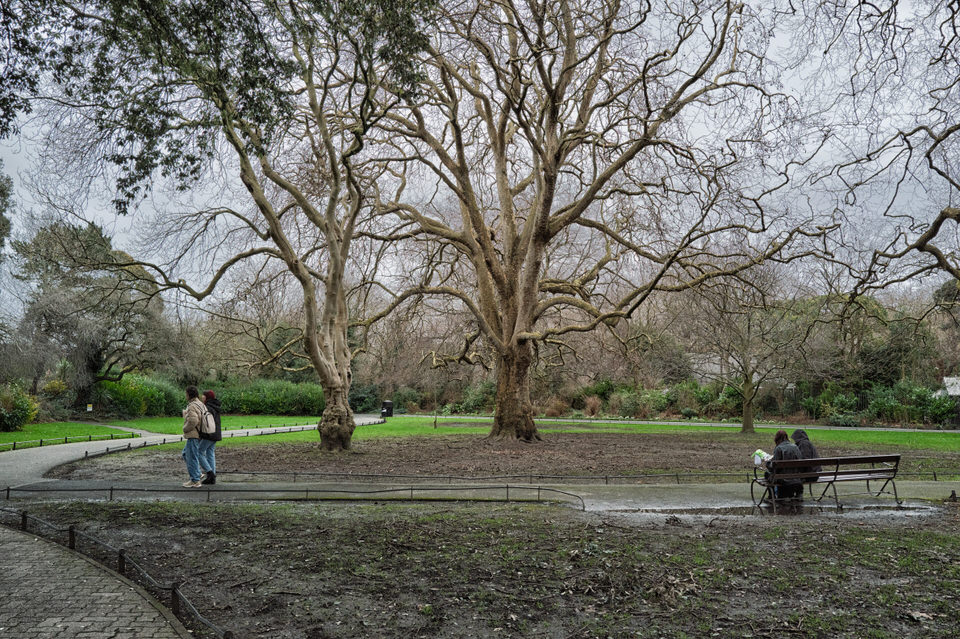 Photographed By William Murphy - Select Image To View Photographs
St Stephen's Green, Dublin – Dublin has weathered an exceptionally wet winter, with relentless rainfall turning much of our beloved capital into a soggy mess. While we might bemoan the constant downpours and muddy footpaths, a silent and far more serious crisis is unfolding beneath our feet, threatening the very foundations of our cherished urban canopy, particularly in iconic spaces like St Stephen's Green.
Visitors to St Stephen's Green recently would have noticed extensive flooding in many areas, creating a dismal tableau of waterlogged lawns and saturated soil. But beyond the visual inconvenience, a stark warning from a park gardener reveals a deeper, more worrying truth: many of these historic trees may not survive. The reason? A phenomenon best described as soil liquefaction and the subsequent loss of vital root traction.
The "Soup" Effect: When Soil Becomes a Liquid
To understand the peril facing our trees, we need to consider the ground beneath them. Tree roots aren't simply "sitting" in the earth; they rely on the shear strength and internal friction of the soil to anchor the massive weight above. Think of it like a ship's anchor digging into solid ground – it needs resistance to hold firm.
When soil becomes supersaturated, as it has been for weeks on end in Dublin, the tiny air pockets that usually exist between soil particles are entirely replaced by water. This transforms the earth from a stable, granular medium into a semi-liquid, slurry-like mud. In essence, the soil loses its structural integrity, much like trying to build a sandcastle with oversaturated sand.
The consequence for trees is immediate and devastating: their roots lose all meaningful grip or friction against this liquefied soil. Even a moderate gust of wind, which a healthy tree would normally withstand effortlessly, can now cause it to simply slide out of the ground. The anchor, no matter how vast, has turned into a lubricant.
Root Suffocation: The Unseen Killer
Beyond the immediate risk of falling, prolonged waterlogging poses another, more insidious threat: root anoxia, or suffocation. Tree roots, like all living organisms, require oxygen to survive and function. They absorb this oxygen from the air pockets within the soil.
For weeks, these vital air pockets in flooded areas of St Stephen's Green have been submerged. While trees are currently in their dormant winter state, which grants them a degree of resilience, this prolonged lack of oxygen leads directly to root rot. If the root system dies or becomes severely compromised from oxygen deprivation, the tree loses its ability to absorb water and nutrients, effectively starving it and rendering it unable to support its own immense weight, even if the ground eventually dries out. The long-term health, and indeed survival, of the tree is severely jeopardised.
The Leverage Problem: Giants on Jelly
Consider the majestic, often Victorian-era trees that grace St Stephen's Green. Many possess enormous trunks and vast, heavy canopies. In normal soil conditions, their root systems are more than capable of counteracting the immense leverage exerted by the wind on their upper branches.
However, when the ground is this soft and unstable, the tree’s own considerable weight becomes its enemy. If a tree develops even a slight lean due to the shifting, muddy ground, its centre of gravity shifts. Without the crucial "traction" provided by firm soil, the sheer mass of the trunk acts as a powerful lever, prying the entire root plate up out of the mud. Once a tree begins this process of "heaving" or "lifting" at its base, its fate is often sealed without drastic and costly intervention.
A Grim Outlook for Some, Hope for Others
Is this a death sentence for every tree in the Green? Not necessarily. Species vary in their tolerance to waterlogging. Willows and Alders, for example, are naturally adapted to "wet feet" and can even pump oxygen down to their submerged roots. However, many of the more sensitive species found in the Green – such as Beech, Oak, and various ornamental evergreens – are far more susceptible. If standing water persists for much longer, their root systems may be too damaged to recover when the warmer temperatures and increased metabolic demands of spring arrive.
This situation in St Stephen's Green is a stark reminder of the profound impact of extreme weather events on our urban environment. It highlights the often-unseen struggles of the natural world in the face of escalating climate challenges.
GALWAY CITY
CORK CITY AND COUNTY
GLOBAL MENU
DUBLIN SOUTHSIDE
DUBLIN NORTHSIDE
URBAN CARTOGRAPHER
EXCELLENT PICTURE THIS 2017
St Stephens Green Was Waterlogged - Presented By The Urban Cartographer
Who Is Building An Experience Which Is Getting Better Day By Day