Urban Expression At Richmond Villas - Presented By The The Urban Cartographer
LET MISTER SCREEN ASSIST YOU
GLOBAL INDEXThe Urban Cartographer
TECHNICAL STUFFExploring the transformation of Dublin’s South Richmond Street from a street-art haven to the corporate home of Amazon. We discuss the relocation of the Bernard Shaw and whether the commercialisation of street art is a positive development or a form of corporate control.
EXCELLENT PICTURE THIS 2017
Urban Expression At Richmond Villas - Presented By The The Urban Cartographer
Urban Expression At Richmond Villas
Author: The Urban Cartographer
|
27. Mar 2026
 Photographed By William Murphy - Select Image To View Photographs
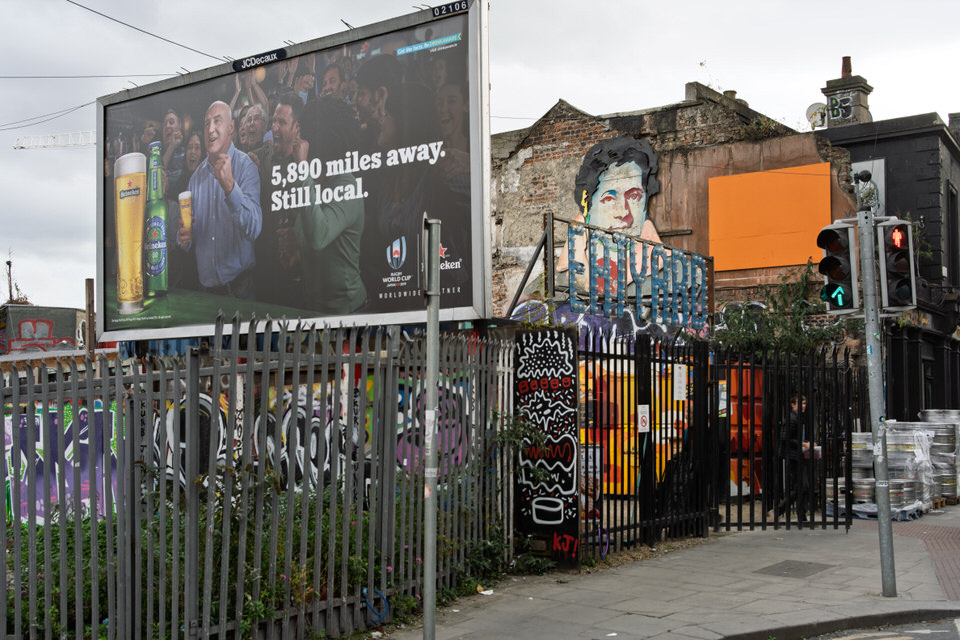
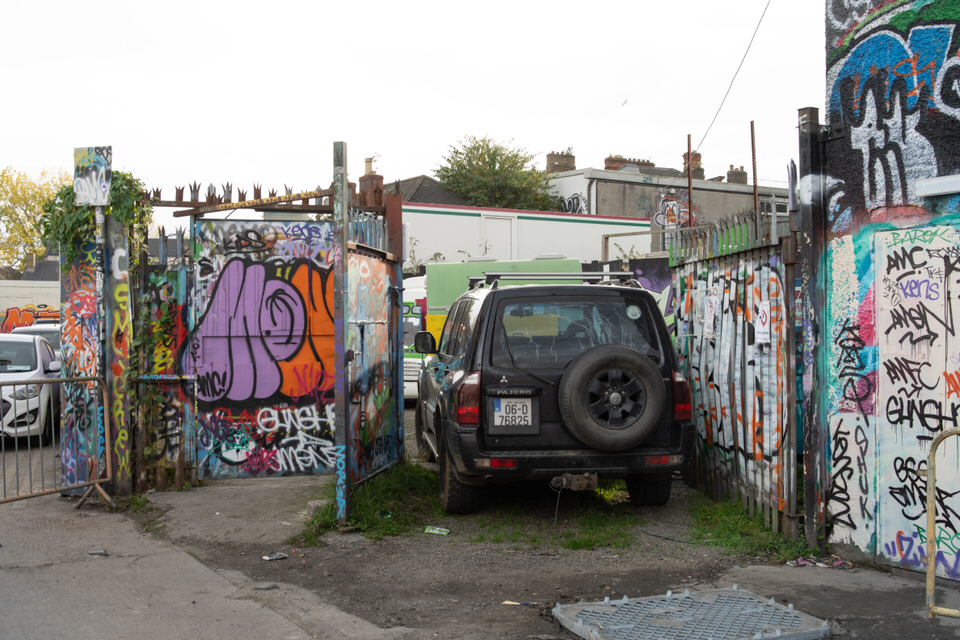
In October 2019, the cranes over Portobello weren't just moving steel; they were moving the very soul of the district. Standing in the chaotic laneway behind the Bernard Shaw, one could feel the air thick with the dust of the old Dublin being ground down to make way for the new.
The Ghost of Richmond Street: Amazon, The Shaw, and the Corporate Curating of Dublin
The Amazon Effect and Charlemont Square
The "huge construction site" which was a work in progress in 2019 has since crystallised into Charlemont Square, a massive mixed-use development anchored by Amazon’s new HQ. Where there were once crumbling brick walls and ad-hoc eateries, there is now a polished, glass-and-steel ecosystem.
While proponents argue that thousands of tech jobs and new retail units revitalise the tax base, the local impact has been a total sanitisation of the atmosphere. The "horrible mess" of the laneway has been replaced by controlled, private-public spaces. It is efficient, safe, and clean—but it lacks the organic friction that makes a city feel alive.
The Bernard Shaw: Mourning a "New" Tradition
When the Shaw announced its closure, the outcry was deafening. "Dublin is dying" became the digital mantra of the year. However, there was a touch of historical amnesia in the grief.
The Bernard Shaw wasn't a centuries-old institution; it was a product of the post-2008 era, a "recent" addition that utilised a derelict space to create something vibrant. The proof of its modern, brand-driven nature lies in its successful relocation to Cross Guns Bridge on the Northside. It didn’t wither away; it simply moved its "Eatyard" and blue-bus aesthetic to a new demographic, proving that the "vibe" was portable, even if the original Portobello community felt a loss.
Street Art: Expression or Urban Management?
The laneways of Richmond Villas were once a gallery of raw, unmediated expression. Today, street art in Dublin has undergone a radical transformation. It has moved from the shadows of illegal tagging into the boardroom.
The Pro: Large-scale commissioned murals provide a platform for professional artists and beautify otherwise drab concrete.
The Con: This "commercialised" art is often used by developers to curb illegal tagging. By painting a curated mural, the "mess" is managed.
Is this a form of unacceptable control? Many argue that when art is sanctioned by a landlord or a tech giant like Amazon, it loses its power as a voice of the people. It becomes "muralism" rather than "graffiti"—a decorative tool used to increase property value rather than a raw response to the urban environment.
The Verdict
Dublin is changing faster than the shutter speed of a camera can capture. The "tallest cranes in the city" have done their work. We have gained a gleaming tech hub and a safer, more navigable South Richmond Street. But in the process, we have traded the chaotic, unpredictable "mess" of the laneway for a curated experience that feels less like a neighbourhood and more like a campus.
 Photographed By William Murphy - Select Image To View Photographs
VIEW HI-RES PHOTOGRAPHS
CORK CITY AND COUNTY
ABOUT RICHMOND VILLAS
GLOBAL INDEX OF PHOTO GALLERIES
STREET ART PHOTO GALLERIES
THE URBAN CARTOGRAPHER
EXCELLENT PICTURE THIS 2017
Urban Expression At Richmond Villas - Presented By The The Urban Cartographer
Who Is Building An Experience Which Is Getting Better Day By Day