Two Men And Two Boys In Cork City - Presented By The The Urban Cartographer
LET MISTER SCREEN ASSIST YOU
GLOBAL INDEXThe Urban Cartographer
TECHNICAL STUFFDiscover the story behind Cork's most famous statues, "Cha and Miah." Originally intended for Dublin, Oisín Kelly’s Two Working Men found a home at Cork County Hall in 1969. Explore the history of these "everyman" icons and the witty "junior" parody sculpture by Brendan Byrne located outside The Kingsley Hotel.
EXCELLENT PICTURE THIS 2017
Two Men And Two Boys In Cork City - Presented By The The Urban Cartographer
Two Men And Two Boys In Cork City
Author: The Urban Cartographer
|
29. Mar 2026
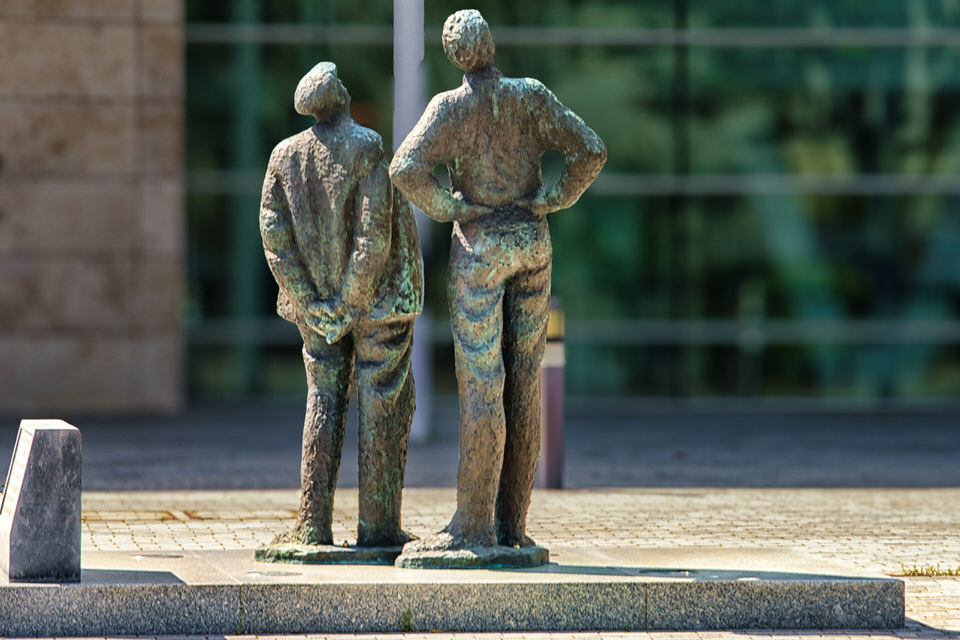
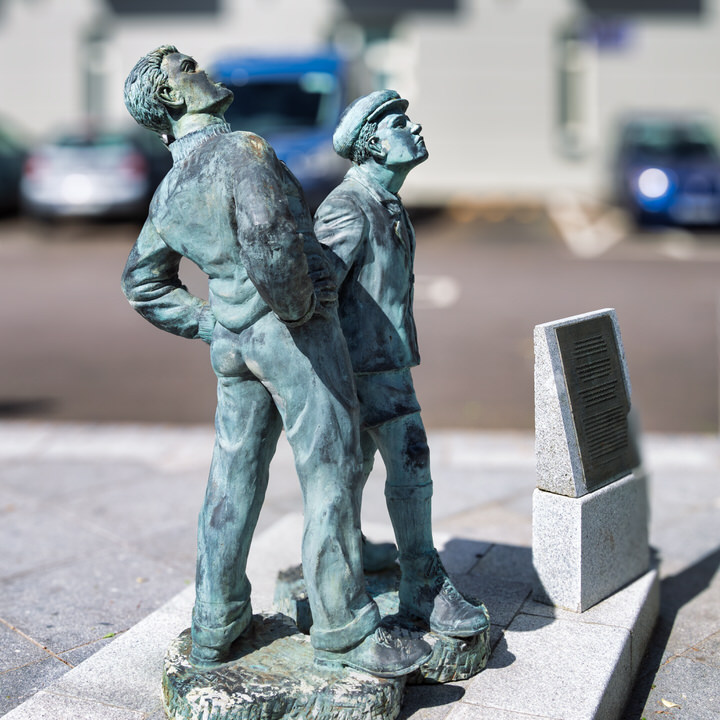 Photographed By William Murphy - Select Image To View Photographs
Cork’s skyline has changed significantly over the decades, but two men have remained steadfastly fixed on the horizon—or at least, on the top of the County Hall. Locally known as "Cha and Miah," Oisín Kelly’s Two Working Men is more than just a bronze monument; it is a symbol of Cork’s wit, its architectural history, and a cheeky artistic rivalry.
The Vision of Oisín Kelly
The sculpture was the brainchild of Oisín Kelly, one of Ireland’s most celebrated 20th-century artists, perhaps best known for the haunting Children of Lir in Dublin’s Garden of Remembrance.
Commissioned in the mid-1960s, the piece was originally intended for the capital. It was slated to stand outside Liberty Hall, the headquarters of SIPTU and then-tallest building in Ireland. However, the union ultimately rejected the installation, citing concerns that the statues would create a "traffic hazard" for pedestrians and vehicles on the busy Quays.
In a twist of fate, by the time the statues were ready for unveiling in 1969, Cork County Hall had surpassed Liberty Hall to become the tallest building in the country. The "Working Men" moved south, finding a permanent home where they could admire a truly record-breaking view.
Why "Cha and Miah"?
While officially titled Two Working Men, the statues were quickly christened by the public. The nicknames "Cha and Miah" (short for Charles and Jeremiah) were borrowed from two iconic "everyman" characters featured in the satirical RTÉ show Hall’s Pictorial Weekly. Played by Frank Kelly and Joe Lynch, the characters were quintessential Cork observers, making the name a perfect fit for two bronze figures perpetually "watching the work."
The Parody: Brendan Byrne’s "Junior" Tribute
If you head across the Carrigrohan Road toward The Kingsley Hotel, you will encounter a masterful piece of visual irony. Sculptor Brendan Byrne created a parody installation that serves as a witty, youthful rebuttal to Kelly’s original.
While Kelly’s men stand tall, admiring the 1960s concrete giant of the County Hall, Byrne’s version features two young boys—effectively junior versions of the famous duo. Positioned near the site of the old Lee Baths, these two lads are mimicking the poses of their elder counterparts, but their gaze is fixed firmly on the modern facade of The Kingsley Hotel.
The Contrast: Where Kelly’s figures are smooth, solid, and monumental, Byrne’s boys possess the rugged, industrial texture characteristic of his work.
The Narrative: By portraying the characters as children, Byrne suggests a passing of the torch (or perhaps a passing of the "spectating"). It transforms the "working man" theme into one of youthful aspiration or mockery, as the boys "watch the work" of a newer generation of Cork architecture.
Byrne’s choice of location is no accident. He placed his 'Junior' workers on the hallowed ground of the old Lee Baths. Operated by the City Corporation from 1934 until its closure in 1986, the baths were the heart of Cork’s summer. By placing his two boys here—looking up at the luxury hotel that replaced their parents' playground—Byrne creates a poignant layer of social history. They aren't just looking at a building; they are standing on the ruins of a lost social era.
About the Artist: Brendan Byrne
Brendan Byrne is a contemporary Irish sculptor known for his ability to breathe life into heavy industrial materials. His work often features:
Materiality: A preference for welded steel and found objects, giving his figures a mechanical, skeletal quality that contrasts with traditional bronze casting.
Social Commentary: Byrne frequently explores themes of labour, childhood, and the Irish identity, often injecting a sense of playfulness or "the underdog" into his pieces.
Fact Check & Historical Context
The Height Race: Cork County Hall (67 metres) held the title of Ireland's tallest building from 1968 until the Elysian (also in Cork) surpassed it in 2008.
Restoration: During the 2003–2005 renovation of the County Hall, the original "Cha and Miah" were temporarily moved to the sculptor's son's garden for safekeeping before being reinstated in 2006.
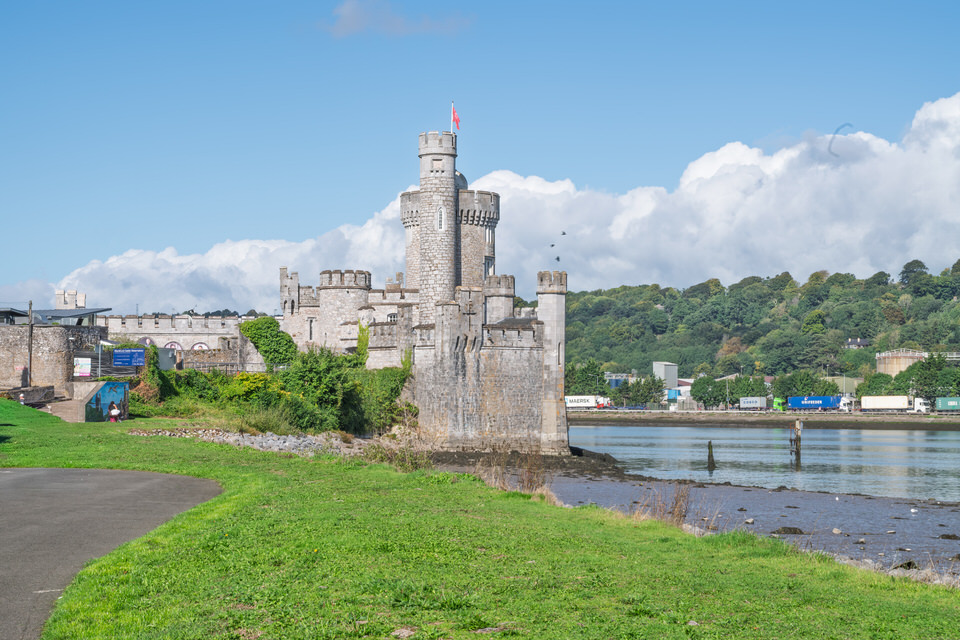 Blackrock Castle In Cork - Select Image To View Photographs
VIEW HI-RES PHOTOGRAPHS
CORK CITY AND COUNTY
ABOUT CHA AND MIAH
GLOBAL INDEX OF PHOTO GALLERIES
CORK CITY AND COUNTY
THE URBAN CARTOGRAPHER
EXCELLENT PICTURE THIS 2017
Two Men And Two Boys In Cork City - Presented By The The Urban Cartographer
Who Is Building An Experience Which Is Getting Better Day By Day