The Táin Wall Has Been Demolished - Presented By The Urban Cartographer
LET MISTER SCREEN ASSIST YOU
GLOBAL INDEXThe Urban Cartographer
TECHNICAL STUFFDiscover the story of Desmond Kinney's lost masterpiece, the "Táin Wall" mural at Dublin's Setanta Centre. We explore the history of this stunning mosaic depicting the Cattle Raid of Cooley, the artist behind it, and the controversial decision by developers to remove it in the name of modernization.
EXCELLENT PICTURE THIS 2017
The Táin Wall Has Been Demolished - Presented By The Urban Cartographer
The Táin Wall Has Been Demolished
Author: Urban Cartographer
|
02. Jan 2026
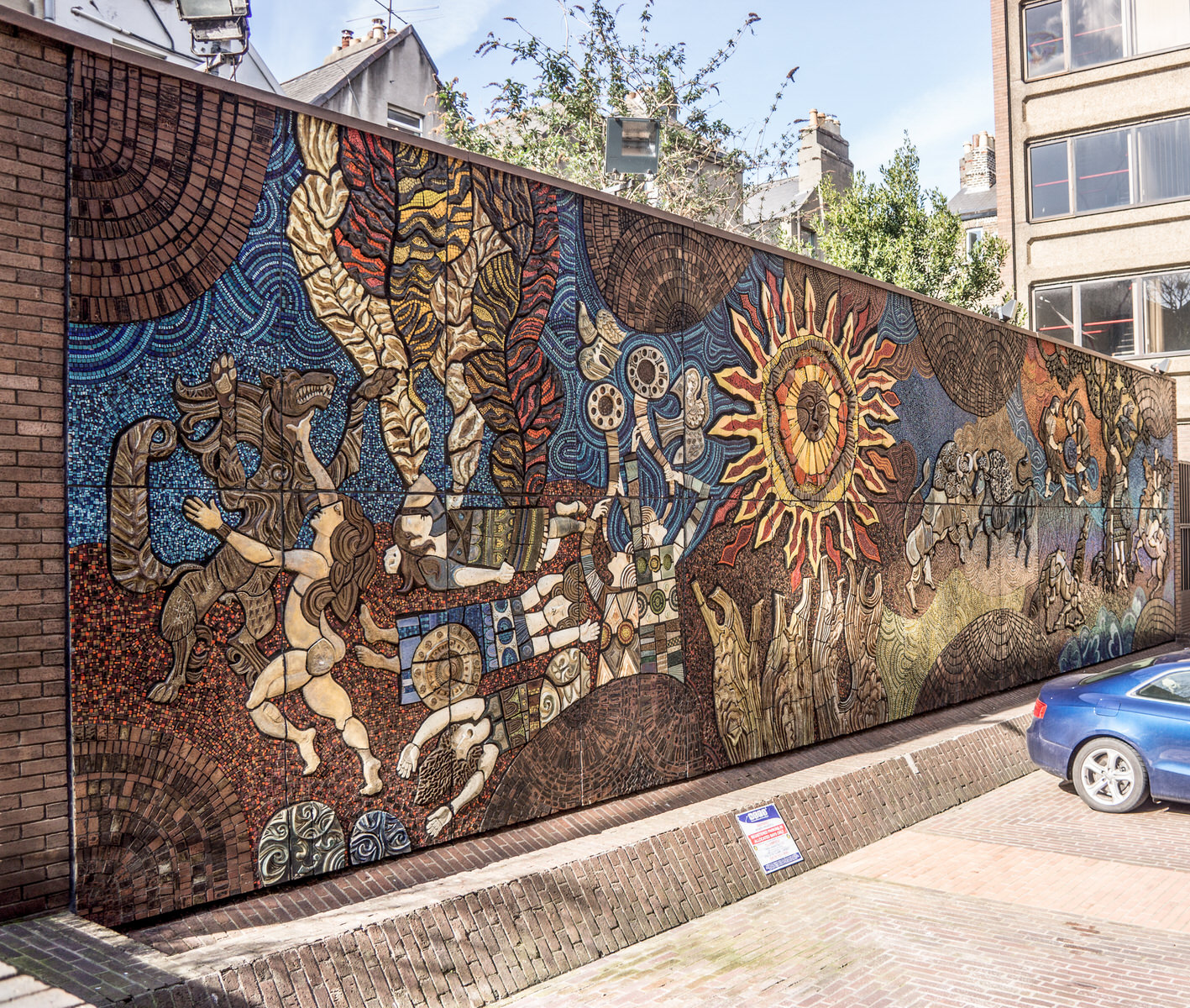
If you walked down Nassau Street between the 1970s and late 2010s, you might have missed it. Tucked away in a quiet setback near the Setanta Centre, often obscured by parked cars and shadows, lay one of Dublin’s most vibrant hidden gems: Desmond Kinney’s "Táin Wall." A reader recently discovered some of our photos of the mural taken between 2007 and 2016, noting they believed it was demolished shortly after. While it actually survived a few years longer than that—standing until around 2019—the sentiment remains effectively true. This masterpiece of public art has been swept away by the tide of redevelopment, leaving a mosaic-shaped hole in the city’s cultural fabric. Here is the story of the art, the artist, and the decision to remove it. The Art: The Cattle Raid of Cooley in Glass Commissioned in 1974 for the newly built Setanta Centre, the mural was a massive mosaic depicting the Táin Bó Cúailnge (The Cattle Raid of Cooley), the central epic of the Ulster Cycle of Irish mythology. The mural was a riot of cobalt blues, fiery reds, and earthy greens, crafted from thousands of hand-cut glass tesserae and ceramic tiles. It told the legendary story of Queen Medb of Connacht’s invasion of Ulster to steal the Brown Bull of Cooley, and the teenage hero Cú Chulainn’s single-handed defense of the province. Kinney’s style was distinct—semi-abstract yet deeply narrative. He didn’t just illustrate the myth; he textured it. As seen in the photographs, the mural featured dynamic scenes: The Bulls: The two great bulls, the Brown Bull of Cooley (Donn Cuailnge) and the White-Horned Bull (Finnbhennach), are depicted locking horns in a swirl of earthen colors. The Sun and Nature: A massive, radiant sun motif dominates the center, surrounded by abstract representations of Irish topography. The Figures: Warriors and horses are rendered with a fluidity that makes them seem to move across the wall. The rough, undulating surface of the mosaic caught the varying Dublin light, making the figures seem alive to anyone who happened to use that specific shortcut or parking space. The Artist: Desmond Kinney (1934–2014) Desmond Kinney was a Belfast-born artist whose contribution to Irish public art is arguably undervalued. A graduate of the Belfast College of Art, he was a master of the mural form. Kinney was part of a generation of artists who believed art belonged in the public square, not just in galleries. He had a unique ability to blend modern architectural styles with ancient Irish themes. Aside from the Táin Wall, he was famous for the "Sweeney Astray" mural (based on Seamus Heaney’s translation of Buile Suibhne) which was located at the Irish Life Centre on Abbey Street. Tragically, Kinney’s work has suffered greatly in recent years. The "Sweeney Astray" mural was controversially removed and largely destroyed in 2013, making the removal of the Táin Wall a "second strike" against his legacy in Dublin. The Removal: Who and Why? You recalled that the wall might have been demolished around 2012. It actually clung to life a bit longer, but its fate was sealed by the same forces that remove much of Dublin's older architecture: property development. The "Who": The Setanta Centre was purchased by Larry Goodman’s Paragon Group in 2003. The decision to remove the wall came from the developers as part of a larger plan to redevelop the site. However, Dublin City Council (DCC) also played a role. In 2018, DCC planners raised "serious concerns" regarding the mural, requiring the developers to submit a detailed method statement for its safe removal and storage. The "Why": The developers argued that the 1970s Setanta Centre structure had reached the "end of its useful life". The mural was attached to a boundary wall that was slated for demolition to open up the space, modernize the building's footprint, and create a new office block (now known as "The Setanta"). The Current Status: Unlike the "Sweeney Astray" mural, which was destroyed, the Táin Wall was reportedly taken down panel by panel and placed in storage around 2019/2020. However, there is currently no public timeline for its return. It sits in crates, a displaced epic waiting for a new wall. Why It Matters The removal of the Táin Wall is symptomatic of a Dublin that often struggles to value its "recent" heritage. Because the Setanta Centre was a polarizing 1970s building, the art attached to it was treated as collateral damage. Kinney’s work was a bridge between the ancient Celtic past and the modern Irish city. By removing it, we haven't just lost a pretty wall; we’ve lost a piece of public storytelling that belonged to everyone.Select Image To Visit The Photo Gallery: The Táin Wall Has Been Demolished
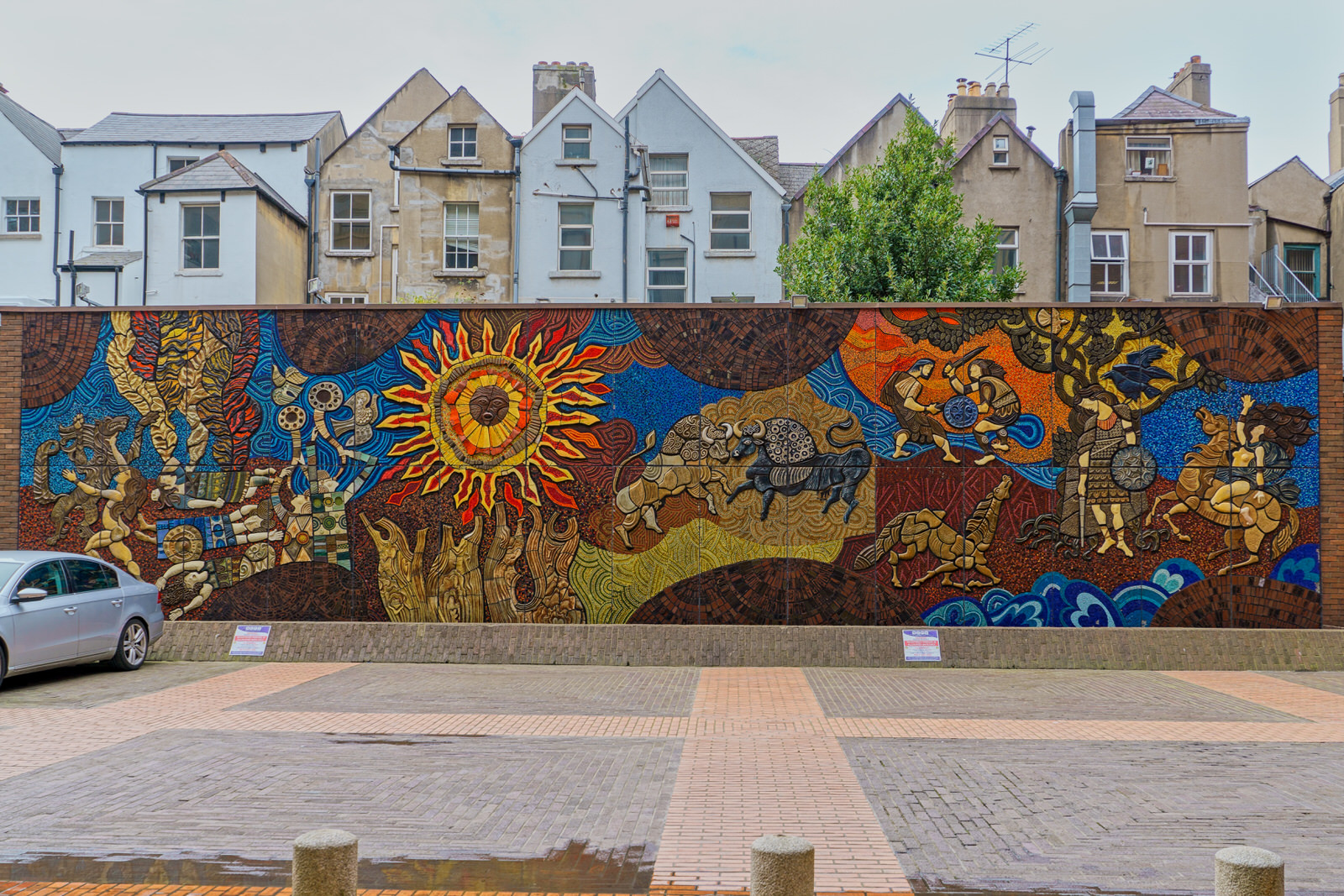
The Lost Epic: Remembering Desmond Kinney’s "Táin Wall"
GALWAY CITY
CORK CITY AND COUNTY
GLOBAL MENU
DUBLIN SOUTHSIDE
DUBLIN NORTHSIDE
URBAN CARTOGRAPHER
EXCELLENT PICTURE THIS 2017
The Táin Wall Has Been Demolished - Presented By The Urban Cartographer
Who Is Building An Experience Which Is Getting Better Day By Day