The Pigeon House At 30 Manor Street - Presented By The The Urban Cartographer And William Murphy
LET MISTER SCREEN ASSIST YOU
GLOBAL INDEXThe Urban Cartographer
TECHNICAL STUFFExplore the bizarre local history of Stoneybatter's infamous Pigeon House at 30 Manor Street, the Dublin City Council legal battle, and the street art it inspired.
THE FULL STORY
The Pigeon House At 30 Manor Street - Presented By The The Urban Cartographer And William Murphy
The Pigeon House At 30 Manor Street
Author: The Urban Cartographer And William Murphy
|
01. Jun 2026
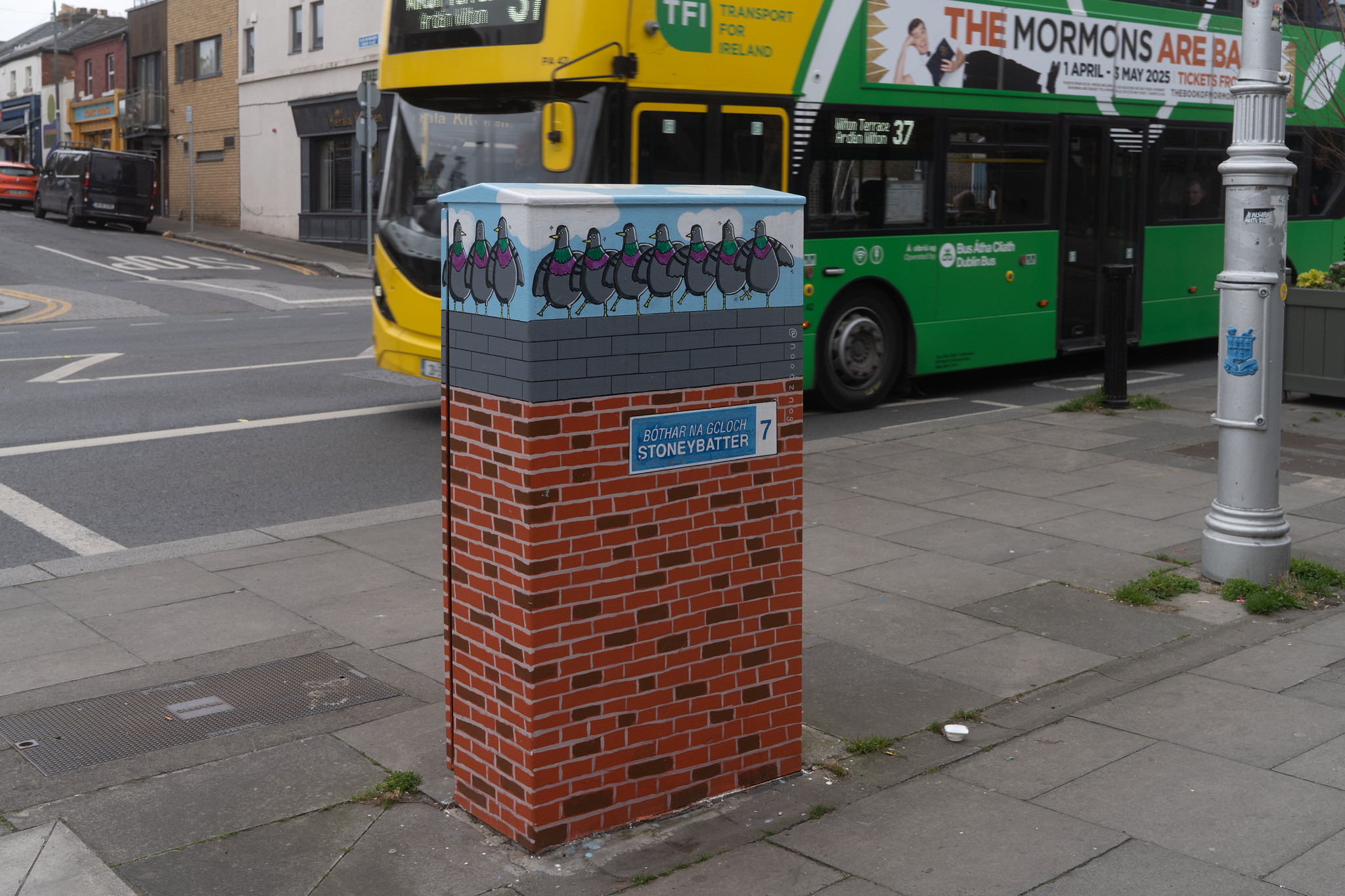
Pigeons About to Depart the Pigeon House at 30 Manor Street
Photographed 29-03-2025 - Camera: Sony α7R IV
Artwork - Paint-A-Box Street Art (Dublin Canvas Project) Street Art as Commentary: The Manor Street Painting Near 30 Manor Street in Stoneybatter, Dublin 7, an interactive utility box features a vivid piece of public art: a flock of pigeons caught mid-flight as they depart an urban rooftop. This piece belongs to Dublin Canvas, a community-led initiative that invites artists to transform ordinary traffic signal boxes into public canvases. While the project is broadly designed to bring colour to Dublin's utility infrastructure, the placement of this specific artwork is intensely local. Positioned just steps from a property notorious for its avian residents, the image of pigeons departing a rooftop offers a subtle, poetic commentary. It mirrors a long-running neighbourhood saga—capturing either a community's quiet wish for the flock to move on, or serving as an artistic nod to the most famous fauna in Stoneybatter. The "Pigeon House": A Local History The property at 30 Manor Street—colloquially dubbed "The Pigeon House" or the "Rat House" by residents—stands as a flashpoint for urban wildlife friction in Dublin 7. Although the property was ultimately sold in March 2024, its history as an accidental sanctuary predates the sale by nearly a decade. For several years, an elderly resident consistently scattered large quantities of birdseed in the front garden and fed local stray cats multiple times a day. This predictable food source triggered a massive ecological imbalance in the immediate area. A sprawling, permanent flock of feral pigeons hijacked the property, while uneaten seed on the ground routinely attracted rats. Community forums like Reddit and articles in the Dublin Inquirer trace the neighbourhood's documented exhaustion back to at least November 2017, with neighbours frequently complaining of foul odours, property damage, and hostile interactions when confronting the resident. Dublin City Council’s Legal Action As local complaints escalated, Dublin City Council intervened. After warning signs reading "Do Not Feed Pigeons Or Other Birds By Order" failed to deter the behaviour, the local authority took the rare step of launching legal proceedings in November 2019. The council initiated a civil prosecution against the resident, William Garnermann, under the Local Government (Sanitary Services) Acts, alleging that his compulsive feeding created a severe public nuisance and actively incentivised a feral flock to occupy a residential zone. "Pigeons of Discontent": The Documentary This localized neighbourhood dispute became the focus of the short documentary Pigeons of Discontent, directed by the late Dublin filmmaker Paddy Cahill. Inspired by Cónal Thomas’s investigative reporting for the Dublin Inquirer, the eight-minute film captures the sharply contrasting perspectives of the Stoneybatter community. Despite its ominous title, the documentary functions less as an expose and more as a nuanced, affectionate look at urban wildlife—described by critics as a "celebration of the wee flockers." Backed by a soundtrack from local musical project Mary and the Pigeons, the film neatly juxtaposes the genuine material frustrations of immediate neighbours against the soft, eccentric charm that urban birds hold for other city dwellers. The Science of Feral Pigeons and Public Health Feral pigeons (Columba livia) are highly successful urban exploiters. Cities like Dublin inadvertently mimic their ancestral habitats—tall, ledged buildings substitute perfectly for rocky coastal cliffs, while open-air dining, food waste, and human feeding provide an endless supply of calories. Lacking natural apex predators like peregrine falcons in high densities, urban pigeon populations can breed year-round. Because they congregate in high numbers, they are frequently branded as "rats with wings." Microbiological research confirms that feral pigeons can harbour over 60 human-pathogenic organisms, including various viruses, bacteria, and fungi. The World Health Organisation (WHO) has specifically noted that bird-associated fungal pathogens represent an under-reported health hazard. Pathogens vs. Transmission Risk Here are the primary diseases and their paths of exposure: Secondary Structural & Allergy Risks: Beyond direct infections, pigeon feathers and dander are potent allergens that can trigger hypersensitivity pneumonitis (commonly known as bird fancier's lung). Furthermore, the highly acidic nature of their droppings contains uric acid, which severely erodes historical stonework, corrodes metal roofing, blocks guttering systems, and turns wet public footpaths into severe slipping hazards. Synthesising the Findings: Was 30 Manor Street a Public Health Crisis? When looking closely at the case of "The Pigeon House," we have to ask: did it actually pose a genuine public health threat to Dublin? From an epidemiological standpoint, there is no evidence that the congregation at 30 Manor Street caused a localized outbreak of infectious disease. The risk remained localized rather than systemic. The primary impact of the property was an attack on local amenity and sanitation. The true hazard was not a viral outbreak, but rather the secondary vector issue—namely, ground-scattered birdseed drawing rats directly into residential properties—coupled with the undeniable nuisance of structural damage, noise, and accumulated faeces. Ultimately, 30 Manor Street stands as a textbook example of how unchecked human intervention can disrupt urban ecosystems, creating a localized environmental nuisance that tested the boundaries of community patience and municipal law.
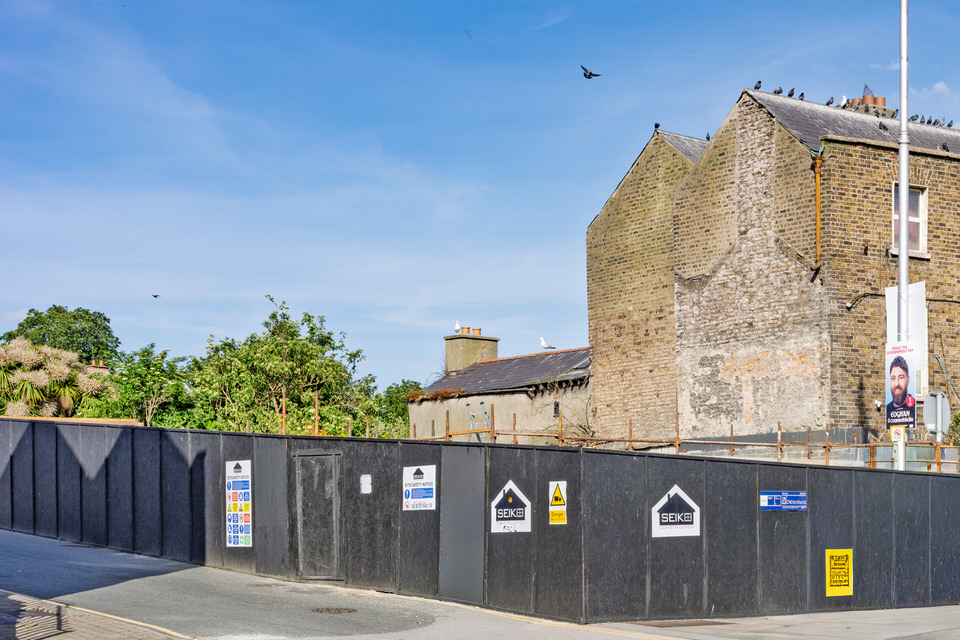 The Same Location A Year Later - Select Image To View Photographs
THE FERAL PIGEONS
I USED A NEW SONY A7RIV
LET MISTER SCREEN DIRECT YOU
GLOBAL INDEX OF PHOTO GALLERIES
DUBLIN NORTHSIDE
THE URBAN CARTOGRAPHER
THE FULL STORY
The Pigeon House At 30 Manor Street - Presented By The The Urban Cartographer And William Murphy
Who Is Building An Experience Which Is Getting Better Day By Day