Palace Street Is The Shortest Street - Presented By The The Urban Cartographer
LET MISTER SCREEN ASSIST YOU
GLOBAL INDEXThe Urban Cartographer
TECHNICAL STUFFDiscover Palace Street, famously known as the shortest street in Ireland. Located in the heart of Dublin, this historic thoroughfare serves as the ceremonial entrance to Dublin Castle and features the iconic "Robocop" building and the historic home of Ireland's oldest charity,
EXCELLENT PICTURE THIS 2017
Palace Street Is The Shortest Street - Presented By The The Urban Cartographer
Palace Street Is The Shortest Street
Author: The Urban Cartographer
|
09. Mar 2026
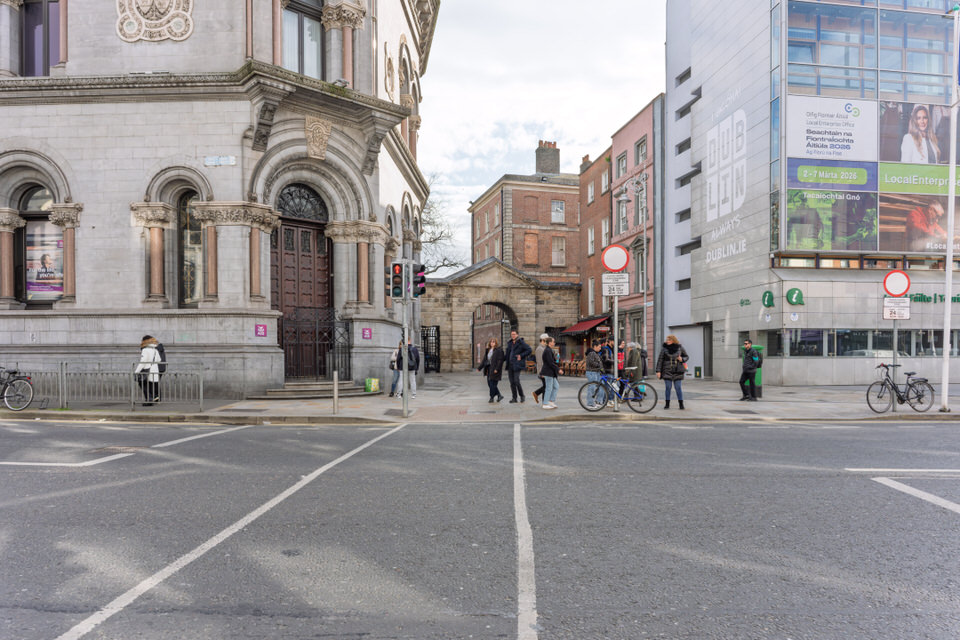
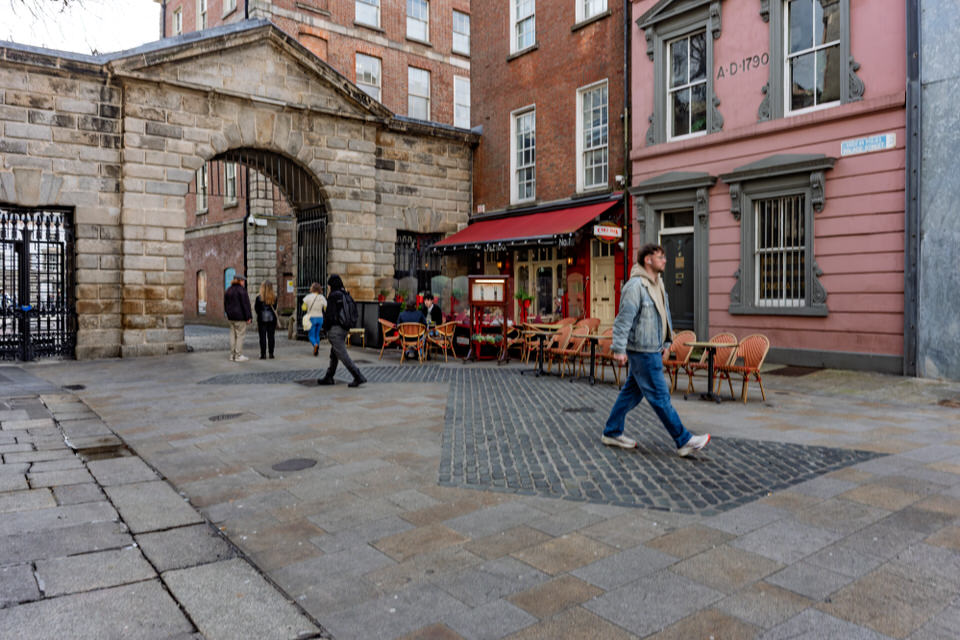 Photographed By William Murphy - Select Image To View Photographs
Tucked away just off the bustling Dame Street, Palace Street is a tiny but titanically significant thoroughfare in Dublin’s historic core. Frequently cited as the shortest street in Ireland, it serves as a grand threshold where the city’s commercial life meets the ancient seat of administrative power.
The Geography of a "Tiny Titan"
While the title is often debated—with contenders like Cross Kevin Street and Dean Street occasionally entering the ring—Palace Street is generally accepted as Dublin's shortest. Measuring roughly 30 metres in length, it is more of a monumental corridor than a traditional street, yet it holds a distinct character that belies its diminutive size.
The Three Pillars: Palace Street’s Buildings
Despite its length, the street is framed by three distinct architectural landmarks, each representing a different chapter of Dublin’s history.
No. 1 Palace Street: The Entrance
This 18th-century structure defines the entrance to the street from Dame Street. Currently housing Chez Max, it is famous for its Parisian-style terrace. This lively outdoor seating makes the "shortest street" feel much deeper and more vibrant than its 30-metre measurement suggests.
No. 2 Palace Street: The Charity (The Jewel)
This is the most historic residence on the street: the former home of The Sick and Indigent Roomkeepers Society.
The Architecture: A fine Georgian house (c. 1770) with a beautiful stone pediment, still bearing the society's name in prominent lettering.
The Emmet Connection: In 1795, the building was purchased by the family of Robert Emmet, the famed Irish republican leader.
The Preservation: A Protected Structure, it was famously saved from demolition during Dublin Corporation’s 20th-century road-widening schemes.
No. 3 Palace Street: The "Robocop" Building
A stark contrast to its neighbours, this modern office replaced a small green space in the early 2000s.
The Design: Designed by MBM Architects, its polished dark granite and glass "visor" earned it the nickname "Robocop" from architectural critics.
The Controversy: Critics have called it "overscaled" and "contextual vandalism," arguing its metallic, soulless aesthetic jars with the historic City Hall next door.
The Irony: It currently houses the National Market Surveillance Office, acting as a modern-day "police force" for consumer goods.
The Gateway to History: Palace Street Gate
The street ends abruptly at the Palace Street Gate, the main ceremonial entrance to Dublin Castle. This gate is a symbolic portal of immense national importance:
History in Iron: The ornate cast-iron gates still bear steel plates added to the back following the 1916 Easter Rising to bolster security.
The 1922 Handover: On 16 January 1922, it was through this very gate that members of the new Irish Provisional Government, including Michael Collins, entered to receive the handover of the Castle from the British Viceroy, marking a pivotal moment in Irish independence.
The View: The view through these gates into the Lower Castle Yard remains one of the most evocative sights in Dublin, framed by the 18th-century architecture of the Treasury Building.
The Legacy of the "Roomkeepers"
The story of the Sick and Indigent Roomkeepers Society (SIRKS) offers a fascinating look into the social fabric of Georgian Dublin. Founded in 1790, they moved to Palace Street in 1855 to be near their meeting place at the Royal Exchange (now City Hall).
Unlike charities that sent the poor to workhouses, SIRKS focused on those who suffered in private—the "roomkeepers" confined to their own lodgings. For 137 years, aid was distributed through a literal hatch in the Palace Street building.
Today, the building is owned by artist and historian Peter Pearson, whose research helped preserve its history. Though the society moved to Fitzwilliam Square in 1992, they remain Dublin’s oldest surviving charity, still helping those through "unforeseen misfortunes."
Geographically, No. 3 Palace Street didn't actually change the physical length of the street, but it fundamentally changed how we perceive its length and the street's overall character.
The "Pocket Park" Era
Before the "Robocop" building was commissioned in 1999 and completed in the early 2000s, the site at No. 3 was a small pocket park.
Visual Length: During this time, Palace Street felt much more "open." Because the park provided a low-level green space, the street didn't feel like a narrow canyon. You could see the side of City Hall more clearly, and the lack of a five-storey wall on that side made the 30-metre stroll feel less confined.
The "Cleared" Site: Historically, the site wasn't always a park. Like much of Dublin's historic core, it had older buildings that were cleared during 20th-century "slum clearance" or road-widening schemes. For several decades, it remained a rare breathing space for workers on Dame Street and visitors to the Castle.
Why It Might Have Seemed "Shorter" Before
Interestingly, the construction of No. 3 might actually make the street feel longer to a pedestrian today.
Enclosure: By building a tall, rigid structure right up to the pavement, architects created a "corridor effect." When you walk down a narrow passage with high walls on both sides, the distance can feel more substantial than walking through an open area.
The Sightline: Before the building existed, your eye would wander into the green space. Now, your vision is funnelled directly toward the Palace Street Gate. This focused perspective emphasizes the street as a distinct, "monumental" route rather than just a gap between buildings.
The Architectural Trade-off
The decision to build No. 3 was part of a "European modernist" vision to infill gaps in the city's "urban fabric." While critics missed the park, the planners argued that a street isn't truly a street without buildings on both sides to define its edges.
So, while the physical measurement of 30 metres has remained constant since the current gate was established, the transition from an open park to a "glass and granite sentry" has made Palace Street feel much more like a formal, enclosed urban space.
GALWAY CITY
CORK CITY AND COUNTY
GLOBAL MENU
DUBLIN SOUTHSIDE
DUBLIN NORTHSIDE
URBAN CARTOGRAPHER
EXCELLENT PICTURE THIS 2017
Palace Street Is The Shortest Street - Presented By The The Urban Cartographer
Who Is Building An Experience Which Is Getting Better Day By Day