The Seagull Who Would Be Master - Presented By The The Urban Cartographer
LET MISTER SCREEN ASSIST YOU
GLOBAL INDEXThe Urban Cartographer
TECHNICAL STUFFFor decades, the stretch of waterfront between Dún Laoghaire’s bustling East Pier and the old Victorian baths felt like a space suspended in time. While the pier remained a beloved ritual for walkers, the adjacent shoreline was defined by peeling paint, crumbling masonry, and rusted ironwork—a melancholic reminder of a bygone Edwardian and Victorian seaside heyday.
DUBLIN SOUTHSIDE
The Seagull Who Would Be Master - Presented By The The Urban Cartographer
The Seagull Who Would Be Master
Author: The Urban Cartographer
|
22. May 2026
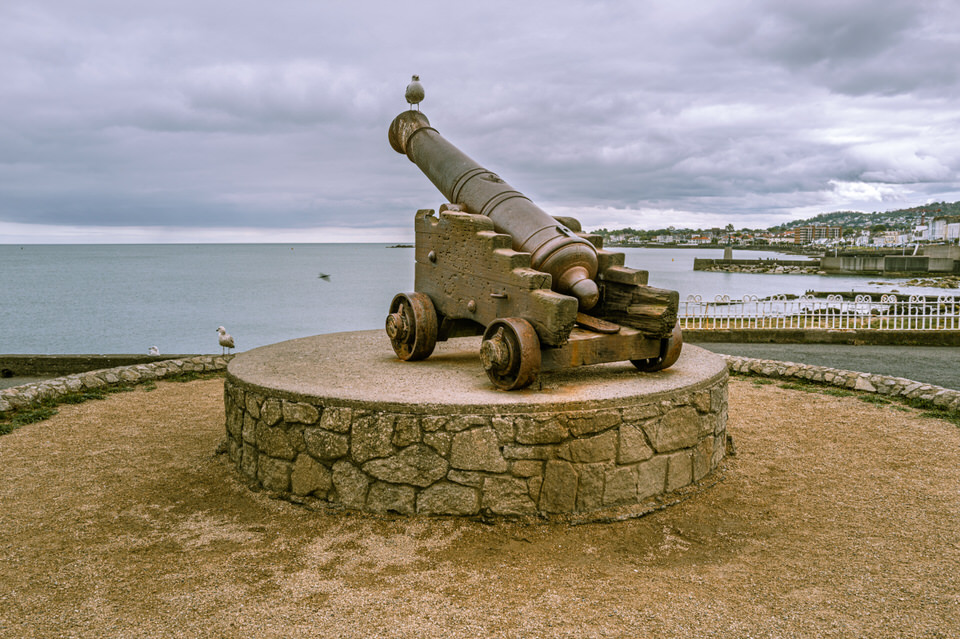
When I visited Dún Laoghaire today, the seagulls were especially plentiful. Folklore suggests that when gulls come ashore in large numbers, it is a sure sign that bad weather is on its way. There is genuine science behind this old maritime tale: gulls possess a keen sensitivity to barometric pressure. When they sense a sudden drop in atmospheric pressure indicating a coastal storm or heavy winds at sea, they head landward to seek calmer, more sheltered roosts. On this afternoon, however, one gull in particular stole the show. Perched proudly atop the old Crimean War cannon, he had absolutely no intention of moving, making himself the central feature of all my photographs. A Spoils-of-War Landmark Located at the East Pier gardens, the cannon is a familiar local landmark. It sits as a striking historical contrast against the scenic backdrop of Scotsman’s Bay—today acting as a climbing frame for children firing imaginary salvos at pirate ships. Yet, this piece of heavy ordnance is actually a genuine trophy from the Crimean War (1853–1856). According to the Kingstown Town Commissioners' minutes from 17 July 1857, the sum of £16 was raised from the township rates to purchase one "Russian gun" from the Secretary of State for War, Lord Panmure. Upon its arrival, the 24-pounder gun was mounted on a garrison carriage constructed at the Royal Arsenal in Woolwich, London. The gun has moved around the seafront over the decades:
1857: Originally displayed on a stone platform along Queen’s Road, close to the historic Dún Laoghaire Baths site.
1934: Removed and placed into storage for forty years when the coastal road was widened.
1974: Returned to public display at its current home overlooking the harbour approach. The Romanov Crest This Russian gun was one of nearly 3,000 pieces of artillery captured by allied forces during the conflict. Most were seized following the bloody, year-long Siege of Sevastopol. Historians suspect the British government intentionally exaggerated the sheer volume of captured weapons to justify to a disgruntled public why the costly siege took so long to win. Following the Treaty of Paris, which concluded the war, it was agreed that the victorious nations would distribute these captured cannons as victory trophies. In Ireland, more than twenty towns successfully applied for and received a gun. If you look closely at the Dún Laoghaire barrel today, you can still clearly see the imperial double-headed eagle and crown of the Romanov family crest, cast into the iron long before the weapon was captured. The Chattering Starlings of the People's Park Just a few yards away from the cannon lies the People's Park, a beautifully restored formal Victorian park opened in 1890. Here, the air was filled with the magnificent chattering of thousands of starlings—cheeky, charming, and wonderfully noisy. The People’s Park is a famous local hotspot for these birds, particularly during the colder months and early spring. The park's mature trees, manicured Victorian shrubbery, and proximity to the sheltered coastal promenade provide the perfect urban microclimate. Starlings gather here in massive numbers because the dense canopy offers safety from predators and shelter from the harsh Irish sea winds before they take to the sky for their spectacular evening roosting displays, known as murmurations.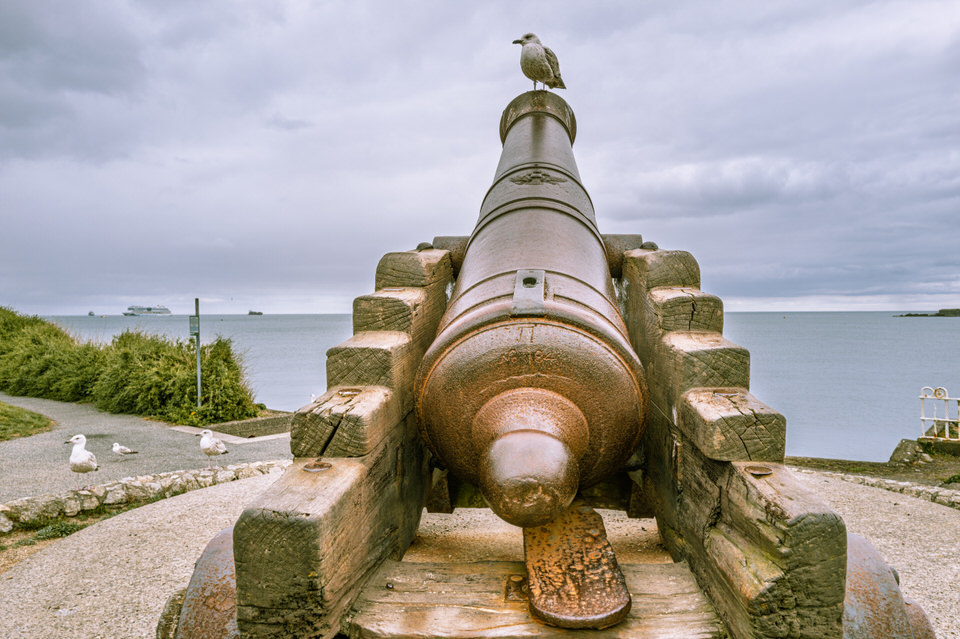 Old Cannon - Select Image To View Photographs
Dún Laoghaire — 20 April 2026
Old Cannon - Select Image To View Photographs
VIEW HI-RES PHOTOGRAPHS
LEICA Q3
ABOUT THIS OLD CANNON
GLOBAL INDEX OF PHOTO GALLERIES
PARKS AND GARDENS
THE URBAN CARTOGRAPHER
DUBLIN SOUTHSIDE
The Seagull Who Would Be Master - Presented By The The Urban Cartographer
Who Is Building An Experience Which Is Getting Better Day By Day