The Old Cavendish Fountain - Presented By The Urban Cartographer
LET MISTER SCREEN ASSIST YOU
GLOBAL INDEXThe Urban Cartographer
TECHNICAL STUFFA photographer’s journal on the Cavendish Row fountain outside Dublin's Gate Theatre. Often mistaken for a simple horse trough, this 1790s landmark features a hidden pedestrian fount on its rear. Discover why this dry relic has recently filled with water for the first time in 15 years.
EXCELLENT PICTURE THIS 2017
The Old Cavendish Fountain - Presented By The Urban Cartographer
The Old Cavendish Fountain
Author: Urban Cartographer
|
10. Jan 2026
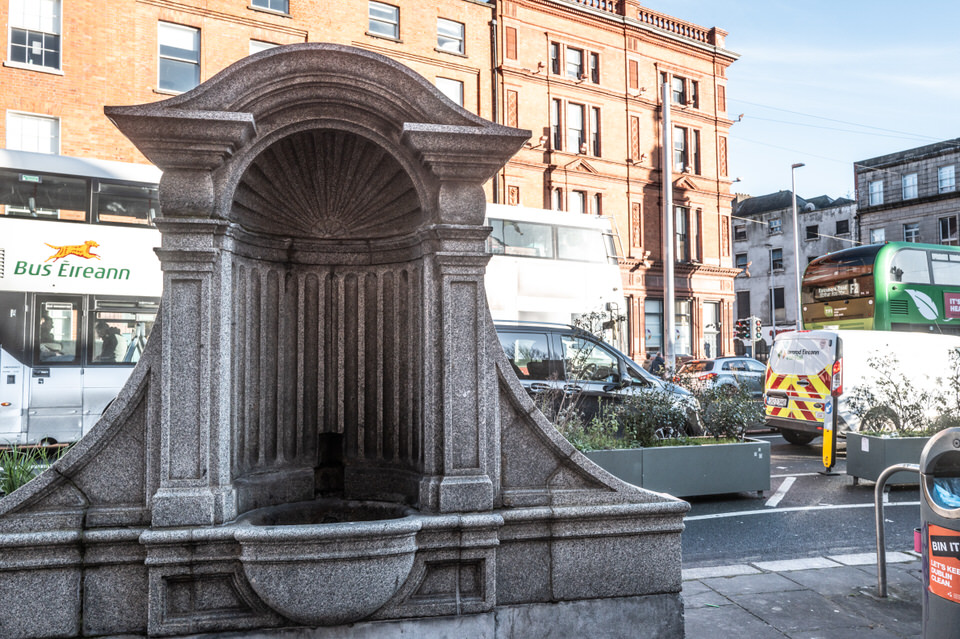
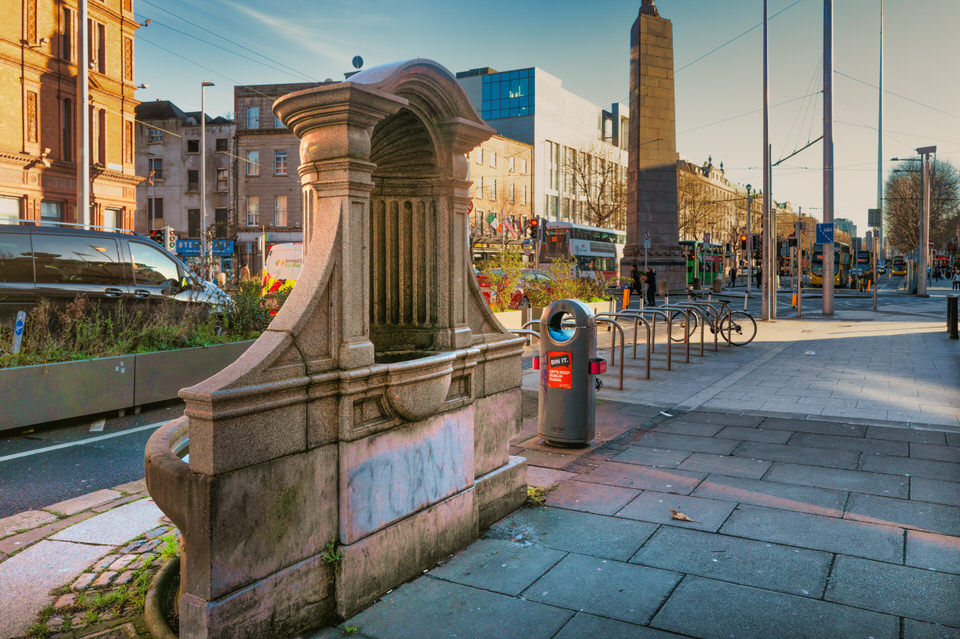
Photographed By William Murphy I have photographed the granite structure nar the Gate Theatre on Cavendish Row a number of times over the last fifteen years. For all that time, it has stood as a silent, dry relic—a piece of street furniture I had long catalogued as a simple, single-sided horse trough. However, a recent visit revealed a startling change: for the first time in over a decade, there was water in the bowl at the street-facing side. This unexpected sight prompted a closer inspection, leading to a discovery that I had missed for years. A Hidden Feature For a long time, I had believed the pavement-facing side of the structure to be a featureless back that did not need to be photographed. Standing there today, however, I realised that the rear conceals a smaller, higher bowl set into a fluted niche. The logic of the design suddenly became clear. The large, curved basin facing the cobbled roadway was for horses—likely carriage horses waiting for patrons of the Assembly Rooms or the Rotunda Hospital. The smaller fount at the rear, separated by the granite wall, was strictly for pedestrians. In the bustle of Georgian Dublin, this dual-purpose design would have allowed chairmen, coach drivers, and passersby to drink safely on the pavement while animals drank from the road. A Georgian Survivor While the structure sits comfortably amidst the Victorian heritage of Dublin 1, research suggests it is actually older. It is likely a late Georgian survivor (c. 1780–1790), installed during the development of the Rotunda and Parnell Square as a social hub. Its survival on such an evolving street is a testament to the durability of the granite construction. The Illusion of Life Seeing the trough filled to the brim was atmospheric, but I suspect the "restoration" is accidental. It is highly unlikely that the fountain has been reconnected to the mains. Instead, it is probable that the antique drainage hole at the base of the trough has become blocked. After days of Irish rain, the basin has simply acted as a cistern. Regardless of the source, seeing the water shimmer in the stone offers a rare glimpse into the street life of Old Dublin. For a brief moment, the reflection of the sky in the water allows us to see the fountain exactly as a carriage driver would have in the 18th century. The Mystery of "72..." While photographing the rear niche, I noticed something else—faint writing in marker or paint (highlighted in one of my photographs), seemingly beginning with the number "72". At first glance, it looked like graffiti, but the style was too functional. This number tells a modern story. It is almost certainly a construction catalog code left over from the Luas Cross City works (2013–2017). When the new tram lines were laid just inches from this kerb, heritage items were often tagged, crated, and stored to protect them from heavy machinery. This simple "72..." is a scar of survival. It confirms that this 1790s structure didn't just survive the revolution and the Rising; it was lifted, catalogued, and returned to its rightful place during the upheaval of the 21st century.
Select Image To Visit The Photo Gallery: The Old Cavendish Fountain
GALWAY CITY
CORK CITY AND COUNTY
GLOBAL MENU
DUBLIN SOUTHSIDE
DUBLIN NORTHSIDE
URBAN CARTOGRAPHER
EXCELLENT PICTURE THIS 2017
The Old Cavendish Fountain - Presented By The Urban Cartographer
Who Is Building An Experience Which Is Getting Better Day By Day