Belfast Grand Central - Presented By The Urban Cartographer
LET MISTER SCREEN ASSIST YOU
GLOBAL INDEXThe Urban Cartographer
TECHNICAL STUFFThe All-Island Strategic Rail Review outlines a transformative future for rail in Ireland, with Belfast Grand Central Station at its core. From reopening the Antrim-Lisburn line to restoring rail to Omagh and Armagh, these plans aim to double passenger capacity and connect 700,000 more people to the network by 2050.
EXCELLENT PICTURE THIS 2017
Belfast Grand Central - Presented By The Urban Cartographer
Belfast Grand Central
Author: Urban Cartographer
|
06. Feb 2026
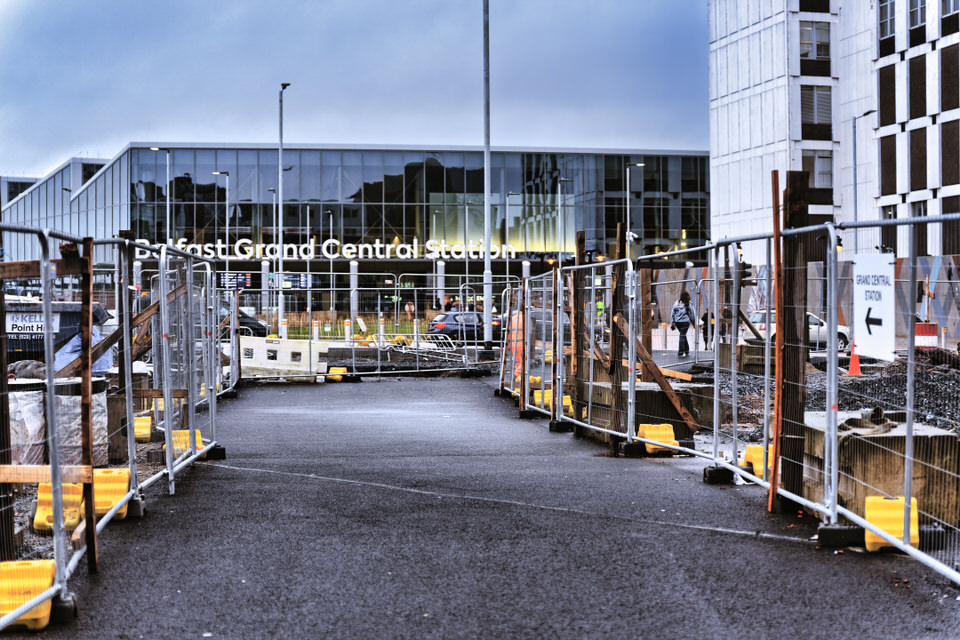
Photographed By William Murphy - Select Image To View Photographs
Select Image To Visit The Photo Gallery: Belfast Grand Central
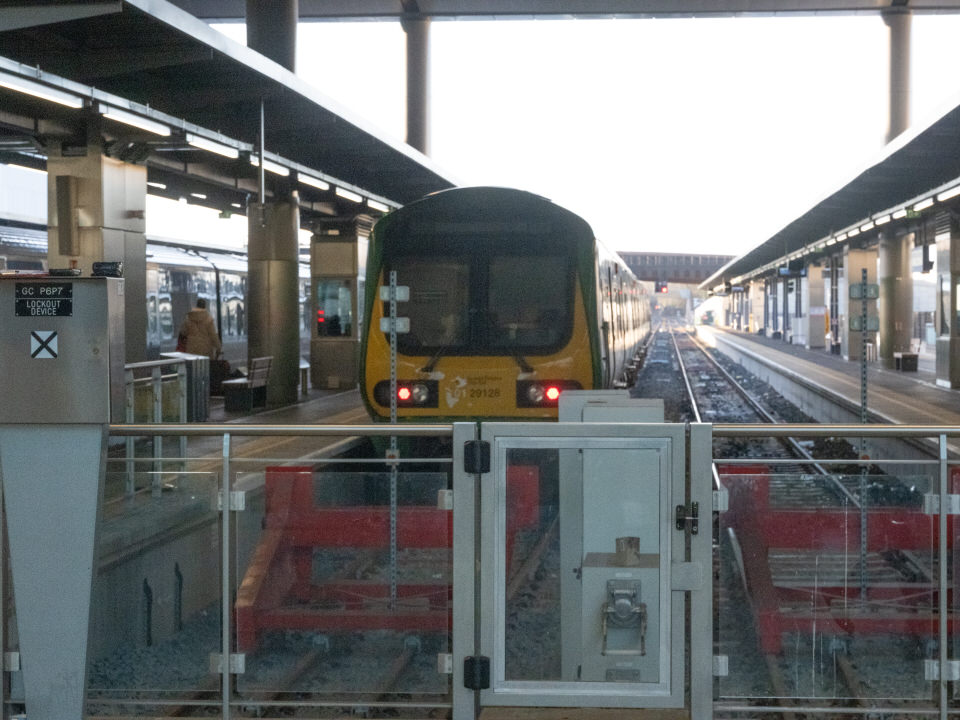
Belfast Grand Central Station (GCS) represents the largest infrastructure project in Northern Ireland’s recent history. While hailed by the Northern Ireland Executive and Translink as a "world-class" gateway, its scale and cost have sparked a heated debate over whether it is a visionary leap forward or a "white elephant"—an expensive asset whose maintenance costs exceed its practical utility.
The Scale and the "White Elephant" Argument
The station is undeniably massive. With 26 bus stands and 8 railway platforms, it is the largest integrated transport hub on the island of Ireland, designed to handle up to 20 million passenger journeys annually.
The "white elephant" label stems from several critical perspectives:
Capacity vs. Reality: Critics argue the station is "over-specified" for a city of Belfast’s size. While the hub can handle 20 million people, the current rail network in the Six Counties remains limited, with many rural areas (particularly west of the Bann) suffering from "transport poverty" and a lack of rail connectivity entirely.
The "Terminus" Problem: Because GCS is a terminus station, through-trains (such as those from Derry~Londonderry to Bangor) now require a change of service. This has added friction to some commutes, leading to claims that the station prioritises Belfast-centric "grandeur" over regional efficiency.
Opportunity Cost: There is a persistent feeling among locals that the £340 million+ budget could have been better spent reopening defunct lines (like the Armagh or Enniskillen routes) or upgrading the aging infrastructure on the Derry line, rather than building a palatial hub in the capital.
Public Transport Requirements: Belfast and Beyond
Within the context of the whole island, the station is a strategic pivot. It serves as the primary northern terminus for the Enterprise service to Dublin, which has recently moved to an hourly frequency. This reinforces the "Dublin-Belfast Economic Corridor," making the station vital for cross-border trade and tourism.
However, within Northern Ireland, the station highlights a stark divide. While it offers a "seamless" transition between bus and rail for those in the Greater Belfast area, it does little to address the car dependency of the West. Supporters argue that you cannot expand the network without first building a hub capable of managing the increased volume—essentially a "build it and they will come" philosophy for future rail expansion.
The Immediate Area: Weaver’s Cross
The station is located on an 8-hectare brownfield site off Great Victoria Street, replacing the old Europa Buscentre and Great Victoria Street Station.
Why this location?
Historical Continuity: The site was once the Grosvenor Road Goods Yard. Using this land allowed Translink to build adjacent to existing tracks while maintaining central city access.
Regeneration (Weaver’s Cross): The station is the "anchor" for a new 20-acre neighborhood called Weaver’s Cross. The goal is to transform a historically neglected industrial area into a "Station Quarter" featuring:
100,000 m² of mixed-use space (offices, residential, and retail).
Saltwater Square: A new public plaza intended to bridge the city centre with the Sandy Row and Grosvenor Road communities.
Socio-Economic Context
The area sits at a sensitive "interface" between the loyalist Sandy Row and the nationalist Grosvenor Road neighbourhoods. By placing the hub here, the government hopes to stimulate "transport-led regeneration," bringing jobs and footfall to areas that have faced significant economic hardship since the Troubles. However, some locals fear "gentrification" and wonder if the high-end retail in the station (like BrewDog and M&S) truly serves the needs of the immediate working-class residents.
The Belfast Grand Central Station (GCS) is not merely a replacement for the old Europa Buscentre; it is the physical foundation for the All-Island Strategic Rail Review (AISRR). For the station to shed its "white elephant" reputation, the ambitious rail expansions currently being prioritised must move from paper to track.
Here is how GCS fits into the future of rail across the Six Counties and the island:
The Rail Project Prioritisation Strategy, published in late 2025, identifies several "quick wins" that rely on the increased platform capacity at Grand Central:
Antrim–Lisburn Line Reopening: A key short-term priority is the restoration of passenger services on this mothballed line. Crucially, this includes a new link to Belfast International Airport (Aldergrove), finally connecting the city’s main airport to the rail network.
Hourly Enterprise Service: Already active as of late 2025, the hourly service to Dublin was the first major "stress test" for the new station. Since its launch, passenger numbers on the cross-border route have surged by over 40%.
Passing Loops: New track loops are being installed on the Belfast–Dublin corridor to allow faster Intercity trains to overtake slower commuter services, reducing the "bottleneck" effect at the entrance to Belfast.
The most significant argument against the "white elephant" claim is the planned expansion into the North-West, which would utilise GCS as its primary eastern terminus:
The Derry~Londonderry via Portadown Line: This "Major Project" aims to reinstate the line through the heart of the Six Counties, adding stations at Dungannon, Omagh, and Strabane/Lifford.
The Armagh Link: Restoration of the Portadown-to-Armagh line is a high-priority regional project intended to bring one of Ireland's most historic cities back onto the rail map.
Journey Times: The goal is to introduce 200 km/h (125 mph) Intercity trains. This would theoretically cut Belfast-to-Derry times to 1 hour 30 minutes, making rail a viable competitor to the car for the first time in decades.
Grand Central was designed with a future net-zero network in mind.
Belfast-to-Border Electrification: Feasibility studies for "Phase 1" (Belfast to the border) are complete. This will eventually see overhead wires replacing diesel engines, aligning with the goal of a fully electrified Intercity core between Belfast, Dublin, and Cork.
Battery-Electric Fleet: While the main lines undergo electrification, regional routes are slated for hybrid or battery-electric rolling stock, with GCS serving as the central charging and maintenance hub.
The Verdict: If these projects fail due to funding constraints (estimated at £35bn/€37bn island-wide), Grand Central Station risks becoming a monument to unfulfilled ambition. However, if the "Major Projects" like the Derry-via-Portadown line proceed, the station’s 20-million-passenger capacity will likely be seen as a necessary foresight rather than an indulgence.
GALWAY CITY
CORK CITY AND COUNTY
GLOBAL MENU
DUBLIN SOUTHSIDE
DUBLIN NORTHSIDE
URBAN CARTOGRAPHER
EXCELLENT PICTURE THIS 2017
Belfast Grand Central - Presented By The Urban Cartographer
Who Is Building An Experience Which Is Getting Better Day By Day