The Fate of the Lightship Kittiwake and Her Sisters - Presented By The The Urban Cartographer
LET MISTER SCREEN ASSIST YOU
GLOBAL INDEXThe Urban Cartographer
TECHNICAL STUFFDiscover the fascinating history of the Lightship Kittiwake and the developer plans to turn her into a Dublin restaurant. Learn why Irish Lights retired its lightvessel fleet and where the surviving ships are today.
THE JUNE 2026 PHOTO GALLERIES
The Fate of the Lightship Kittiwake and Her Sisters - Presented By The The Urban Cartographer
The Fate of the Lightship Kittiwake and Her Sisters
Author: The Urban Cartographer
|
05. Jun 2026
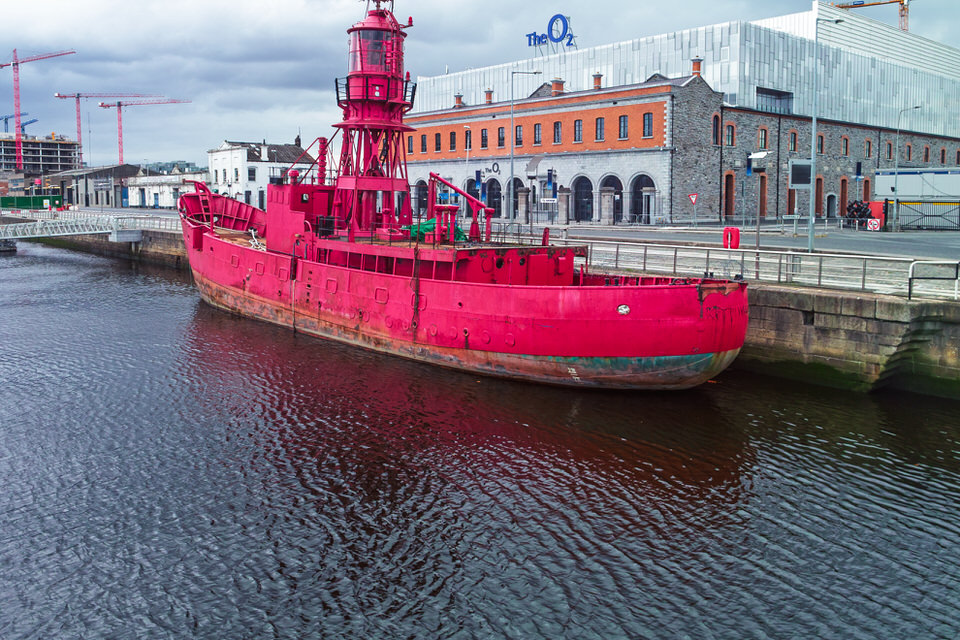
Ghosts of the Irish Coast: The Fate of the Lightship Kittiwake and Her Sisters The Vision of a Dublin Developer Built of solid steel in 1959 by Philip and Son in Dartmouth, Devon, the Kittiwake spent decades anchored off the Irish coast, braving fierce Atlantic gales to guide ships safely to port. By the early 2000s, her time at sea had come to an end. In 2007, the prominent Dublin property developer Harry Crosbie purchased the 40-metre vessel from the Commissioners of Irish Lights for roughly half a million euros. Crosbie, a key figure in the regeneration of the Dublin Docklands, had grand plans to give the vessel a glamorous second life. He envisioned converting the retired lightship into a floating cafe, restaurant, or nightclub, adding a unique maritime aesthetic to the developing Point Village area. Crosbie went so far as to strip out the old engines and safely remove the asbestos from her hull. However, the ambitious project hit a bureaucratic sandbank. The Dublin Docklands Development Authority refused the planning application, arguing controversially that the ship belonged strictly in the water, whereas the conversion plans required dry-land or permanent structural alterations. Tied up outside the Point Theatre, the Kittiwake was left to face the elements, rotting in plain sight. After years of neglect and disappearance into the restricted Alexandra Basin, a dramatic twist occurred. In late 2022, the Dublin Port Authority hoisted the 481-tonne Kittiwake out of the water. She was salvaged from NAMA and moved to a heritage area within the port basin with plans for a full restoration as a land-based public attraction. The move sparked a legal feud, with Crosbie threatening lawsuits and insisting he still owned the vessel. Today, she sits on dry land, awaiting a more permanent resolution to her long, turbulent retirement. Why the Fleet Was Retired The story of the Kittiwake is inseparable from the wider history of Irish lightships. At the peak of their usage in the mid-twentieth century, the Commissioners of Irish Lights operated a fleet of over fifteen lightvessels. These floating beacons were vital for marking treacherous, shifting sandbanks and rocky reefs where constructing a permanent stone lighthouse was either structurally impossible or economically unviable. Places like the Saltee Islands off Wexford or the South Rock off County Down relied heavily on these manned vessels. Life aboard was notoriously tough. Crews endured weeks of isolation, tossed violently by storms while anchored to a single spot. The downfall of the traditional Irish lightship began in the 1970s and 1980s with an aggressive automation programme. The watched lights were gradually extinguished, and vessels were either converted into Automated Lightfloats—which required no crew—or replaced entirely by Large Automated Navigation Buoys. By the dawn of the twenty-first century, rapid technological advancements spelt the final end for the remaining fleet. The global adoption of satellite navigation systems, low-power LED technology, and highly sophisticated "superbuoys" meant that maintaining massive, high-cost steel ships was no longer practical. Improved hull coatings allowed modern buoys to remain at sea for up to six years without maintenance, making the old lightships completely obsolete. The final automated lightfloats were permanently withdrawn from Irish stations between 2005 and 2009. Have Any Irish Lightships Survived? While dozens of historic Irish lightships were sold for scrap or lost to devastating storms over the last two centuries, a select few managed to survive, scattered across Europe in the most unexpected ways. The Petrel, built between 1913 and 1915, is perhaps the most intact survivor remaining on Irish shores. Sold off in 1968, she found a permanent home in Ballydorn at Strangford Lough, where she still serves proudly as the floating clubhouse for the Down Cruising Club. The Osprey, built in the mid-1950s, took a distinctly cosmopolitan path. Following her retirement in 1975, she was sold and towed to France. Moored permanently on the River Seine in the heart of Paris, she was transformed into "Le Batofar", a wildly popular, long-running floating nightclub and music venue. The Gannet, built in 1954, was the vessel that officially replaced the Kittiwake on the South Rock station in 1981. Withdrawn in 2009, she was initially bought by a private owner and towed to the River Medway in Kent. Her journey did not end there; she was later sold, towed up the Rhine, and lifted by a massive crane into the Holzpark Klybeck in Basel, Switzerland. Today, the Gannet serves the Swiss public as a vibrant cultural hub, housing a radio station and a restaurant. The Guillemot, a classic lightvessel built in the early 1920s, had a bittersweet retirement. She was preserved for decades on land, set in concrete as the centerpiece of the Kilmore Quay Maritime Museum in County Wexford. Sadly, despite her historic value, her structure deteriorated beyond repair, and she was dismantled and scrapped in 2011. From guarding deadly sandbanks to hosting Parisian clubbers and Swiss artists, the surviving lightships of Irish Lights carry a rich legacy. While the Kittiwake’s future remains tangled in dockland development politics, her presence on the Dublin waterfront remains a vivid memory for those who captured her fading glory.
HIGH RESOLUTION GALLERY
I USED A SIGMA DP1
LET MISTER SCREEN DIRECT YOU
GLOBAL INDEX OF PHOTO GALLERIES
DUBLIN SOUTHSIDE
THE URBAN CARTOGRAPHER
THE JUNE 2026 PHOTO GALLERIES
The Fate of the Lightship Kittiwake and Her Sisters - Presented By The The Urban Cartographer
Who Is Building An Experience Which Is Getting Better Day By Day