2009 Gas Explosion In Blackrock - Presented By The Urban Cartographer
LET MISTER SCREEN ASSIST YOU
GLOBAL INDEXThe Urban Cartographer
TECHNICAL STUFFEmergency services described it as a 'miracle' that no one was killed when a mid-terrace house at St. Anne’s Square, Blackrock, was reduced to rubble on Friday, March 13th, 2009. The blast, occurring at 2:30 PM, leveled the property and severely damaged neighboring homes. Subsequent investigations by Bord Gáis confirmed a natural gas build-up as the cause, though the property was unoccupied at the time of ignition. The event led to the permanent demolition and eventual reconstruction of several units in the historic square.
EXCELLENT PICTURE THIS 2017
2009 Gas Explosion In Blackrock - Presented By The Urban Cartographer
2009 Gas Explosion In Blackrock
Author: Urban Cartographer
|
21. Feb 2026
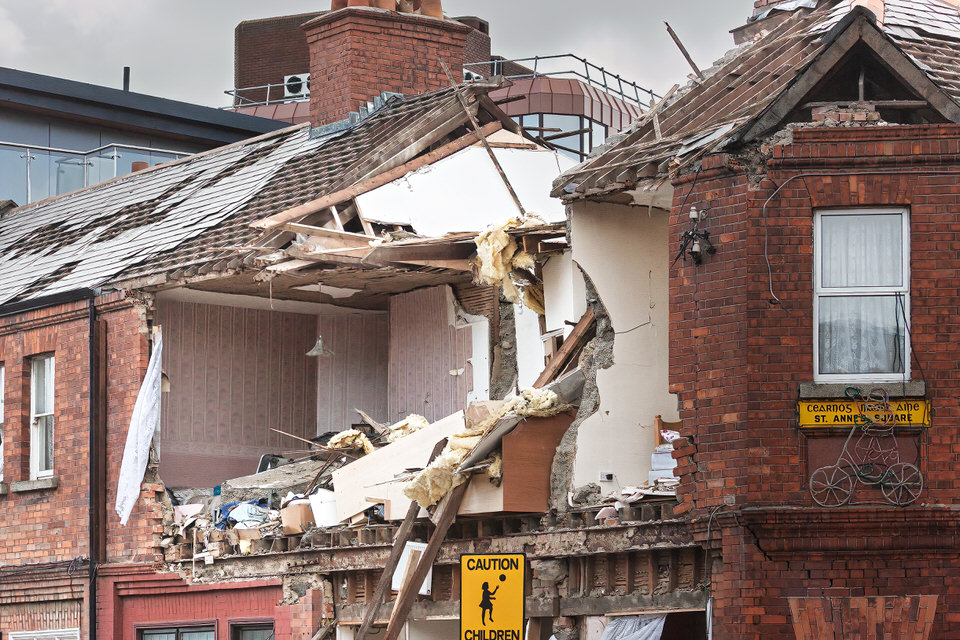
Photographed By William Murphy - Select Image To View Photographs
Select Image Below To Visit The Photo Gallery: 2009 Gas Explosion In Blackrock
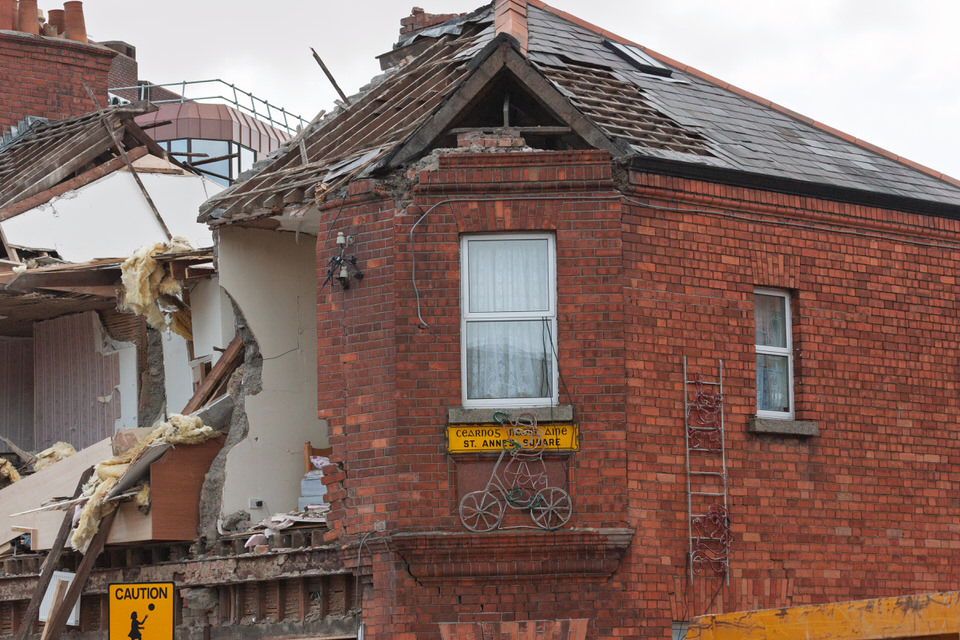
This series ofphotographs captures the aftermath of a devastating gas explosion at St. Anne’s Square in Blackrock, Co. Dublin, which occurred on Friday, March 13, 2009.
The event was widely reported as a miraculous escape for the residents, given the sheer level of destruction. Here are the key details regarding that afternoon:
The Incident
Time and Date: The explosion occurred shortly after 2:30 PM on Friday, March 13, 2009.
Location: The blast entered on a house in St. Anne’s Square, located just off Temple Hill in Blackrock.
Scale of Damage: The explosion was so powerful that it completely blew the front and back walls off one house (as seen in the photographs) and caused severe structural damage to several adjoining terrace homes. Debris was launched across the square, damaging approximately 12 parked cars.
The "Miracle" Escapes
The event is often remembered for the lack of fatalities despite the timing:
Empty House: The house at the centre of the blast was reportedly empty at the exact moment of the explosion.
A Lucky Fall: A woman living in an adjacent house had fallen and broken her ankle earlier that morning. She had been taken to the hospital hours before the blast, likely saving her life as her home was one of those most severely impacted.
Street Safety: Because it was a Friday afternoon, the square was relatively quiet; witnesses noted that had it occurred a few hours later when children were home from school, the outcome could have been tragic.
Aftermath and Investigation
Response: Six units of the Dublin Fire Brigade and several ambulances attended the scene.
Evacuation: Residents from the entire square were evacuated to nearby Sheehan’s Pub while gas crews (Bord Gáis) and engineers worked to make the area safe.
Demolition: Following the blast, several of the houses were deemed structurally unsound and had to be demolished for safety reasons, which is the process seen starting in your image with the Hegarty Demolition fencing.
The investigation into the March 2009 explosion at St. Anne’s Square, Blackrock, concluded that the blast was caused by a significant natural gas leak within the property.
While the exact "ignition source" (the specific spark that set it off) is often difficult to pinpoint in such total destructions, the technical investigation by Bord Gáis Networks and the Dublin Fire Brigade confirmed that gas had accumulated to an explosive level inside the dwelling.
Key Findings & Context
The Leak: The concentration of gas reached the "Upper Explosive Limit," meaning the smallest trigger—such as a fridge motor cycling on, a light switch being flipped, or even a static spark—could have caused the detonation.
Structural Impact: The investigation highlighted that the "open-plan" nature of the modernised interior may have allowed the gas to cloud more freely, leading to the uniform pressure that blew out both the front and rear structural walls simultaneously.
Safety Review: Following the event, there was a localised push for residents in older terraced housing to ensure their internal gas plumbing was up to modern standards, as older lead or copper piping can become stressed over decades.
GALWAY CITY
CORK CITY AND COUNTY
GLOBAL MENU
DUBLIN SOUTHSIDE
DUBLIN NORTHSIDE
URBAN CARTOGRAPHER
EXCELLENT PICTURE THIS 2017
2009 Gas Explosion In Blackrock - Presented By The Urban Cartographer
Who Is Building An Experience Which Is Getting Better Day By Day