The Children Of Lir - Presented By The Urban Cartographer
LET MISTER SCREEN ASSIST YOU
GLOBAL INDEXThe Urban Cartographer
TECHNICAL STUFFDiscover the history and symbolism of Oisín Kelly's Children of Lir sculpture in Dublin's Garden of Remembrance. A bronze masterpiece representing Irish freedom, rebirth, and ancient Celtic mythology.
EXCELLENT PICTURE THIS 2017
The Children Of Lir - Presented By The Urban Cartographer
The Children Of Lir
Author: Urban Cartographer
|
09. Jan 2026
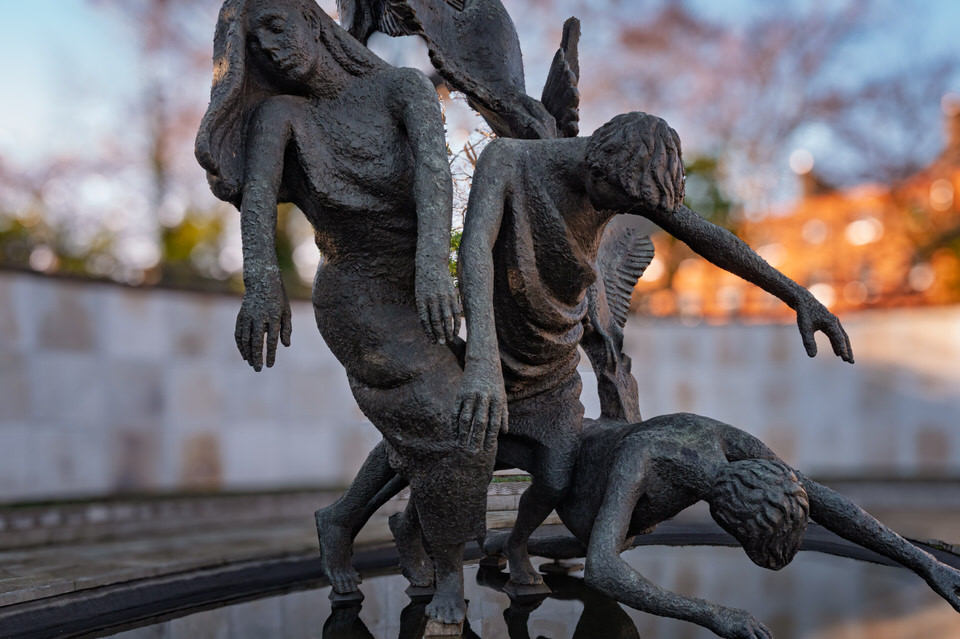
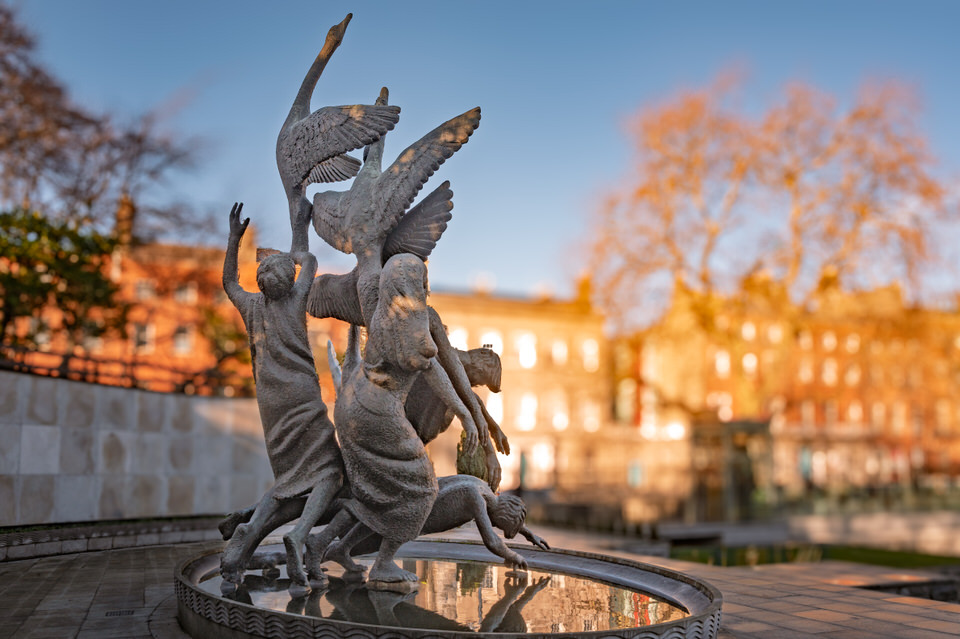
Photographed By William Murphy Located at the northern end of O'Connell Street in Parnell Square, the Garden of Remembrance serves as a tranquil sanctuary dedicated to "all those who gave their lives in the cause of Irish Freedom". Its dramatic focal point is the soaring bronze sculpture of the Children of Lir, a masterpiece that weaves ancient mythology with modern Irish history. The Sculpture Created by the renowned Irish artist Oisín Kelly, the sculpture stands 25 feet (7.5 metres) tall. It was cast in bronze at the Ferdinando Marinelli Artistic Foundry in Florence, Italy, and unveiled in 1971, five years after the garden itself was opened by President Éamon de Valera. The piece captures a moment of dynamic transformation. It depicts the four children of the sea god Lir—Fionnuala, Aodh, Fiachra, and Conn—at the very instant their human forms are being metamorphosed into swans. The fluid, elongated lines of the bronze figures convey both the agony of the curse and the grace of the birds they are becoming, creating a powerful silhouette against the Dublin sky. The Legend The sculpture is based on one of Ireland's most poignant myths, Oidheadh Chlainne Lir (The Tragedy of the Children of Lir). According to the legend, the four children were beloved by their father, King Lir. In a fit of jealous rage, their stepmother, Aoife, used a druidic wand to cast a spell upon them. They were condemned to live as swans for 900 years: 300 years on Lough Derravaragh, 300 years on the Sea of Moyle, and 300 years on the Atlantic waters of Inishglora. Despite their bird-like forms, they retained their human voices and beautiful singing. The spell was only broken when they heard the bell of a Christian monk, marking the arrival of Christianity in Ireland. Upon returning to human form, they were ancient and frail, passing away immediately to be buried together. Symbolism and Meaning Oisín Kelly's choice of this legend for a nationalist memorial was deeply deliberate. It serves as a metaphor for the Irish nation: Rebirth and Resurrection: Just as the children endured 900 years of suffering before their release, the sculpture symbolises the centuries of Irish struggle against colonial rule before the eventual "rebirth" of the independent state. Silent Endurance: The myth speaks to the preservation of identity (symbolised by the children retaining their singing voices) despite the loss of physical freedom. Behind the statue, inscribed on the limestone wall, is a poem by Liam Mac Uistín titled "An Aisling" (The Vision). It reinforces the sculpture's theme, concluding with the lines: "O generations of freedom remember us, the generations of the vision." Here is the full text of the poem "We Saw A Vision" (originally titled "An Aisling" in Irish) by Liam Mac Uistín. It is inscribed on the limestone wall behind the Children of Lir sculpture in English, Irish, and French. The poem was written in 1976 specifically to express the spirit of the generations who struggled for Irish independence. "We Saw A Vision" In the darkness of despair we saw a vision, We lit the light of hope, And it was not extinguished. In the desert of discouragement we saw a vision, We planted the tree of valour, And it blossomed. In the winter of bondage we saw a vision, We melted the snow of lethargy, And the river of resurrection flowed from it. We sent our vision aswim like a swan on the river, The vision became a reality, Winter became summer, Bondage became freedom, And this we left to you as your inheritance. O generations of freedom remember us, The generations of the vision. Original Irish Text ("An Aisling") As the Garden is a site of deep national significance, you will also see the original Irish version prominently displayed: I ndorchacht an éadóchais rinneadh aisling dúinn. Lasamar solas an dóchais agus níor múchadh é. I bhfásach an lagmhisnigh rinneadh aisling dúinn. Chuireamar crann na crógachta agus tháinig bláth air. I ngeimhreadh na daoirse rinneadh aisling dúinn. Mheileamar sneachta na táimhe agus rith abhainn na hathbheochana as. Chuireamar ár n-aisling ag snámh mar eala ar an abhainn. Rinneadh fírinne den aisling. Rinneadh samhradh den gheimhreadh. Rinneadh saoirse den daoirse agus d'fhágamar agaibhse mar oidhreacht í. A ghlúnta na saoirse cuimhnígí orainne, glúnta na haislinge.
Select Image To Visit The Photo Gallery: The Children Of Lir
GALWAY CITY
CORK CITY AND COUNTY
GLOBAL MENU
DUBLIN SOUTHSIDE
DUBLIN NORTHSIDE
URBAN CARTOGRAPHER
EXCELLENT PICTURE THIS 2017
The Children Of Lir - Presented By The Urban Cartographer
Who Is Building An Experience Which Is Getting Better Day By Day