The Boyne Viaduct In Drogheda - Presented By The The Urban Cartographer
LET MISTER SCREEN ASSIST YOU
GLOBAL INDEXThe Urban Cartographer
TECHNICAL STUFFDiscover the history of the Boyne Viaduct in Drogheda, a Victorian engineering marvel designed by Sir John Macneill. Learn about its 1855 construction, the "sheep’s wool" foundation legend, and its unique 1930s steel reconstruction.
EXCELLENT PICTURE THIS 2017
The Boyne Viaduct In Drogheda - Presented By The The Urban Cartographer
The Boyne Viaduct In Drogheda
Author: The Urban Cartographer
|
25. Mar 2026
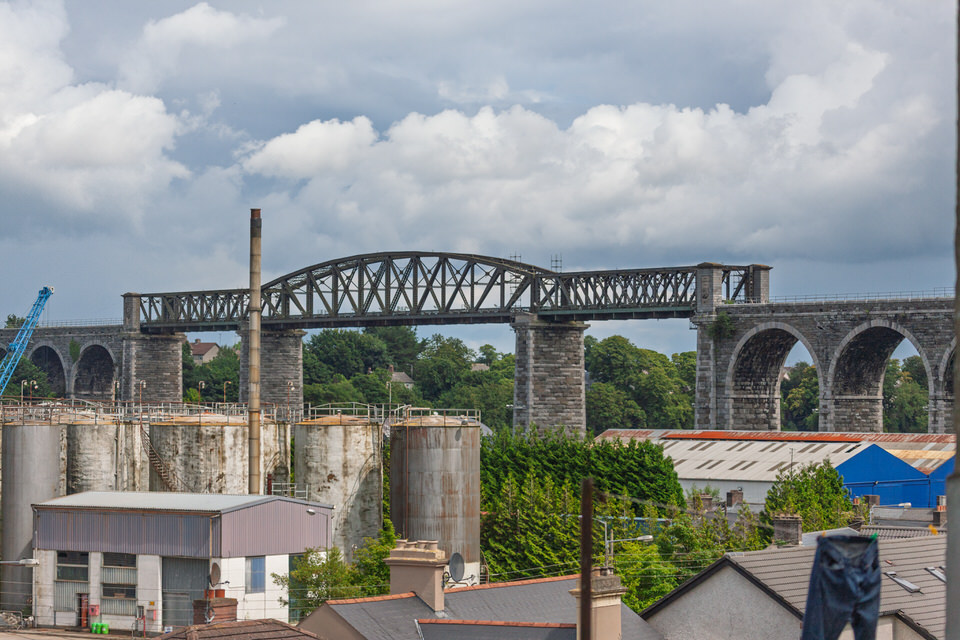
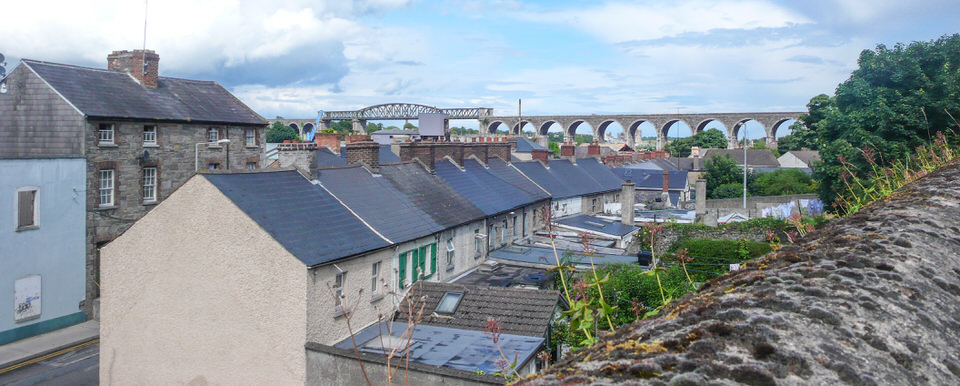 Photographed By William Murphy - Select Image To View Photographs
The Boyne Viaduct in Drogheda stands as one of the most significant landmarks of Ireland's industrial heritage. Completed in 1855, this towering structure is not just a functional railway bridge but a masterpiece of Victorian engineering that once ranked among the "wonders of the age."
**History and Construction
The viaduct was built to provide the final, crucial link in the railway line between Dublin and Belfast. Before its completion, the journey was notoriously fragmented; passengers had to disembark at a temporary station south of the River Boyne, take a horse-drawn carriage through the streets of Drogheda, and board a different train at a station on the northern side.
Construction began in 1851 and was completed in 1855. The project was an immense undertaking, involving over 15 million bricks and massive limestone blocks. The sheer scale of the 30-metre-high structure (roughly 98 feet) was designed to ensure that the masts of tall ships could pass underneath to reach the bustling Drogheda Port.
The Architect and Engineers
The primary designer was the esteemed Irish civil engineer Sir John Benjamin Macneill. He was assisted by James Barton, who took over much of the site supervision. The project was also notable for its use of pioneering mathematical stress analysis developed by William Bindon Blood.
A local legend, often cited by historians, claims the bridge’s foundations were built on "cotton wool." In reality, during the difficult excavation of Pier 14, workers used bales of sheep’s wool to seal leaks in the cofferdams (watertight enclosures) when they hit problematic quicksand and water seepage before reaching solid bedrock.
Unique Features and Evolution
The Boyne Viaduct is unique for several reasons:
A Global Record: At the time of its opening, it was the seventh-largest bridge of its kind in the world.
Hybrid Design: It combines twelve elegant stone arches on the southern side and three on the north with a central metal truss span over the river itself.
The 1930s "Bridge Within a Bridge": By 1930, the original wrought iron spans were no longer strong enough for modern, heavier trains. In a remarkable feat of engineering, the new steel trusses were built inside the old iron ones while trains continued to run. This replacement - completed in 1932 - resulted in the bridge being narrowed to a single track, which remains today.
Interlaced Tracks: For many years, the bridge featured "interlaced" or "gauntlet" tracks—where two sets of rails overlapped without a switch—to avoid the need for complex signalling on the bridge itself.
**
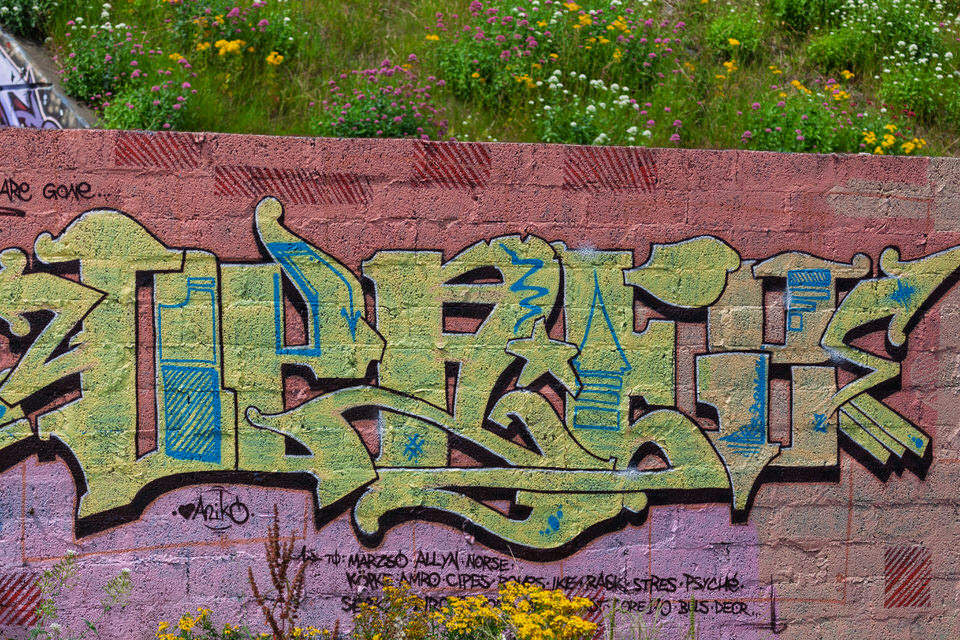 Legacy Street Art In Drogheda - Select Image To View Photographs
HIGH RESOLUTION IMAGES
CORK CITY AND COUNTY
ABOUT THE VIADUCT IN DROGHEDA
GLOBAL INDEX OF PHOTO GALLERIES
2009 LEGACY PHOTO COLLECTIONS
THE URBAN CARTOGRAPHER HOME PAGE
EXCELLENT PICTURE THIS 2017
The Boyne Viaduct In Drogheda - Presented By The The Urban Cartographer
Who Is Building An Experience Which Is Getting Better Day By Day