Tara Street Station - Presented By The Urban Cartographer
LET MISTER SCREEN ASSIST YOU
GLOBAL INDEXThe Urban Cartographer
TECHNICAL STUFF
EXCELLENT PICTURE THIS 2017
Tara Street Station - Presented By The Urban Cartographer
Tara Street Station
Author: Urban Cartographer
|
26. Nov 2025
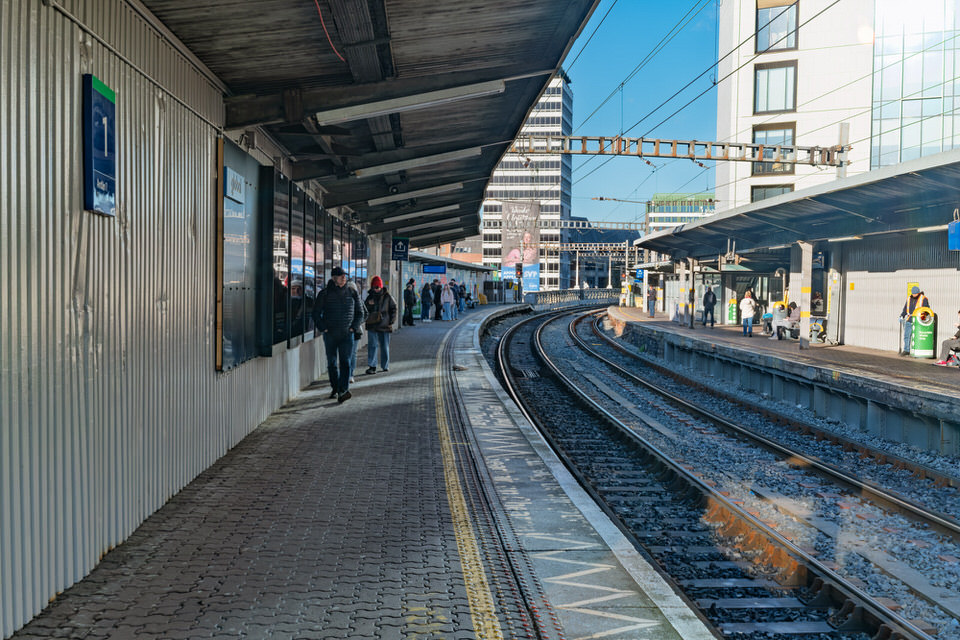
A recent visit to Tara Street Station revealed a fascinating friction currently playing out in Dublin’s transit centres. The station has evolved into a battleground for visual attention, representing a stark intersection between grassroots cultural expression and high-level corporate communication. While the station has long been a canvas for local artists, this is now balanced—somewhat precariously—by a new wave of advertising infrastructure. The result is a compelling dialogue between the curated artwork and the arrival of Global’s digital presence. For some time, the precinct surrounding and entering Tara Street Station has served as a vibrant, open-air gallery. This is far removed from casual tagging; it is a display of curated, high-quality muralism that performs specific functions within the station's environment: However, the visual landscape of the station has shifted with the aggressive expansion of Digital Out-of-Home (DOOH) infrastructure, largely managed by media giants like Global. This represents a distinct change in the medium. Unlike traditional paper billboards, these high-definition LED screens are luminous and dynamic, rotating through multiple advertisers per minute. The strategy is precise: Global targets high-footfall transport hubs, and Tara Street Station serves as a prime demographic chokepoint. The resulting aesthetic clash is palpable. The curated art is static, textured, and paint-based; the advertising is slick, backlit, and pixel-perfect. Biologically, the human eye is drawn to light and motion. Consequently, the commercial signage demands attention, physically threatening to overpower the subtler, static street art residing alongside it. This "balance" within the station raises a critical question regarding the commodification of urban "cool." Tara Street Station is a microcosm of modern Dublin. It is a city attempting to retain its artistic soul and "rough edges" while simultaneously upgrading infrastructure and revenue streams through corporate partnerships. The result is a jarring, yet undeniable, visual dialogue between the paint brush and the pixel. Keywords
Tara Street Station, Urban Cartographer, Dublin, street art, Global Media, DOOH, public transport, visual pollution, murals, corporate advertising, place-making, cultural landscape, urban aesthetics.Tara Street Station
Select Image To Visit The Photo Gallery: Tara Street Station
The Canvas of Culture
The New Player: The Digital Shift
Symbiosis or Parasitism?
Conclusion
GALWAY CITY
CORK CITY AND COUNTY
GLOBAL MENU
DUBLIN SOUTHSIDE
DUBLIN NORTHSIDE
URBAN CARTOGRAPHER
EXCELLENT PICTURE THIS 2017
Tara Street Station - Presented By The Urban Cartographer
Who Is Building An Experience Which Is Getting Better Day By Day