Sweeney's Ashtray - Presented By The Urban Cartographer
LET MISTER SCREEN ASSIST YOU
GLOBAL INDEXThe Urban Cartographer
TECHNICAL STUFFDiscover the story of Desmond Kinney's lost masterpiece, the "Táin Wall" mural at Dublin's Setanta Centre. We explore the history of this stunning mosaic depicting the Cattle Raid of Cooley, the artist behind it, and the controversial decision by developers to remove it in the name of modernization.
EXCELLENT PICTURE THIS 2017
Sweeney's Ashtray - Presented By The Urban Cartographer
Sweeney's Ashtray
Author: Urban Cartographer
|
02. Jan 2026
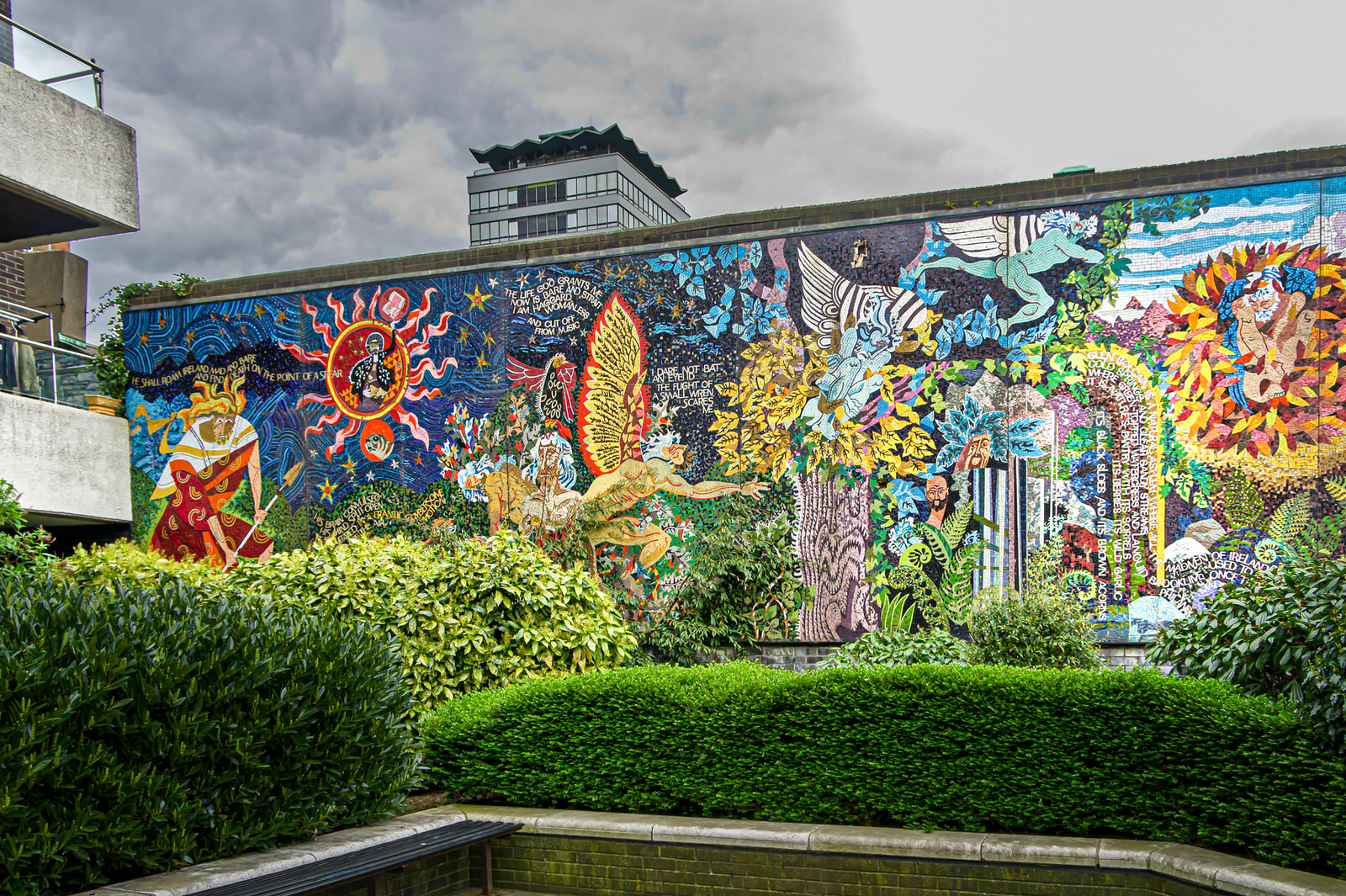
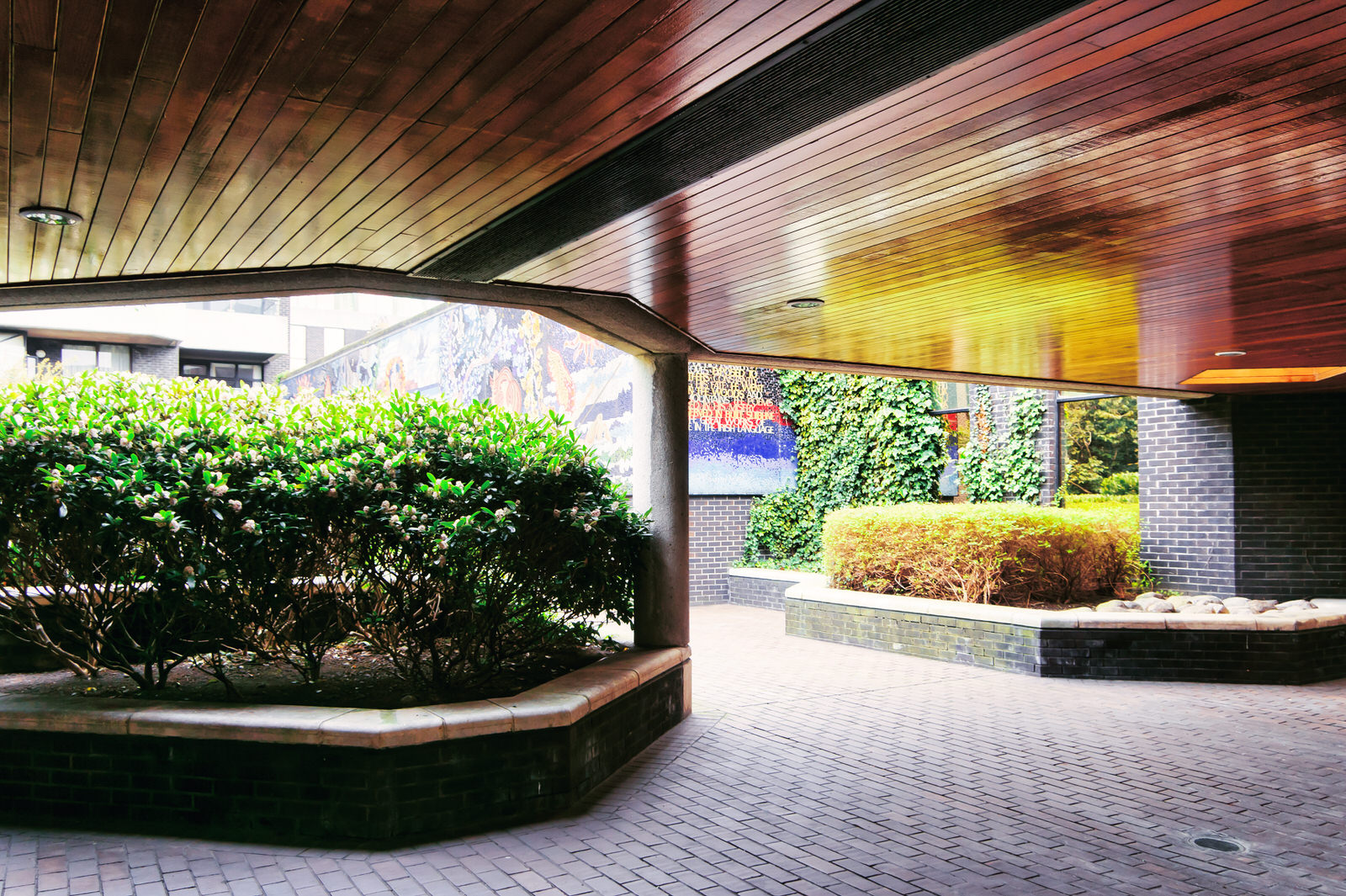
Digital Archaeology: How AI Unlocked a Ghost Story in the Infomatique Archive By The Urban Cartographer There is a distinct difference between taking a photograph and building an archive. Over the years, the Infomatique catalog has grown to a staggering size—housing more than 300,000 photographs. It is a visual memory of a changing city, capturing moments, buildings, and artworks that have since vanished. But a collection of that magnitude presents a challenge: how do you connect the dots between 300,000 disparate images? This is where the true power of an AI "thought partner" comes into play. By granting an AI access to this vast repository, we can do more than just catalogue; we can uncover unexpected stories, spot patterns human memory might miss, and resolve contradictions that have lingered for years. Recently, the AI helped me solve a mystery involving a shutter, a bird-woman, and a "destroyed" mural. The Mystery of the Bird Woman (2019) The story begins with a single image from 8 September 2019. I was at the Irish Life Centre complex, photographing a striking mosaic figure—a woman with the body of a blue and white bird. It was a rushed job; as I snapped the shutter, a security grille began to close, threatening to trap me inside the complex. I escaped, but the exact identity of the artwork remained a blur. For a long time, I assumed this figure was part of Desmond Kinney’s famous "Táin Wall" (The Cattle Raid of Cooley), located nearby at the Setanta Centre on Nassau Street. After all, the figure resembled The Morrígan, the Celtic war goddess who often appears as a crow. However, when I asked the AI to cross-reference this 2019 image with the older files in the Infomatique archive, it flagged a contradiction. The Archive Dig: Sweeney Astray The archive holds images of the Táin Wall before its removal, and the AI correctly noted that the style—earthy reds, browns, and warriors—did not match my blue Bird Woman. Instead, the AI pointed me to a folder from March 2011, containing photos of a completely different Kinney work: "Sweeney Astray" at the Irish Life Centre. My original notes from that 2011 shoot read: "THIS NO LONGER EXISTS - SWEENEY ASTRAY BY DESMOND KINNEY. The photographs date from 2011... In July 2013 it was reported that 'A historical mural was ripped off Irish Life building and put in black bags'. My understanding is that such murals have a limited life expectancy..." Here was the anomaly. The official record, and my own notes, stated that Sweeney Astray was destroyed in 2013. Yet, my photo of the Bird Woman—clearly a match for the Sweeney style—was dated September 2019. The conclusion? While the main wall was indeed removed due to rot, the archive proves that a single fragment—the Bird Woman—survived on a pillar inside the complex for at least six years longer than the public believed. A ghost hiding in plain sight. The Artist: Desmond Kinney (1934–2014) It is fitting that such a mystery surrounds Desmond Kinney, an artist whose work is woven into the fabric of Dublin’s architecture. Born in Portstewart, Co. Derry, in 1934, Kinney studied at the Belfast College of Art alongside contemporaries like Basil Blackshaw and T.P. Flanagan. In the 1960s, he established Kinney/Dobson, an innovative graphic design studio that was the first of its kind in Ireland to achieve international recognition. However, he is best remembered for his large-scale mosaics. The Sweeney Astray work was a masterpiece of this form. Consisting of twelve glass mosaic panels, it depicted the story of Sweeney’s wanderings through forests and hills—a tale dating back to the 1600s, later translated by Seamus Heaney. The AIB Connection: Silver Apples The archive also reminds us that this isn't the first Kinney work to go on a journey. In 1971, Kinney designed The Song of Wandering Aengus mosaic for the AIB Bank in Dublin. Influenced again by Seamus Heaney, Kinney used the W.B. Yeats poem as his inspiration. The interior mosaic symbolised the poem’s final lines: "I will find out where she has gone... And pluck till time and times are done / The silver apples of the moon / The golden apples of the sun." Like the Sweeney mural, this work was removed from its original Dublin home in the 1980s. Fortunately, it was saved and found a new home in the Glucksman Library Board Room foyer at the University of Limerick (UL). The university maintains strong links to the poem; their crèche is named "Silver Apples," and those immortal final lines are carved into the university's foundation stone. The Value of the Archive Without the Infomatique archive—and the ability to sift through it intelligently—the 2019 photo of the Bird Woman would have remained just another image. Instead, it has become a piece of evidence, correcting the timeline of a lost artwork. It serves as a reminder: photograph everything. You never know what story is waiting to be uncovered in the files.Select Image To Visit The Photo Gallery: Sweeney's Ashtray
Sweeney's Ashtray
GALWAY CITY
CORK CITY AND COUNTY
GLOBAL MENU
DUBLIN SOUTHSIDE
DUBLIN NORTHSIDE
URBAN CARTOGRAPHER
EXCELLENT PICTURE THIS 2017
Sweeney's Ashtray - Presented By The Urban Cartographer
Who Is Building An Experience Which Is Getting Better Day By Day