St Dominicks Church On Lower Dominick Street - Presented By The The Urban Cartographer
LET MISTER SCREEN ASSIST YOU
GLOBAL INDEXThe Urban Cartographer
TECHNICAL STUFFDiscover the history and community impact of St Saviour’s Church (St Dominick’s) on Lower Dominick Street, Dublin. Built by J.J. McCarthy in 1861, this Gothic Revival masterpiece serves as a parish church, a Dominican house of studies, and the National Shrine of St Martin de Porres, supporting a diverse local community in the heart of Dublin's Northside.
EXCELLENT PICTURE THIS 2017
St Dominicks Church On Lower Dominick Street - Presented By The The Urban Cartographer
St Dominicks Church On Lower Dominick Street
Author: The Urban Cartographer
|
18. Mar 2026
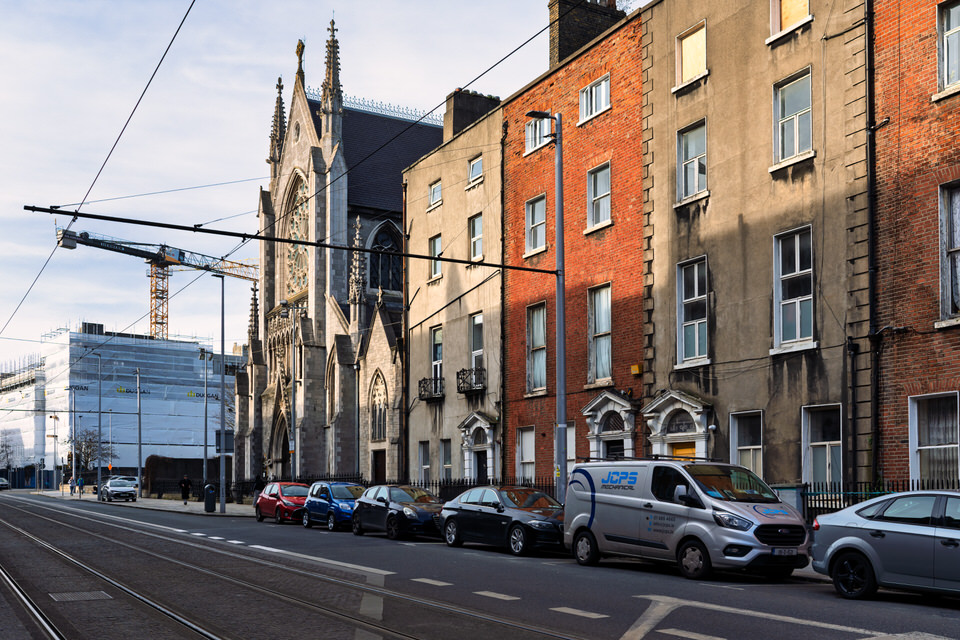
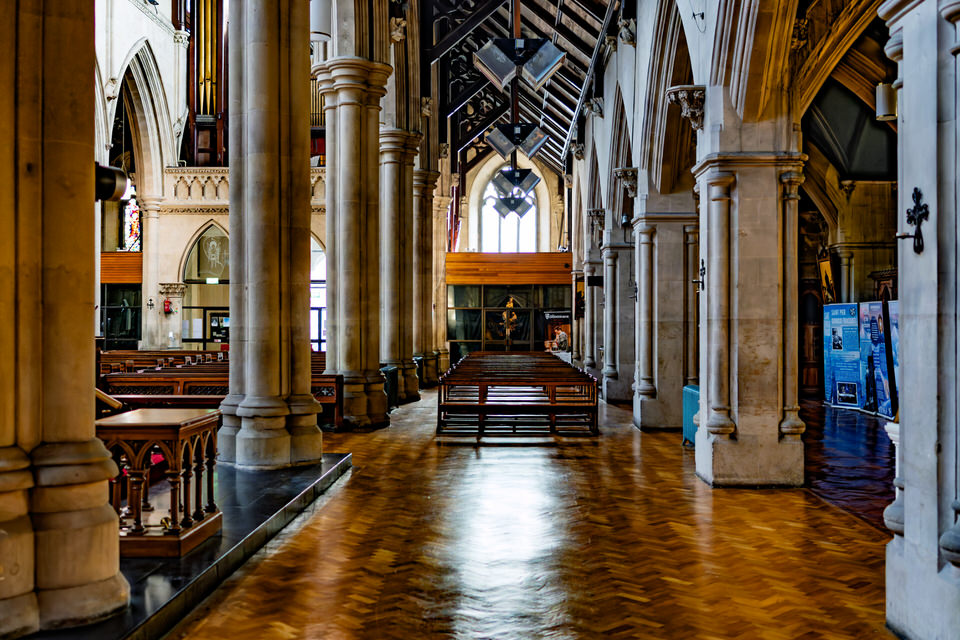 Photographed By William Murphy - Select Image To View Photographs
Situated on the Northside of Dublin’s city centre, the church widely known to locals as "St Dominick’s" is officially St Saviour’s Church and Priory. This landmark Gothic Revival building has served as a spiritual and social anchor for Lower Dominick Street for over 160 years, maintaining a continuous Dominican presence in a part of the city that has seen dramatic transformation.
Historical Background
The Dominicans (the Order of Preachers) first arrived in Dublin in 1224. However, their modern chapter on Dominick Street began in the mid-19th century.
Construction (1853–1861): Designed by the renowned Irish architect James Joseph McCarthy, often called "the Irish Pugin" for his mastery of the Gothic style. Construction began in 1853, and the church was opened for worship in 1861.
Architectural Significance: The church is noted for its limestone exterior and Portland stone dressings. While McCarthy’s original design included a grand tower and spire, these were never completed due to a lack of funds—the money was instead diverted to build the adjoining priory in the 1880s.
The "Church for the Poor": At the time of its opening, Lower Dominick Street had transitioned from a fashionable Georgian enclave for the aristocracy into an area dominated by overcrowded tenements. The church was specifically intended to serve this "toil-hardened" local population.
Current Status
Today, St Saviour's is more than just a historical monument; it is a functioning Parish Church (since 1974) and the Studium (house of studies) for the Irish Dominican Province.
National Shrine: It houses the National Shrine of St Martin de Porres, a site of significant pilgrimage and daily devotion for people across Ireland.
Academic Hub: Since 2000, it has served as the primary centre for the formation of new Dominican friars, keeping the building alive with a community of priests and students.
Recent Restorations: The church has undergone various conservation efforts to preserve its stained glass and intricate stonework, ensuring it remains a focal point of Dublin’s architectural heritage.
Community Relevance
The relevance of St Saviour's to the local community has evolved with the changing face of Dublin 1.
Cultural Diversity: As the local demographic has shifted, the church has adapted. It is now the home of the Dominican Polish Chaplaincy and hosts regular Masses in Spanish, reflecting the international character of modern Northside Dublin.
Social Support: The church remains deeply involved in local social issues. The Dominicans have historically supported youth clubs and community response projects in an area that has faced significant socio-economic challenges and urban regeneration.
A "Quiet Space" Amidst Change: With the Luas (tram) now running directly past its doors and new social housing developments surrounding it, the church provides a rare, contemplative space for residents in an otherwise bustling, modernised urban environment.
GALWAY CITY
CORK CITY AND COUNTY
GLOBAL MENU
DUBLIN SOUTHSIDE
DUBLIN NORTHSIDE
URBAN CARTOGRAPHER
EXCELLENT PICTURE THIS 2017
St Dominicks Church On Lower Dominick Street - Presented By The The Urban Cartographer
Who Is Building An Experience Which Is Getting Better Day By Day