So What Happened To The Pigeon House At 30 Manor Street - Presented By The The Urban Cartographer And William Murphy
LET MISTER SCREEN ASSIST YOU
GLOBAL INDEXThe Urban Cartographer
TECHNICAL STUFFDiscover what happened to Stoneybatter's infamous "Pigeon House" at 30 Manor Street. Read about its 2024 sale, recent demolition, future development plans, and the fate of its displaced pigeon flock. Also Learn about the artist behind Stoneybatter’s iconic pigeon street art. Discover how motion designer Paul Gonnelly created "Punk Pigeons" for the Dublin Canvas project.
THE FULL STORY
So What Happened To The Pigeon House At 30 Manor Street - Presented By The The Urban Cartographer And William Murphy
So What Happened To The Pigeon House At 30 Manor Street
Author: The Urban Cartographer And William Murphy
|
01. Jun 2026
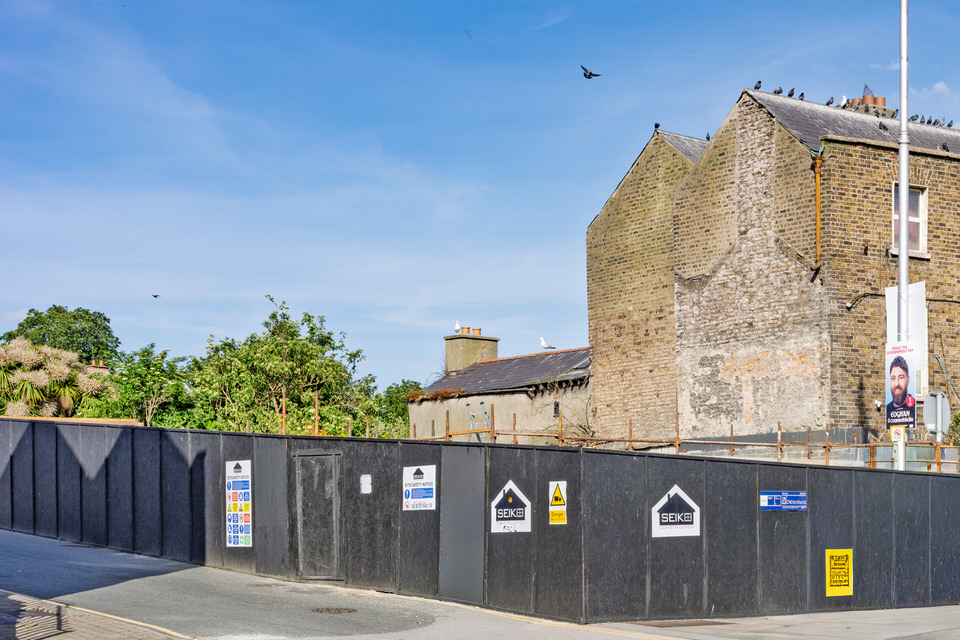
The physical landscape of 30 Manor Street changed dramatically following its purchase in March 2024 for €490,000. The extensive, end-of-terrace residential site has been completely demolished to clear the path for modern urban redevelopment—a common transition in the rapidly gentrifying Stoneybatter district. March 2024 - Property Sold (€490,000) The Future Plan The site was acquired by private buyers recognising the premium value of extensive footprints in Dublin 7. While specific construction timelines emerge, the objective aligns with contemporary urban planning in Stoneybatter: replacing aging, underutilised domestic structures with high-density, modern residential units or mixed-use infill development. Because the site is extensive, it represents a lucrative opportunity to optimise living space in a highly sought-after city-fringe neighbourhood. Ecological Aftermath: The Displaced Flock The demolition has triggered an immediate shift in local urban ecology. With "The Pigeon House" completely flattened and its historical ground-feeding routines entirely halted, the resident feral pigeon population has been forced to adapt. Roosting Realignment: Deprived of their primary sanctuary, the birds have transitioned to neighbouring properties, establishing new roosting spots on the high, slate rooftops of Manor Street and Manor Place. Behavioural Shifts: Without a centralised, high-volume food source on the ground, the flock is fracturing into smaller sub-groups, scavenging from open-air waste and local commercial food businesses. About the Artist: Paul Gonnelly While many Dublin Canvas pieces are painted by casual community painters or fine art hobbyists, Paul Gonnelly brings a highly structured background in professional visual media to his street art. Professional Background: He operates professionally as a senior motion designer, having spent years creating broadcast graphics and animations for national networks including Virgin Media Television. He has also served as an industry judge for digital media and design showcases at institutions like the Dundalk Institute of Technology (DkIT). Design Philosophy: His training in animation and motion graphics is highly visible in the structure of his static art. His designs are characterised by strong lines, clear spatial energy, and a keen sense of "captured movement"—traits essential for a piece that depicts birds mid-flight on a fixed, three-dimensional street object. The Significance of Punk Pigeons (2024) The Character Concept: By calling the piece Punk Pigeons, Gonnelly infuses the local feral flock with a specific attitude. Stoneybatter has long been celebrated for its creative, alternative, and bohemian community. Reimagining the ubiquitous, often-maligned urban pigeon as a "punk" subverts the classic "rats with wings" trope, turning the birds into gritty, rebellious local characters who claim ownership of the urban landscape. The Context of Motion: Painted in 2024—just as the extensive site at 30 Manor Street was being sold and prepared for the changes that ultimately led to its recent demolition—the artwork's depiction of birds flying upward and outward carries an unintentional prophetic quality. The "departing" motion Gonnelly captured now mirrors the literal displacement of the birds from the flattened structures to the neighbouring roofs. The persistence of Punk Pigeons on the street corner ensures that even as the brick-and-mortar history of "The Pigeon House" is cleared away by developers, Paul Gonnelly’s artistic tribute remains—keeping the memory of Stoneybatter’s most famous avian corner alive in public memory.
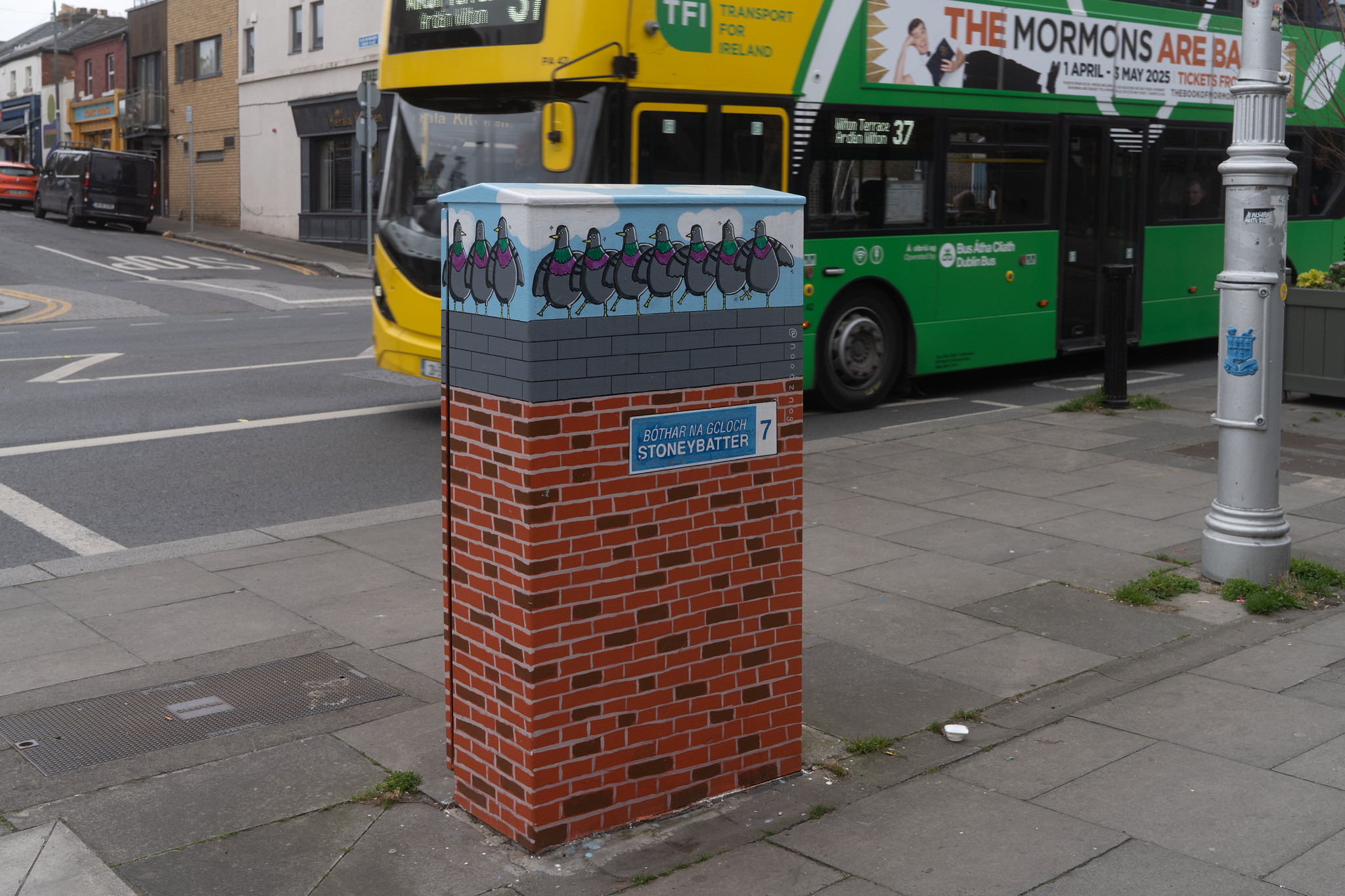 The Same Location In March 2025 - Select Image To View Photographs
THE PIGEON HOUSE ON MANOR STREET
I USED A NEW SONY A7RVI
LET MISTER SCREEN DIRECT YOU
GLOBAL INDEX OF PHOTO GALLERIES
DUBLIN NORTHSIDE
THE URBAN CARTOGRAPHER
THE FULL STORY
So What Happened To The Pigeon House At 30 Manor Street - Presented By The The Urban Cartographer And William Murphy
Who Is Building An Experience Which Is Getting Better Day By Day