Rachel Joynt Sculpture At Glencar House - Presented By The Urban Cartographer
LET MISTER SCREEN ASSIST YOU
GLOBAL INDEXThe Urban Cartographer
TECHNICAL STUFFA chance encounter on the E2 bus led to a photography mission at Circle K Donnybrook. This post explores the rise of "fuel deserts" in Dublin, the tragic history of house collapses on Bolton Street, and the controversial hotel developments replacing essential city services.
EXCELLENT PICTURE THIS 2017
Rachel Joynt Sculpture At Glencar House - Presented By The Urban Cartographer
Rachel Joynt Sculpture At Glencar House
Author: Urban Cartographer
|
19. Jan 2026
Photographed By William Murphy
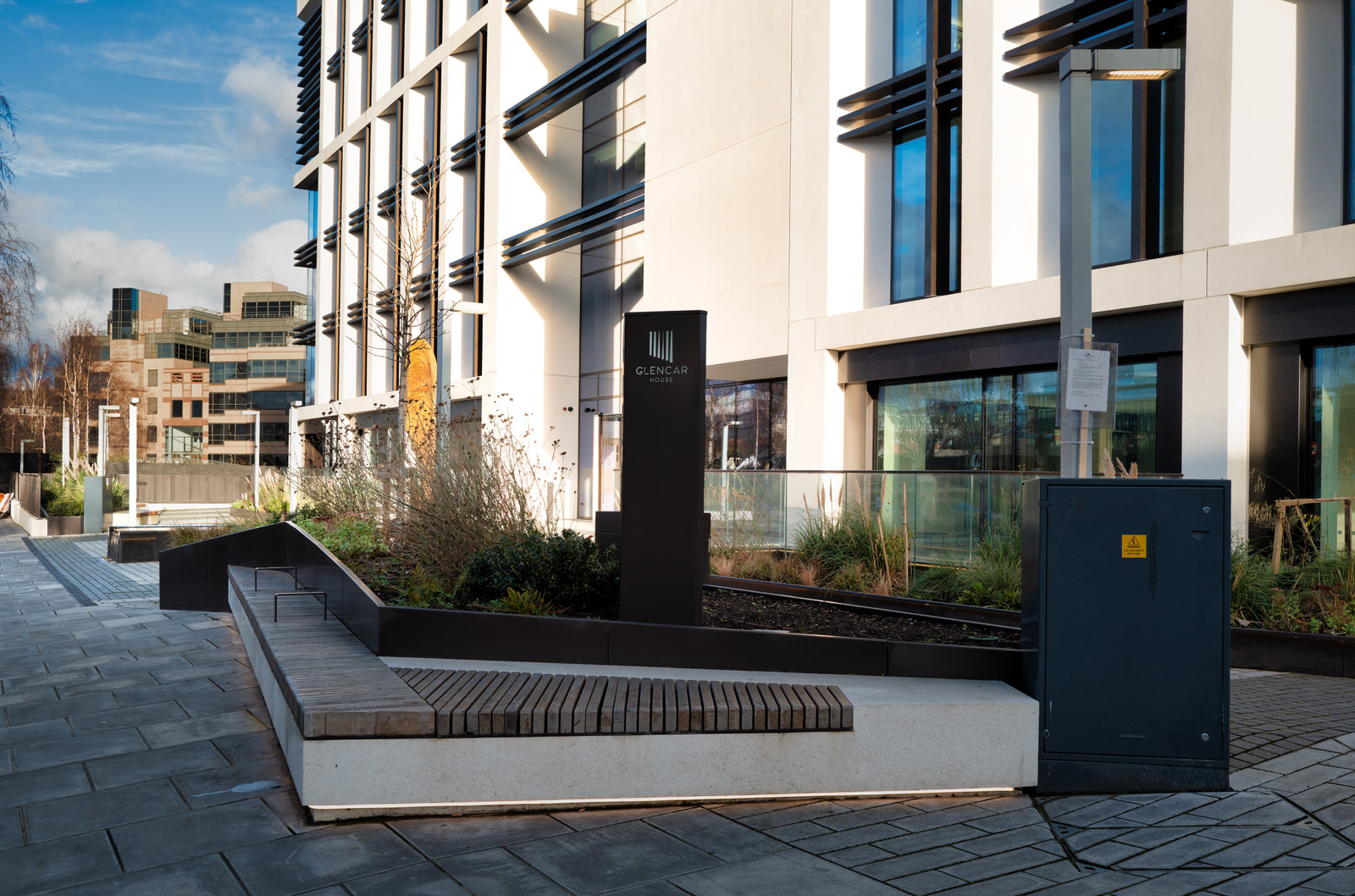
Standing on the Merrion Road in Dublin 4, directly opposite the iconic RDS, Glencar House is a masterclass in how modern commercial architecture can pay homage to Irish heritage. Completed in 2024 by the Killeen Group, this six-storey Grade A office development replaces a long-standing landmark of the Dublin automotive landscape.
For over a decade, the site was occupied by a low-slung, pavilion-style building that served as the flagship Toyota and Lexus Ireland showroom. The choice of the site for Glencar House was deeply personal for the developers; the Killeen Group was founded by the late Dr Tim Mahony, a titan of Irish industry and the man who brought Toyota to Ireland. The previous structure, part of the 1990s Sweepstakes Centre development, was a remnant of a different era of urban planning—focused on car-centric retail and low-density corporate let. Its demolition made way for a 75,000 sq. ft. sustainable "biophilic" headquarters that reflects the international prestige of the Ballsbridge business district. Architectural Identity: Ogham and Water Designed by Reddy Architecture + Urbanism, Glencar House is named after the Glencar Waterfall in County Leitrim, a site of great significance to the Mahony family. This natural theme is woven into the building’s very fabric: The Facade: The exterior is defined by vertical precast concrete fins. These are a modern interpretation of the Ogham alphabet, an Early Medieval Irish script. The "notches" of the fins mimic the ancient carvings found on standing stones. The Interior: The biophilic design continues inside with a three-storey atrium featuring bronze fins that mimic a "cascading waterfall." The reception area is finished with native Connemara marble, Irish timber, and stone. The Sculpture: "Síol" (The Seed)
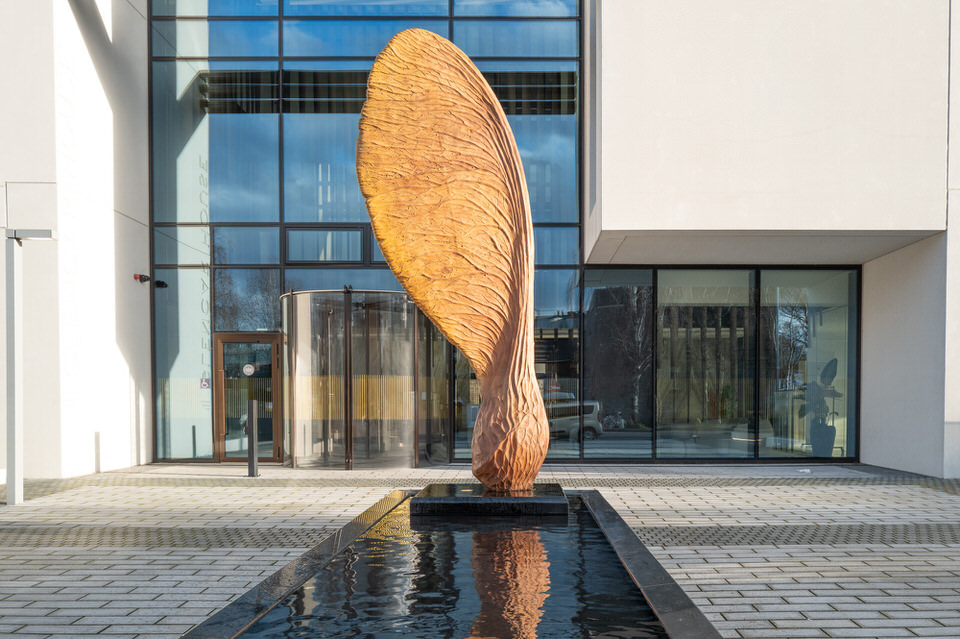
The most striking public feature of the development is the four-metre-high bronze sculpture situated in the front plaza. Titled Síol (the Irish word for "seed"), it was created by the renowned sculptor Rachel Joynt. The piece depicts a giant, aerodynamic sycamore seed. Balanced as if momentarily caught by the wind, it sits atop a reflective pool. The sculpture acts as a symbolic "time capsule," representing potential and the continuity of life—a fitting tribute to the legacy of the Killeen Group’s founders. It is positioned on a direct visual axis that leads the eye through the glass lobby to a live sycamore tree in the internal courtyard. A Family Legacy: Rachel and Dick Joynt
The presence of Síol in Ballsbridge adds another chapter to the story of the Joynt family, who have collectively shaped the visual landscape of Ireland. Rachel Joynt RHA Rachel is one of Ireland’s most celebrated public artists. Her work often takes small, organic objects—seeds, shells, acorns—and scales them to monumental proportions. Her other notable works include: Perpetual Motion (Naas Road): The famous giant "map" sphere on the M7. The People’s Acorn (Áras an Uachtaráin): A bronze acorn in the President’s gardens containing a time capsule of Irish history. Mothership - A bronze sea urchin on the rocks of the South Dublin coast Noah’s Egg (UCD): A large bronze egg with a celestial interior at the Veterinary Sciences Centre. Dick Joynt (1938–2003) Rachel’s father, Dick Joynt, was a master of stone and bronze whose work possessed a "primitive" and enduring strength. He was a central figure in 20th-century Irish sculpture, known for: Celebration at Eden Park, Glasthule: Located very near to Rachel's Mothership, this Kilkenny limestone sculpture depicts a mother holding a child aloft—a powerful expression of vitality and the "celebration of life." Earthmother (Dublin Airport): A powerful reclining figure carved from limestone. The Ram (Bray): A massive, stylised limestone ram that has become a local icon in County Wicklow. Michael Collins (Merrion Square): The bronze bust of the revolutionary leader located in the quiet parkland of Dublin’s Georgian core. The Victors (Tallaght): A significant limestone monument commissioned for the Dublin Millennium.
Select Image To Visit The Photo Gallery: The Evolution of Glencar House
What Glencar House Replaced
GALWAY CITY
CORK CITY AND COUNTY
GLOBAL MENU
DUBLIN SOUTHSIDE
DUBLIN NORTHSIDE
URBAN CARTOGRAPHER
EXCELLENT PICTURE THIS 2017
Rachel Joynt Sculpture At Glencar House - Presented By The Urban Cartographer
Who Is Building An Experience Which Is Getting Better Day By Day