The Irish Volunteer Monument at Blaquiere Bridge - Presented By The Urban Cartographer
LET MISTER SCREEN ASSIST YOU
GLOBAL INDEXThe Urban Cartographer
TECHNICAL STUFFExplore the history of the Irish Volunteer Monument at Blaquiere Bridge in Phibsborough. Sculpted by Leo Broe, this landmark commemorates the Dublin Brigade's role in the 1916 Rising and features stunning reliefs of Irish mythology.
EXCELLENT PICTURE THIS 2017
The Irish Volunteer Monument at Blaquiere Bridge - Presented By The Urban Cartographer
The Irish Volunteer Monument at Blaquiere Bridge
Author: Urban Cartographer
|
17. Feb 2026
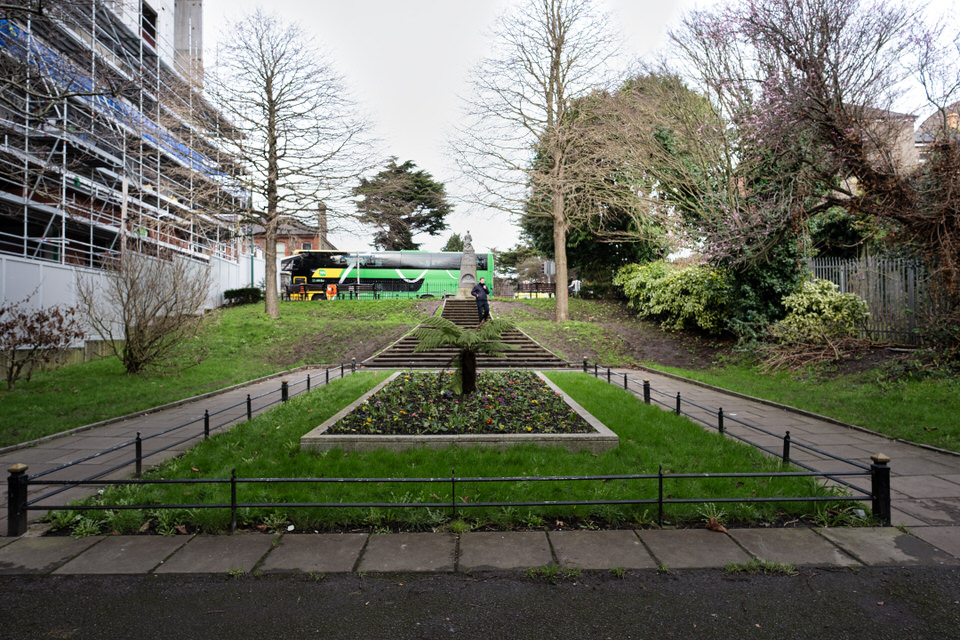
Photographed By William Murphy - Select Image To View Photographs
I purchased the Loxia 21mm as my dealer had decided to sell off his stock of Zeiss Loxia lenses and offered them to me at a very good price. However as I had two Batis Lenses the only one that was of interest to me was the Loxia 21mm and even though I had decided not to purchase any equipment during 2026 but I decided to purchase the 21mm lens as the price was very good. As I plan to spend next week in Kilkenny I am now trying to decide what camera(s) to bring with me assuming that it will rain for the duration of the visit.
Select Image Below To Visit The Photo Gallery: The Irish Volunteer Monument at Blaquiere Bridge
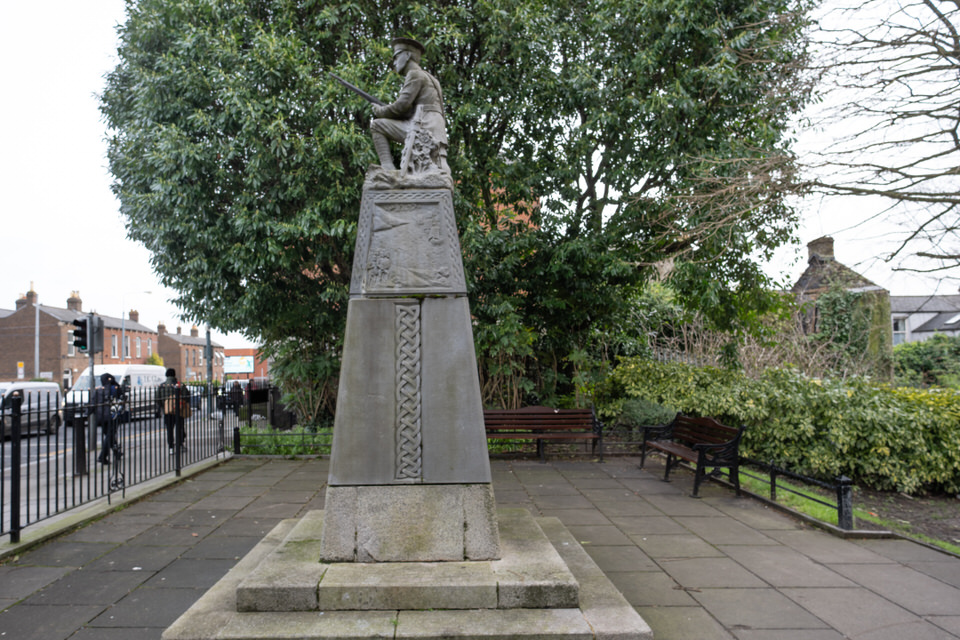
Exploring Phibsborough with a new Loxia 21mm lens paired with a Sony A1 MkII offered a great opportunity to test the kit’s sharpness, even under overcast Dublin skies. One of the local highlights is the Irish Volunteer Monument, a site rich in both revolutionary and civic history.
The Origins of Blaquiere Bridge
The monument stands at the site of the former Blaquiere Bridge on a now-filled-in section of the Royal Canal. It was named after John Blaquiere (1732–1812), a British soldier and diplomat of Huguenot descent who served as Chief Secretary for Ireland (1772–1777).
While Blaquiere was a key figure in the establishment of the Catholic Committee alongside Lord Trimleston, he was a polarising figure. Satirists of the era often mocked him with the play-on-words nickname "Queerblack." Interestingly, the bridge that bore his name once spanned a busy stretch of the canal before the waterway was culverted and paved over in the mid-20th century.
The Monument: Art and Symbolism
Formally recognised by Dublin City Council as the Irish Volunteer Monument, this limestone tribute was sculpted by Leo Broe (1899–1966), a renowned artist who was himself a member of the Irish Volunteers. Unveiled on 19 February 1939, the monument honours the Dublin Brigade members who fought during the 1916 Easter Rising and the War of Independence (1919–1921).
The structure is more than just a statue; it is a narrative in stone. While the top features a Volunteer in a defiant pose, the base displays intricate reliefs of Irish mythology and history:
The Arrival of the Milesians: Representing the legendary ancestors of the Irish people.
Cuchulainn at the Ford: A symbol of heroic solo defence.
The Death of Brian Boru: Commemorating the victory at Clontarf in 1014.
Restoration and Access
On closer inspection, it becomes clear that the monument was originally designed as a public fountain. Sadly, like many of Dublin’s historic water features, the supply was disconnected long ago.
The monument has had a turbulent past. It was severely vandalised in the 1970s, leaving the Volunteer figure without his rifle for nearly two decades until a full restoration in 1991. For years, the site was kept behind locked gates to deter anti-social behaviour. However, the gates are now frequently left open, suggesting a more trusting approach to community heritage. While litter remains a persistent issue, the presence of a recently repaired "colourful bench" nearby hints at a renewed pride in the local area.
The Bridge: The bridge was demolished in the late 1920s when this section of the Royal Canal was filled in (it is now a linear park/roadway).
The Artist: Leo Broe’s studio was actually located nearby on Harold’s Cross Road. He is famous for several republican monuments across Ireland.
Location: Since the monument is often overlooked by digital maps, I have added a pin to Google Maps to ensure this piece of Dublin history is easier for others to find.
When to choose the Sony A1 II + Loxia 21mm
This setup is a specialist’s tool. The Loxia 21mm is legendary for its "Sunstars" and corner-to-corner sharpness, making it a dream for disciplined photography.
Landscape & Architecture: The 21mm focal length allows you to capture much more of the scene than the Q3’s 28mm. If you are shooting the Royal Canal or narrow Dublin streets, the Loxia gives you that "expansive" feel.
The Joy of "Slow" Photography: Because the Loxia is a mechanical manual-focus lens, it forces you to slow down. With the A1 II’s high-resolution EVF and focus peaking, the experience is incredibly precise.
Technical Perfection: If you need the extreme speed of the A1 II sensor (e.g., shooting moving subjects while maintaining an ultra-wide perspective) or want to use the lens for video (the Loxia has a "de-click" feature for the aperture), this is the winner.
When to choose the Leica Q3
The Q3 is the ultimate "grab-and-go" luxury camera. It is designed for spontaneity and an unobtrusive presence.
Street Photography: 28mm is the "Goldilocks" focal length for street work—wide enough for context, tight enough for portraits. The Q3’s autofocus is fast and reliable, allowing you to capture fleeting moments that you might miss while racking the focus on a Loxia.
Travel & Portability: If you want one camera to hang around your neck all day without fatigue, the Q3 wins. It’s significantly more compact than the A1 II body, let alone with a lens attached.
Versatility (Crop & Macro): With 60MP, the Q3 has a "Digital Zoom" feature that lets you crop to 35mm, 50mm, 75mm, or 90mm while still retaining usable resolution. Plus, its dedicated Macro Mode allows for close-up shots that the Loxia (with a 0.25m minimum focus) simply cannot match.
Summary: The "Why"
Choose the Sony + Loxia when the process is the priority. It is for the days when you want to "build" a photograph, focusing on composition and the mechanical feel of the glass. It is a superior choice for wide-angle vistas and architectural detail.
Choose the Leica Q3 when the moment is the priority. It is for when you want to blend in, move fast, and trust the camera to handle the technicalities while you focus on the story.
GALWAY CITY
CORK CITY AND COUNTY
GLOBAL MENU
DUBLIN SOUTHSIDE
DUBLIN NORTHSIDE
URBAN CARTOGRAPHER
EXCELLENT PICTURE THIS 2017
The Irish Volunteer Monument at Blaquiere Bridge - Presented By The Urban Cartographer
Who Is Building An Experience Which Is Getting Better Day By Day