Fuji X100Vi - Presented By The William Murphy
LET MISTER SCREEN ASSIST YOU
GLOBAL INDEXThe Urban Cartographer
TECHNICAL STUFF
EXCELLENT PICTURE THIS 2017
Fuji X100Vi - Presented By The William Murphy
Fuji X100Vi
Author: William Murphy
|
13. Nov 2025
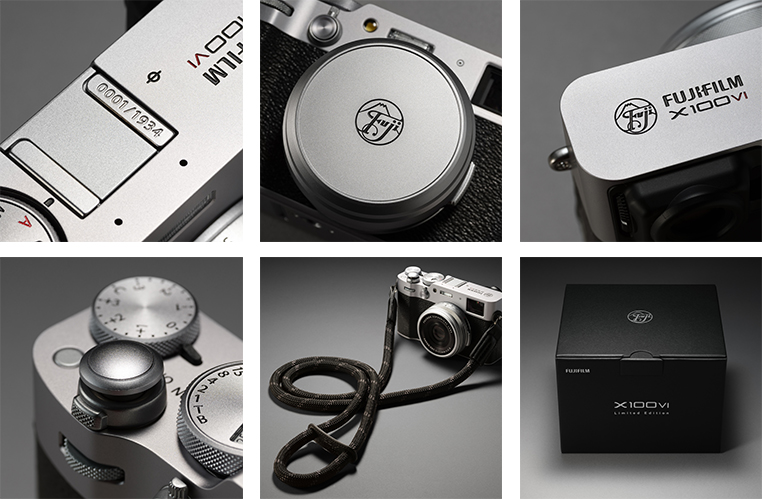
The decision to acquire a Fujifilm X100VI, despite already possessing an elite camera collection—specifically the Sony A1 Mk2 and A7RV for uncompromising speed and resolution, the Fujifilm GFX100RF for ultimate medium format aesthetic, and the Leica Q3 for full-frame fixed-lens purity—is not a financially reckless or technically redundant one. Rather, it represents a highly sophisticated, deliberate strategic choice to fill a functional and psychological niche that remains conspicuously empty within this high-end arsenal. The existing equipment is calibrated for extremes: the Sony systems dominate in performance, tracking, and workflow efficiency; the GFX system is dedicated to ultimate resolution and large format aesthetics; and the Leica Q3, while compact, leans heavily into premium materials and purist manual operation. The X100VI, conversely, is not acquired to challenge the 100-megapixel detail of the GFX100RF or the 30 frames-per-second capability of the A1 Mk2. Instead, it serves a distinct purpose rooted in a "specific photographic philosophy". This philosophy celebrates fixed-lens limitations and a particular style of engaged photography. The camera's appeal lies in its unique combination of retro-styled aesthetic, streamlined operational simplicity, and superior image quality derived from Fujifilm's exceptional colour science. This acquisition targets the "missing link": a tool that is genuinely small, unobtrusive, and lightweight, yet "very capable". The X100VI is engineered as the quintessential everyday carry (EDC) camera, offering a streamlined workflow and an engaging, "mindful" photography experience that acts as a necessary contrast to the overwhelming technical efficiency of the user's high-performance mirrorless bodies. While the Sony cameras are described by some professionals as "trusted friends—always ready to capture the shot", the X100VI offers inspiration and immediate creative gratification through its exceptional JPEG output and tactile interface. A crucial element in justifying the X100VI's purchase is its physical footprint compared to the other high-end fixed-lens option available to the user, the Leica Q3. While the Q3 is itself a premium compact system, the X100VI’s physical design successfully crosses a critical psychological threshold into true coat-pocket portability. | Specification | Fujifilm X100VI | Leica Q3 | Difference (X100VI vs Q3) |
| :--- | :--- | :--- | :--- |
| Weight (with battery/card) | 521g | 743g | -222g (Lighter) |
| Dimensions (W x H x D) | 128.0 x 74.8 x 55.3mm | 130 x 80 x 93mm | Significantly less depth | The weight difference of approximately 222g is sufficient to shift the X100VI from merely a small camera to a truly pocketable device, fitting "snugly in my jacket pocket". This analysis highlights the principle of diminishing returns in utility. Even a modest reduction in size and weight can drastically alter how frequently and spontaneously a camera is carried. Furthermore, the X100VI is not merely lighter; it is also feature-rich. Its inclusion of an In-Body Image Stabilisation (IBIS) system and a built-in Neutral Density (ND) filter provides immense practical utility for spontaneous shooting in low light or bright conditions, enhancing its capability as an EDC tool beyond the purist capabilities of the Q3. The X100VI is slightly larger and heavier than its X100V predecessor, a necessary trade-off Fujifilm made to integrate the powerful 6-stop IBIS unit. This inclusion validates the minimal size increase by transforming the camera’s low-light and handheld capabilities. The X100VI thrives in environments where technical excellence must be delivered without technical distraction. Its primary justification is its ability to foster engagement and discipline in the photographic process, a stark contrast to the automatic efficiency of the Sony A1 or A7RV. The fixed focal length is central to the X100VI’s appeal. It features a high-quality 23mm f/2 lens, which provides a classic 35mm full-frame equivalent perspective. This limitation compels the photographer to pre-visualise shots and "move their feet," thereby deepening the engagement with the scene, rather than relying on the inherent flexibility and detachment offered by zoom lenses on full-frame mirrorless systems. A key draw for long-time professionals turning to Fujifilm is the unparalleled colour science and the extensive range of JPEG simulation options. With 20 built-in film simulations, including the new Reala Ace, the X100VI offers users the ability to achieve superior, creatively pre-processed JPEG files straight out of the camera. This capability represents a substantial professional advantage: it allows for the immediate creation of content, bypassing the laborious post-production workflow required for processing high-resolution RAW files from the GFX100RF or even the standard RAW files from the A7RV. For personal projects and fast-paced documentary work, this immediate, aesthetically pleasing output is invaluable. The camera's interface reinforces this mindful approach. The tactile ergonomics are defined by dedicated, mechanical dials for aperture, shutter speed, and ISO. This analogue-style control is intuitive and satisfying to use, establishing a direct, physical connection between the photographer and the exposure settings. This direct manual control facilitates a clean separation from the complex digital menu structures often required to operate high-performance flagship cameras. The unique Hybrid Viewfinder is a crucial factor that draws sophisticated users to the X100 series. This system allows the photographer to toggle between a pure optical viewfinder (OVF) and a high-resolution electronic viewfinder (EVF). The OVF provides an "incredibly bright" and pure view of the scene, allowing the photographer to see slightly outside the frame, which is highly beneficial for street photography. Simultaneously, the OVF can integrate digital overlays, such as histograms or focusing aids. This fusion offers the tactile, immersive experience associated with classic rangefinders (like the user’s GFX or Q3) while retaining the essential digital information necessary for contemporary shooting. Furthermore, the X100VI integrates several features that transform its functionality compared to purist fixed-lens rivals. The inclusion of a critical built-in Neutral Density (ND) filter is repeatedly cited as a professional standout feature. This internal filter is immensely handy for mitigating the challenges of shooting wide open at $f/2$ in bright daylight, or when attempting slow shutter speeds for creative effects. By negating the need for external screw-in filters, the ND filter saves both space and time, enhancing the camera's efficiency as a spontaneous tool. The X100VI also includes a built-in flash, which is noted as perfect for unobtrusive documentation of people. The camera’s utility is silently enhanced by its use of a leaf shutter. This mechanical design is nearly silent, making the X100VI ideal for environments demanding discretion, such as street or documentary photography, or formal events where the focal plane shutter noise of the A7RV would be disruptive. Moreover, the leaf shutter technology inherently supports high-speed flash synchronisation, which significantly enhances the utility of the built-in flash, particularly for achieving balanced exposure during daylight fill photography—a capability often complex and expensive to replicate with the focal plane shutters found in most professional mirrorless cameras. The X100VI is not merely an aesthetic update; it integrates two major technical leaps that drastically increase its functional capability over its predecessors and justify its position as a modern, high-performance compact camera in a professional’s bag. The core of the X100VI’s technical justification is its sensor. It features the 40.2-megapixel X-Trans CMOS 5 HR sensor, the same high-resolution architecture found in Fujifilm’s flagship interchangeable lens cameras, such as the X-H2 and X-T5. This sensor provides exceptional image quality, delivering crisp details, vibrant colours, and excellent dynamic range. The adoption of this high-resolution sensor significantly mitigates the primary limitation of a fixed-lens system: fixed focal length. The 40MP files provide ample resolution for "heavy cropping". While the X100VI offers digital zoom options equivalent to 50mm and 70mm, which are essentially crops of the 23mm image, the high starting resolution ensures that the resulting files maintain sufficient detail and resolution for professional use, offsetting the need for interchangeable lenses. This capability makes the camera considerably more versatile than earlier X100 models, whose lower resolution sensors made cropping less viable. The integrated leaf shutter technology further ensures that these files can be captured with near-silent operation, essential for unobtrusive work. The integration of 5-axis In-Body Image Stabilisation (IBIS) is the most significant functional enhancement of the X100VI. This miniaturised IBIS unit is rated for up to 6.0 stops of stabilisation, although this rating marginally reduces to 5.5 stops when utilising the optical viewfinder. The inclusion of IBIS is especially consequential, transforming the camera's low-light performance. For a camera equipped with an APS-C sensor and an $f/2$ fixed lens, low-light performance has always been a point of discussion. The IBIS system directly addresses this, allowing users to dramatically reduce their reliance on high ISO settings. Users have reported being able to comfortably shoot the X100VI handheld at very slow shutter speeds, validating this capability. Consistent field testing demonstrates the ability to handhold the camera at shutter speeds down to 1/2 second with a solid keeper rate (around 25%), and even achieving tack sharp images at 1 second in optimal conditions. This ability to slow the shutter speed allows the 40MP sensor to capture more light and minimise noise levels. Furthermore, the IBIS system is fundamentally necessary to ensure the user can reliably extract the full detail potential of the new, high-density 40MP sensor when shooting handheld. High-resolution sensors are notoriously unforgiving of micro-shake; the 6-stop stabilisation ensures that the detailed architecture of the X-Trans sensor can be fully resolved without demanding the unrealistic shutter speeds or static support typically required for high-resolution capture. This enhancement opens significant creative opportunities, particularly for documentary and travel photographers where conditions are often unpredictable. The IBIS system is also highly effective for video, providing stable handheld footage, complementing the camera’s improved video specifications, which now include 6.2K/30p and 10-bit capability. The X100VI incorporates Fujifilm’s most recent autofocus technology, featuring intelligent hybrid contrast and phase detection AF, alongside improved subject recognition capabilities. While the focus speed of the X100VI does not rival the speed and instant tracking of systems like the Sony A1 Mk2, the modern focusing engine represents a significant upgrade from previous X100 generations. For the primary use case of street, portrait, and general casual photography, the AF performance is considered "fine". Specifically, the implementation of subject, eye, and face recognition modes has been lauded for its effectiveness in "fast paced street photography". Professionals upgrading from previous X100 models have noted that the new system "feels quite modern, and it's at a point now where it just works with no hassle". By assigning subject recognition to a dedicated button, users can consistently nail focus on faces rapidly, proving substantially faster than traditional focus-and-recompose techniques. The X100VI has been met with overwhelmingly positive critical reception, confirming its status as a "gem" and a "very serious camera". The professional consensus views it as a significant refinement of a beloved platform, often described as a "home-run" for the brand. Professional photographers, including those who rely on the GFX medium format system and high-end X-T series bodies (like the X-T5), have embraced the X100VI as their preferred tool for "personal projects and spontaneous shoots". It is recognised as a powerful, fixed-lens workhorse, delivering a "classic reportage focal length" with excellent image quality. Its specific utility for documentary and travel photography is consistently highlighted due to its combination of being small, lightweight, and unobtrusive. The camera’s image quality receives high praise, particularly regarding its output files. The dynamic range is ample, and the colour is "exceptional". The fidelity of the X-Trans sensor RAW files is often noted as being dramatically superior when processed using professional software like Capture One, resulting in better contrast and sharpness compared to standard Adobe Lightroom conversion. This quality validates the X100VI as a tool capable of generating professional-grade output even for users accustomed to 100MP medium format files. Despite the widespread enthusiasm, professional reviewers and consistent user feedback highlight several operational limitations that must be understood within the context of its niche role. The most critical and consistent performance constraint is the camera’s autofocus speed and tracking capability. While the AF is greatly improved for deliberate shooting and static subjects (like portraits or landscapes), the X100VI is explicitly not the camera for tracking fast action. Reviewers have found that the lens focus speed can feel "sluggish in certain situations", confirming that the camera is designed for a methodical, non-sports shooting style. It is important to acknowledge that for a user already owning the Sony A1 Mk2, this AF weakness is not a failure of the X100VI but a known, acceptable compromise that reinforces the camera’s role as the secondary, more mindful tool, relieving the pressure to capture every instant moment with maximum efficiency. Physically, some long-term X100 series users have expressed minor grievances. The camera is reported as slightly larger and heavier than its predecessor, a necessary compromise for the IBIS system. Additionally, the lens focusing mechanism, while functional, is occasionally noted as being "a bit noisier and slower" than anticipated. Finally, there have been isolated reports of the camera freezing during extended or rapid use, necessitating a hard reset via battery pull. While seemingly rare, this behaviour is reminiscent of occasional stability issues encountered in earlier generations of Fujifilm X-series bodies (such as the X-T2), suggesting a possible area for future firmware refinement. One specific, practical issue raised by the user is the logistical challenge presented by the optional BC-W126S battery charger profile when attempting to use it in typical UK or Irish hotel sockets. This complaint is entirely valid and stems from Fujifilm's corporate policy regarding charging accessories and the design of the plug unit. Fujifilm’s policy for the X100VI, like many modern compact cameras, involves omitting the dedicated BC-W126S charger from the box. The camera is supplied with an NP-W126S rechargeable battery. The assumption is that users will rely on the ubiquitous USB-C port for in-camera charging. While in-camera USB charging is convenient, it presents significant practical limitations for professionals who travel or use multiple batteries in quick succession. Charging the battery via a standard computer USB input (rated at 5 V/500 mA) can take approximately five hours. This prolonged charging time renders the camera body unusable for photography, making rapid battery turnaround impossible. Given the X100VI’s CIPA rating of 450 shots per charge—a figure which is low compared to professional full-frame bodies—frequent charging is essential. Consequently, the optional BC-W126S dedicated charger must be purchased separately to facilitate rapid power replenishment (approximately 150 minutes per battery). The design of the optional BC-W126S is a compact, direct wall plug unit. This requires the user to attach a regional plug adapter, such as the UK three-pin version, directly to the charger body. The design’s compact nature paradoxically becomes its Achilles' heel in environments common in the UK and Ireland. UK and Irish electrical sockets are often designed in ways that physically constrain direct-plug chargers: they may be slightly recessed into the wall or skirting board, or they may be positioned in tight clusters within multi-socket strips or travel adaptors. The BC-W126S, when fitted with the required UK adapter, possesses a rigid, non-flexible physical profile (in terms of depth and width) that often prevents it from sitting flush against the wall or fully engaging the contacts when the socket is recessed. Crucially, its width often means it physically blocks access to adjacent sockets in a typical double-gang wall plate or power strip, or that it is too bulky to fit into the constrained space of older or complex hotel bedside sockets. This logistical flaw means that the very accessory intended to provide rapid, convenient power restoration while travelling often fails in the key locations (hotels) where it is most needed. The professional traveller must therefore bypass the original direct-plug design entirely. The solution involves either purchasing a high-quality, third-party dual charger that uses a flexible power cable to separate the charging unit from the restrictive socket, or utilising a powerful, high-wattage USB-C Power Delivery (PD) wall charger (not a slow computer port) to dramatically reduce the five-hour in-camera charging time, thereby circumnavigating the physical limitations of the proprietary wall charger. The acquisition of the Fujifilm X100VI is a measured and highly logical choice for a photographer whose arsenal already defines the pinnacle of technical capability. The X100VI successfully avoids redundancy by positioning itself not as a performance rival to the Sony A1 Mk2 or A7RV, but as a complementary tool that addresses dimensions of photography—portability, aesthetic pleasure, and streamlined creative output—that large, interchangeable lens systems cannot match. The camera's definitive role is to serve as the ultimate EDC device, achieving maximum utility within a minimal footprint. It achieves this by combining the psychological benefits of a fixed-lens, tactile interface with key modern advancements: the 40MP sensor provides high-resolution cropping potential, and the 6-stop IBIS system ensures that this high-resolution capacity can be fully realised handheld, regardless of lighting conditions. The integrated ND filter and silent leaf shutter further cement its status as an unparalleled tool for unobtrusive documentary and street work. The known operational limitations—such as its comparative lack of speed for tracking fast action and the minor size increase—are acceptable compromises that reinforce its specialised function. These limitations facilitate a more deliberate and engaging photographic experience, offering a psychological respite from the pressure of peak performance expected from the flagship Sony systems. The singular logistical failing identified by the user—the impractical physical profile of the optional BC-W126S charger in common UK/Irish hotel sockets—is a precise, non-performance-related design flaw. It requires a simple mitigation strategy (cabled third-party charger or high-power USB-C PD) but does not detract from the X100VI's profound functional and creative contribution to a diverse professional equipment portfolio. The X100VI is, ultimately, the luxury item that earns its keep through sheer, inspiring usability.The Definitive Role of the Fujifilm X100VI: A Strategic Acquisition Beyond Flagship Performance
I. Introduction: The X100VI in the Pantheon of High-End Photography
Contextualising the Acquisition: Performance vs. Philosophy
Comparative Size and Weight Analysis (Addressing the Niche)
II. Philosophical Resonance: The X100VI as the Tool for 'Mindful' Photography
The Joy of Limitation and Tactile Control
The Hybrid Viewfinder and Integrated Utility
III. Technical Advancement: Justifying the VI's Performance
The 40.2MP X-Trans CMOS 5 HR Sensor
Stabilisation Reimagined: The Critical 6-Stop IBIS
Autofocus Evolution: Subject Recognition
IV. Critical Reception and Operational Limitations
Professional Consensus and Market Hype
Operational Limitations and Consistent User Feedback
V. Logistical Analysis: The BC-W126S Charger and UK/Irish Socket Constraints
Charging Policy and In-Camera Reliance
Design Flaw: The BC-W126S UK Plug Profile
VI. Conclusion: The Definitive Role of the X100VI in a Professional Ecosystem
GALWAY CITY
CORK CITY AND COUNTY
GLOBAL MENU
DUBLIN SOUTHSIDE
DUBLIN NORTHSIDE
URBAN CARTOGRAPHER
EXCELLENT PICTURE THIS 2017
Fuji X100Vi - Presented By The William Murphy
Who Is Building An Experience Which Is Getting Better Day By Day