O'Connell Street 2 June 2026 - Presented By The The Urban Cartographer
LET MISTER SCREEN ASSIST YOU
GLOBAL INDEXThe Urban Cartographer
TECHNICAL STUFFExplore the rich history of Dublin's O'Connell Street, from the 1916 Easter Rising to its modern architecture. Discover why this iconic Irish boulevard and its surrounding streets face ongoing issues with urban dereliction, vacant commercial spaces, and unoccupied upper-floor residential units.
THE JUNE 2026 PHOTO GALLERIES
O'Connell Street 2 June 2026 - Presented By The The Urban Cartographer
O'Connell Street 2 June 2026
Author: The Urban Cartographer
|
03. Jun 2026
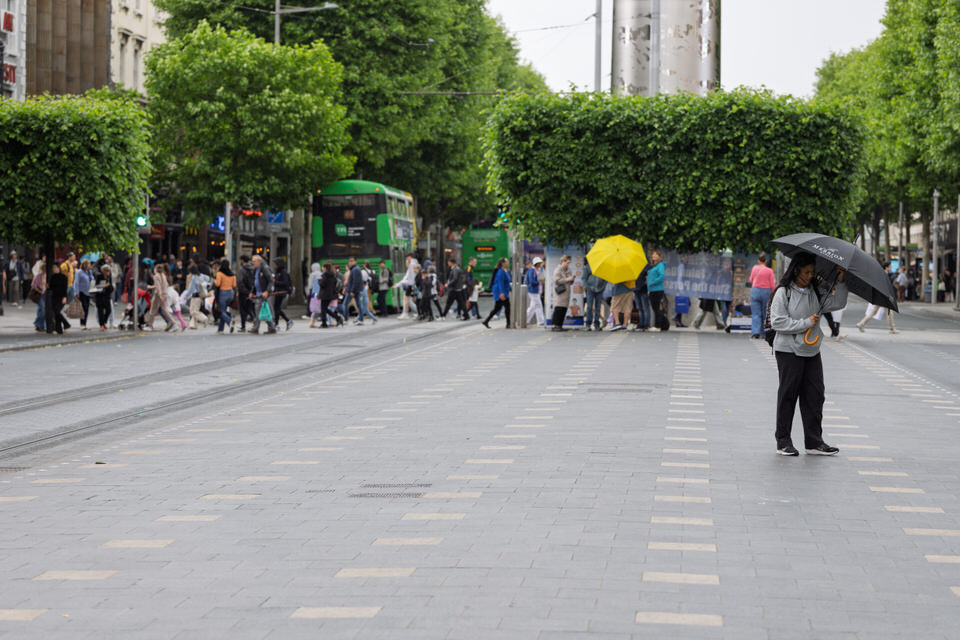
O’Connell Street is Dublin’s primary boulevard. Visually imposing and unusually wide, it serves as the spine of the capital's northside. Yet, it presents a striking paradox. While it functions as a highly symbolic national stage, the street and its surrounding arteries—such as Henry Street, Moore Street and Marlborough Street—are visibly marred by persistent dereliction, vacant commercial premises and unutilised upper-floor residential spaces. The story of O’Connell Street, its exceptional historic weight, and the complex socioeconomic factors that have left it peppered with "void sites" (vacant or underutilised properties) reveal a unique urban challenge. The Historic Importance: Stage of the Nation Originally laid out in the 18th century as Sackville Street, the thoroughfare was designed by the Wide Streets Commission to be one of the grandest conversational and residential boulevards in Europe. In 1924, it was renamed in honour of Daniel O’Connell, the nineteenth-century nationalist leader whose monument guards the southern end of the street facing O’Connell Bridge. O’Connell Street is essentially a living museum of modern Irish history, having stood at the epicentre of the country's turbulent journey toward independence: The 1913 Dublin Lockout: The street witnessed brutal clashes between striking workers and police, establishing it as a focal point for Irish labour history and the civil rights movement led by James Larkin. The 1916 Easter Rising: The General Post Office (GPO) served as the headquarters for the rebel forces. It was from its steps that Patrick Pearse read the Proclamation of the Irish Republic. The subsequent British artillery bombardment reduced the west side of the street to smouldering ruins. Bullet holes are still clearly visible on the O'Connell Monument today. The Irish Civil War (1922): Just years after being rebuilt, the street was torn apart again. The "Battle of Dublin" resulted in the destruction of the upper eastern side of the street. The 1920s Reconstruction: The street we see today is largely the result of meticulous neo-classical rebuilding executed in the 1920s under City Architect Horace O’Rourke, who sought to give the new Irish Free State a dignified, uniform capital spine. The Paradox: Void Sites and Vacant Spaces Despite this peerless heritage, O’Connell Street and its intersecting avenues suffer from a high concentration of vacant shopfronts, neglected facades and empty upper floors. This state of decay stems from a combination of historical shifts, complex ownership legalities and modern planning bottlenecks. Shift in the City's Gravity
In the mid-to-late twentieth century, Dublin’s commercial, cultural and social center of gravity shifted decisively south of the River Liffey toward Grafton Street and Temple Bar. O'Connell Street lost its prestigious status, its historic cinemas and ballrooms closed, and many prime properties were taken over by fast-food outlets, convenience stores and amusement arcades. This down-at-heel reputation discouraged premium retail investment for decades. Large-Scale Strategic Stagnation
A massive factor in the prevalence of void sites has been prolonged speculation and legal deadlocks surrounding major urban plots. The most infamous example is the sprawling "Dublin Central" site, which stretches from O'Connell Street across to Moore Street (originally encompassing the old Carlton Cinema site). Decades of planning appeals, ownership changes, court battles regarding historic 1916 battlefield sites, and economic crashes have kept this prime real estate boarded up and frozen in time, severely deadening the economic vitality of the surrounding lanes. The "Living Over the Shop" Conundrum
While Dublin faces a critical modern housing crisis, thousands of square metres of residential space sit empty above the commercial units on O’Connell Street. Converting these upper floors into safe, habitable apartments is notoriously difficult due to: Strict Building and Fire Regulations: Installing modern fire escapes and universal access (lifts) into century-old, protected neo-classical structures is structurally challenging and financially prohibitive for many landlords. Separate Access Issues: Many ground-floor retail units swallowed up the original separate street doorways leading to the upper floors during twentieth-century renovations, leaving the spaces above entirely inaccessible from the street. Many buildings are owned by institutional investors, multi-generational families or receivers who view the properties purely as land-bank assets. High commercial rates and complex institutional portfolios mean that some owners prefer to leave units vacant rather than lowering rents or investing the capital required to remediate structural decay.
HIGH RESOLUTION GALLERY PLUS MAP
I USED A NEW SONY A7RVI
LET MISTER SCREEN DIRECT YOU
GLOBAL INDEX OF PHOTO GALLERIES
DUBLIN SOUTHSIDE
THE URBAN CARTOGRAPHER
THE JUNE 2026 PHOTO GALLERIES
O'Connell Street 2 June 2026 - Presented By The The Urban Cartographer
Who Is Building An Experience Which Is Getting Better Day By Day