Mister Screen Before He Retired - Presented By The The Urban Cartographer
LET MISTER SCREEN ASSIST YOU
GLOBAL INDEXThe Urban Cartographer
TECHNICAL STUFFA look back at Vincent Browne's iconic bronze sculpture, Mr. Screen, exploring the forgotten history of the traditional cinema usher, the legacy of the Green Cinema on St. Stephen's Green, and the changing landscape of Dublin's historic picture houses.
DUBLIN NORTHSIDE
Mister Screen Before He Retired - Presented By The The Urban Cartographer
Mister Screen Before He Retired
Author: The Urban Cartographer
|
27. May 2026
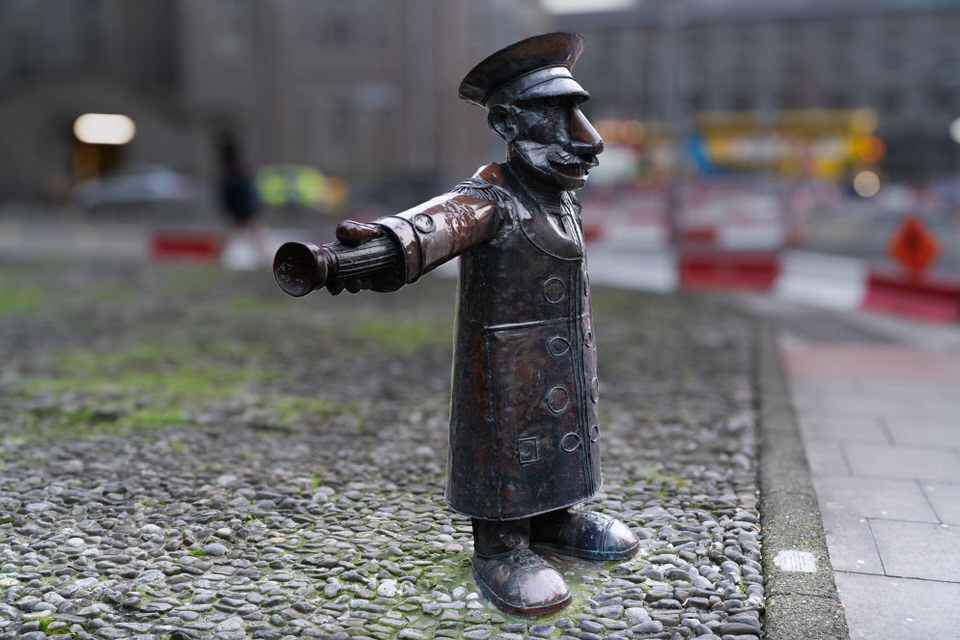
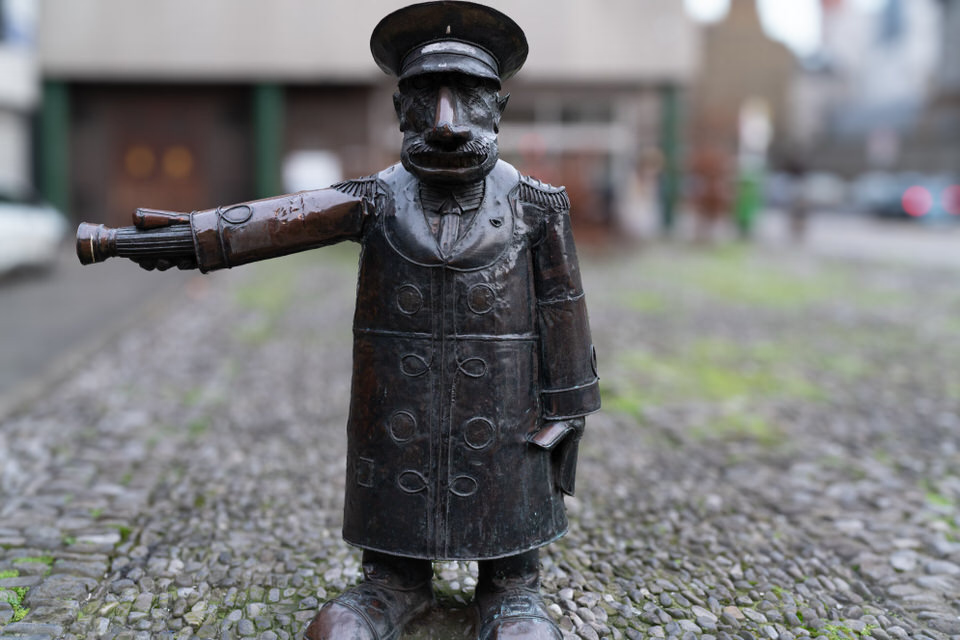
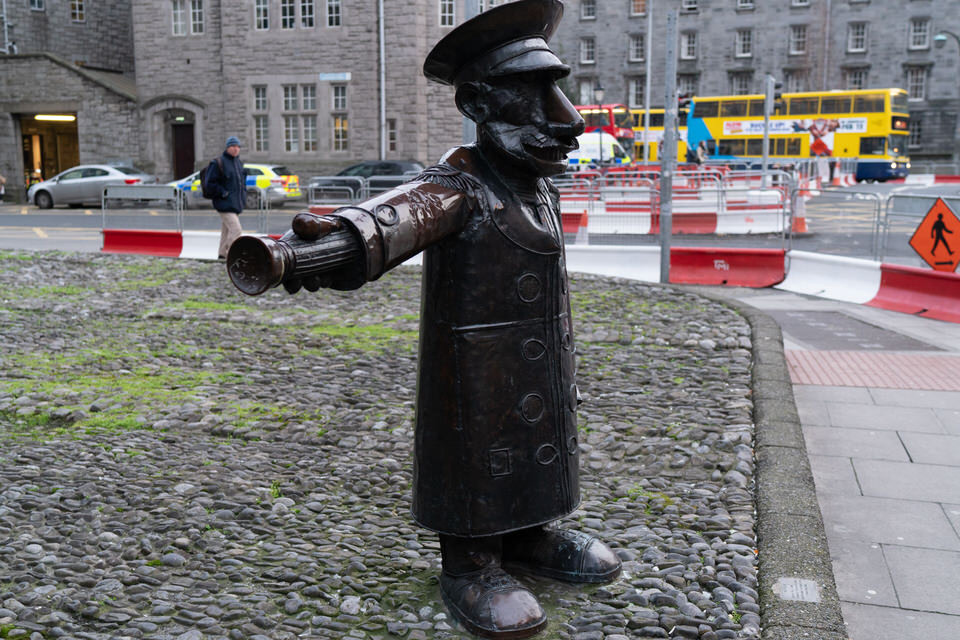
REMEMBERING MISTER SCREEN AND DUBLIN'S LOST PICTURE HOUSES The Watchman of the Aisles: Remembering Mister Screen and Dublin’s Lost Picture Houses The Golden Era of the Cinema Usher To anyone who has grown up in the era of multiplexes, online booking apps, and unlit aisles, the concept of a cinema usher must seem like a relic from a different century. Today, you scan a barcode at an automated turnstile and navigate the dark with the glow of your smartphone. But for decades, the cinema usher was the absolute guardian of the picture-house experience. The job demanded a very specific kind of individual and carried an air of quiet authority. Typically, ushers were neat, disciplined, and possessed an encyclopaedic knowledge of the auditorium’s layout. Clad in sharp, military-style uniforms—complete with polished buttons, peaked caps, and braided epaulettes—they were the public face of the theatre. Their attributes had to be a mix of strict discipline and utmost discretion. An usher needed the diplomatic skills to quieten rowdy patrons or spot underage teenagers trying to sneak into an over-18s screening, paired with the physical grace to guide theatregoers down pitch-black stairs without a stumble. Their primary tool of the trade was the heavy brass torch, used to slice a clean beam of light through thick clouds of cigarette smoke to point you toward your velvet seat. They weren’t just taking tickets; they were stage managers of the stalls, maintaining the atmosphere of glamour and decorum that going to the "flicks" once demanded. Sculpting a Dublin Icon: Mr. Screen It was this distinct cultural figure that sculptor Vincent Browne immortalised in 1988. Commissioned by the Dublin Cinema Group during the Dublin Millennium celebrations—the same year that brought us Jeanne Rynhart’s Molly Malone on Grafton Street and the two female shoppers on Liffey Street—Mr. Screen was cast in bronze and placed outside the Screen Cinema at the junction of Hawkins Street and D’Olier Street. Browne, a celebrated Irish sculptor known for his highly expressive, tactile, and often satirical bronze works, perfectly captured the caricatured essence of the profession. With his oversized peaked cap, exaggeratedly long coat buttoned to the chin, and an outstretched arm gripping a flared torch, Mr. Screen stood as a whimsical, affectionate monument to a fading trade. For nearly thirty years, he pointed his bronze beam toward the cinema doors, becoming a beloved meeting point and a familiar face to generations of Dublin film lovers. When I photographed him back in 2016, it was just a short time before the Screen Cinema closed its doors for good and he "retired" from his post, removed to protect him from the impending demolition of the site. For years, many of us wondered where he had gone. Fortunately, he wasn't lost. In 2018, thanks to the care of artist David Flynn, Mr. Screen was carefully restored and relocated across the Liffey to the Northside, where he now greets a new generation of cinemagoers inside the foyer of the Savoy Cinema on O’Connell Street. From the Green to the Screen: A Personal Celluloid History Originally opened on 18 December 1935 by the Lord Mayor Alfie Byrne, the Green Cinema stood proudly at 127 St. Stephen’s Green (on the west side of the square). Designed by the prominent architectural firm Jones and Kelly, it was a magnificent Art Deco house boasting nearly 1,500 seats. It was celebrated for its modern, clean lines and its sophisticated long foyer that built anticipation as you walked away from the bustling street into the auditorium. The Green was an essential fixture of mid-century Dublin social life, but by the late 1980s, the economic climate and changing viewing habits caught up with it. It closed its doors permanently in 1987 and was purchased by hotelier P.V. Doyle before being demolished shortly thereafter. Following the closure of the Green, the Dublin Cinema Group shifted focus, and their flagship alternative and independent programming moved to the Hawkins Street venue, which was subsequently renamed The Screen. I have vivid memories of both chapters of this cinema lineage. It was at the original Green Cinema on St. Stephen’s Green where I first experienced Ridley Scott’s dystopian masterpiece, Blade Runner—a film whose dark, rain-slicked, neon-lit urban landscapes felt incredibly striking to step out from into the crisp Dublin night. Years later, after the spiritual relocation to D'Olier Street, the programming shifted towards more eclectic, independent fare. Yet, despite its reputation for avant-garde and foreign-language films, the only movie I ever ended up seeing at the Screen Cinema location was Baz Luhrmann’s vibrant, eccentric Australian comedy, Strictly Ballroom. Mr. Screen stands as a monument to all of these lost spaces, a bronze reminder of a time when going to the movies was a grand, ushered ceremony. Mister Screen Before He Retired - Select Image To View Photographs
 Mister Screen Before He Retired - Select Image To View Photographs
 Mister Screen Before He Retired - Select Image To View Photographs
HIGH RESOLUTION PHOTOGRAPHS
SONY A7RII
WHO WAS MISTER SCREEN
GLOBAL INDEX OF PHOTO GALLERIES
DUBLIN SOUTHSIDE
THE URBAN CARTOGRAPHER
DUBLIN NORTHSIDE
Mister Screen Before He Retired - Presented By The The Urban Cartographer
Who Is Building An Experience Which Is Getting Better Day By Day