Bohermore Where Lord Haw Haw Is Buried - Presented By The The Urban Cartographer
LET MISTER SCREEN ASSIST YOU
GLOBAL INDEXThe Urban Cartographer
TECHNICAL STUFFExplore the history and architectural nuances of Bohermore Cemetery in Galway. Originally opened in 1880, this "New Cemetery" challenges the traditional definition of Victorian funerary style while serving as the final resting place for figures like Lady Gregory and William Joyce.
EXCELLENT PICTURE THIS 2017
Bohermore Where Lord Haw Haw Is Buried - Presented By The The Urban Cartographer
Bohermore Where Lord Haw Haw Is Buried
Author: The Urban Cartographer
|
04. Apr 2026
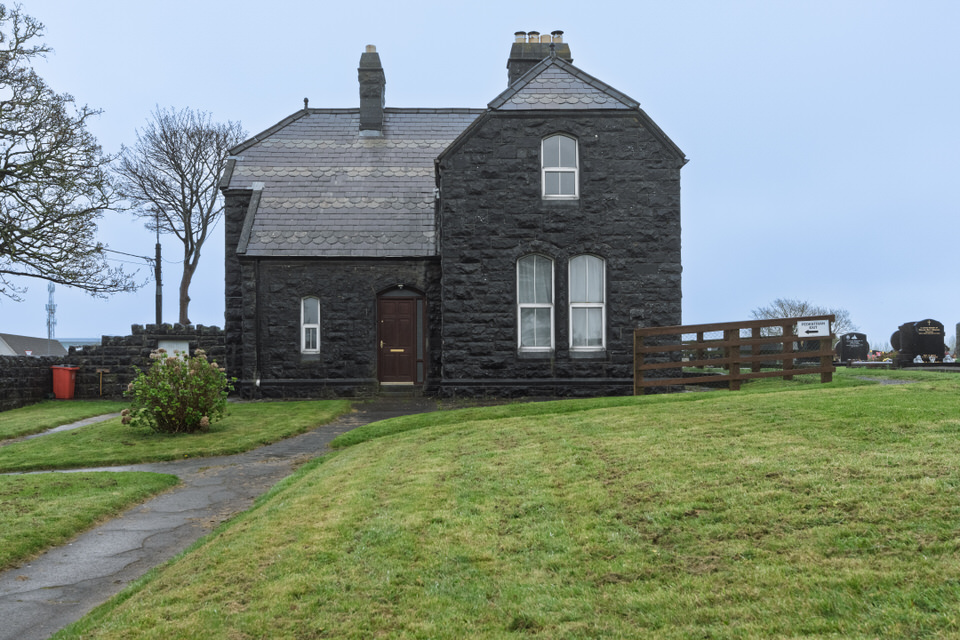
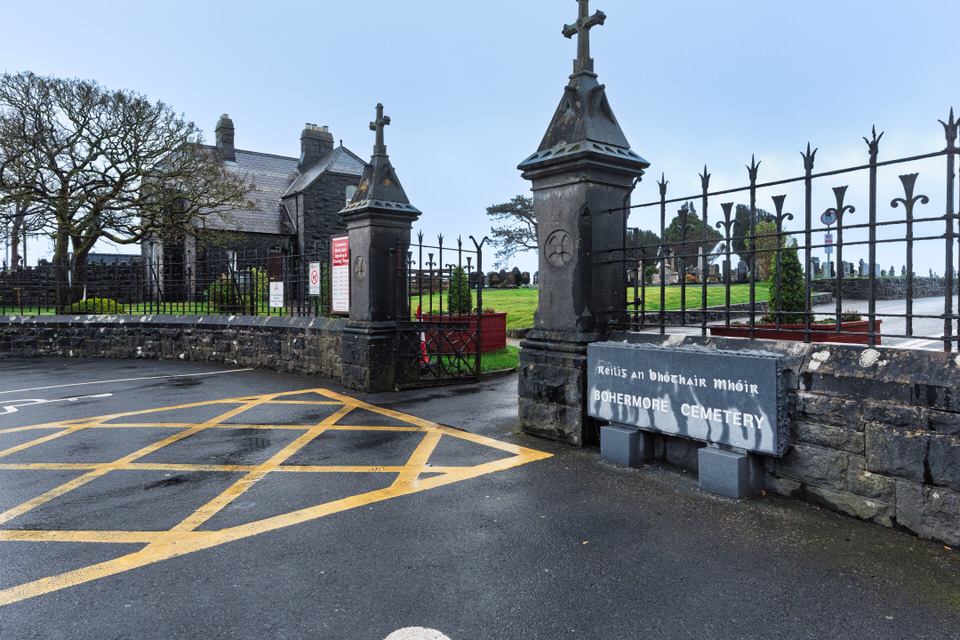 Photographed By William Murphy - Select Image To View Photographs
On this latest pilgrimage, I walked from Eyre Square, ducking into Cabbage Lane along the way. It is currently home to a series of striking, high-quality murals that demand a closer look—though I shall save that particular gallery for a future post. For now, my focus remains on the "New Cemetery," the final resting place of Galway’s most celebrated and its most humble.
Beneath the Galway Grey: Re-evaluating Bohermore’s Victorian Identity
The Label Debate: Style vs. Era
When I first shared a collection of photographs from Bohermore in August 2016, the response was unexpectedly academic. My description of the site as a "Victorian Cemetery" drew thoughtful criticism from readers who felt the term didn't quite fit the reality on the ground. This prompted a deeper look into the nuances of funerary history.
I originally stumbled upon the burial ground by pure chance while wandering through Bohermore—a name derived from the Irish Bóthar Mór, or "the big road." Expecting the romantic, melancholic disarray often found in historic graveyards, I was instead met with a space that was remarkably well-organised and immaculately maintained. This orderly character is likely why, despite opening in 1880 to relieve overflowing parish churchyards, it is still referred to locally as the "New Cemetery."
What Makes a Cemetery "Victorian"?
The objections to my initial description were less about politics and more about architectural taxonomy. When people think of a "Victorian" cemetery, they usually envision the "garden cemetery" movement—sprawling, theatrical landscapes like Highgate in London or Glasnevin in Dublin. These were often commercial ventures, designed as public parks where mourners could promenade amidst:
Ornate Gothic mausoleums and weeping angels.
Grand obelisks and winding, picturesque paths.
The overt display of wealth and status through masonry.
Bohermore does not fit this flamboyant mould. Established as a municipal cemetery in the late Victorian period (1837–1901), it was born in a post-Famine Ireland. Here, the design prioritised public health, civic order, and practicality over the opulent architectural excesses seen in the wealthier heartlands of the British Empire. In this strict aesthetic sense, the critics were right: it is not a "Victorian-style" cemetery.
A Uniquely Irish Synthesis
However, to strip the "Victorian" label away entirely is to ignore the historical clock. Bohermore is, unequivocally, a Victorian-era cemetery. Its foundations and earliest residents are rooted firmly in the late 19th century.
Furthermore, the stones themselves tell a fascinating story of Victorian-era cultural tension. Alongside conventional headstones of the period stand magnificent Celtic crosses, powerful symbols of the Gaelic Revival and a burgeoning national identity. The site houses figures whose lives—and deaths—capture the complexity of the age:
Lady Gregory: The dramatist and folklorist who helped shape the Irish Literary Revival.
William Joyce ("Lord Haw-Haw"): The infamous propagandist whose story remains a dark, complex footnote in 20th-century history.
Final Thoughts
"Victorian-era" serves as the more precise and respectful term. It acknowledges the historical timeframe without imposing a British aesthetic style that the site never intended to mimic. Bohermore is a sober, dignified, and distinctly Irish response to the universal need to honour the dead—a product of its time, place, and the persistent Galway rain.
William Joyce, notoriously known as "Lord Haw-Haw," remains one of the most polarising and unusual figures in the history of 20th-century wartime propaganda. His journey from a Brooklyn birthplace to a Galway grave via a London gallows is a strange tale of shifting identities and ultimate treason.
The Rise of "Lord Haw-Haw"
Born in New York in 1906 to an Irish Unionist father and an English mother, Joyce moved to Ireland as a child and later to England. In the 1920s and 30s, he became deeply involved in far-right politics, eventually becoming a leading figure in Oswald Mosley’s British Union of Fascists. Known for his vitriolic oratory and a distinctive scar on his cheek (received during a political brawl), he eventually fled to Nazi Germany just days before the outbreak of World War II in 1939.
In Germany, he became the primary English-language voice of Nazi radio. He was nicknamed "Lord Haw-Haw" by British radio critics due to his exaggerated, upper-class nasal drawl. His broadcasts, which began with the chilling catchphrase "Germany calling, Germany calling," were designed to demoralise the British public and spread disinformation. While many listeners tuned in for his unintentional comedic value, his mockery of the British war effort made him the most hated man in Britain.
The Trial and Execution
Joyce was captured by British forces near the Danish border in May 1945. His trial became a landmark legal case. Although he was born in the US and had become a naturalised German citizen, he had travelled on a British passport he obtained by lying about his birthplace. The court ruled that by holding a British passport, he owed allegiance to the Crown, making his broadcasts for the enemy an act of high treason.
He was executed by hanging at Wandsworth Prison in London on 3 January 1946. He was the penultimate person to be executed for treason in the United Kingdom.
How He Ended Up in Galway
After his execution, Joyce was buried in an unmarked grave within the walls of Wandsworth Prison, which was standard practice for executed criminals. However, his family—specifically his daughter, Heather Iandoli—campaigned for decades to have his remains repatriated.
Despite his "Lord Haw-Haw" persona, Joyce had deep ties to Galway; he had spent much of his youth there and attended St Ignatius College. In 1976, the British government finally permitted the exhumation of his body. His remains were flown to Ireland and reinterred in Bohermore Cemetery (the "New Cemetery") in Galway.
The move was controversial at the time, but the family wished for him to lie in the place he considered home. His grave in Bohermore is relatively simple, often surprising visitors who expect something more imposing for such a notorious historical figure. It serves as a stark reminder of the complexities of identity and loyalty during the darkest years of the 20th century.
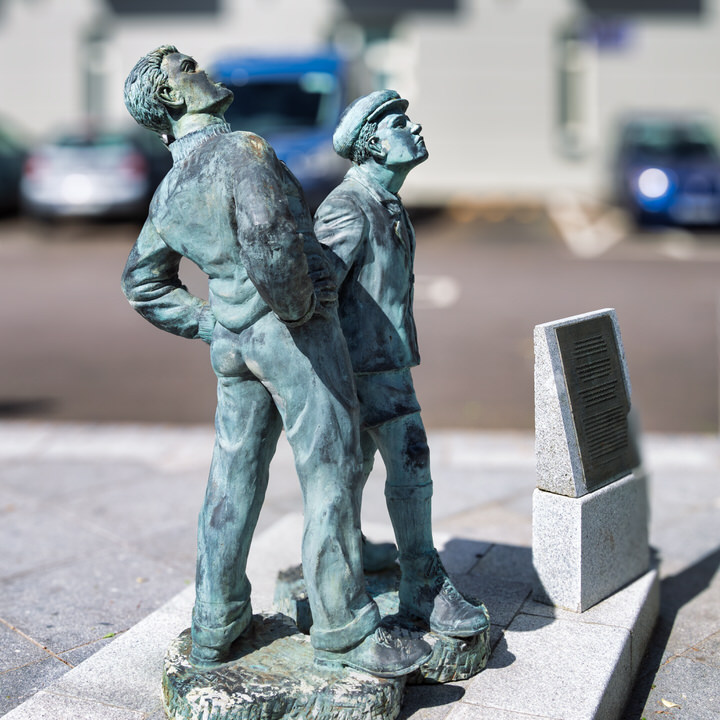 Sculpture In Cork City - Select Image To View Photographs
VIEW HI-RES PHOTOGRAPHS
CORK CITY AND COUNTY
ABOUT BOHERMORE AND LORD HAW HAW
GLOBAL INDEX OF PHOTO GALLERIES
GALWAY CITY
THE URBAN CARTOGRAPHER
EXCELLENT PICTURE THIS 2017
Bohermore Where Lord Haw Haw Is Buried - Presented By The The Urban Cartographer
Who Is Building An Experience Which Is Getting Better Day By Day