The Rise Of The Working Van Dweller - Presented By The The Urban Cartographer
LET MISTER SCREEN ASSIST YOU
GLOBAL INDEXThe Urban Cartographer
TECHNICAL STUFFAs skyrocketing rents and property prices price out full-time workers, a new generation of working professionals are turning to urban van dwelling across the UK, Ireland, and the US. Read an in-depth analysis of the vehicles they use, the legal realities of stealth camping, and how transatlantic housing solutions differ.
THE JUNE 2026 PHOTO GALLERIES
The Rise Of The Working Van Dweller - Presented By The The Urban Cartographer
The Rise Of The Working Van Dweller
Author: The Urban Cartographer
|
03. Jun 2026

I photographed the VW van (Betsy) July 4 2014 using a Sony NEX-7. It was parked in Cork City. The plate VCU 279L belongs to the historic (pre-1987) Irish vehicle registration system. Issued by County Monaghan, the structure reflects the county and sequence, while the concluding "L" represents a classic vintage era for British and Irish vehicles dating back to 1972 Kerbside Communities: The Rise of the Working Van Dweller The modern housing crisis has birthed a new demographic on the streets of Britain and Ireland: the employed, full-time "van dweller." Far removed from traditional nomadic communities or the idealized, sun-drenched filters of social media influencers, these are nurses, teachers, construction workers, and office professionals. They have jobs, they pay taxes, and they have been completely priced out of brick-and-mortar housing. With average urban rents swallowing huge portions of a worker's take-home pay, the choice to move into a converted panel van is transitioning from an eccentric lifestyle alternative to an act of financial survival. The Tools of Modern Stealth Living Maintaining a professional 9-to-5 while living on a public highway requires a strategy known as stealth camping. Because local councils are increasingly clamping down on overnight vehicle habitation, these workers must blend seamlessly into the urban landscape. The most utilized vehicles are chosen precisely because they look like standard tradesperson transport from the outside. They are completely devoid of external camper tells like side windows, bike racks, or decorative decals. Inside, however, they are highly engineered mobile micro-apartments. A major driver of this trend is financial liberation. With private rents in cities like London, Dublin, Bristol, or Manchester consuming up to 50% or more of average earnings, moving into a van allows workers to completely opt out of a broken system. It provides an immediate route to clear debts or accumulate a deposit for a traditional mortgage. However, maintaining professional hygiene standards while living on the street is a constant logistical hurdle, forcing workers to rely heavily on gym memberships just to access daily hot showers. Furthermore, opponents argue that normalising vehicle living as a viable housing alternative is dangerous, as it frames a systemic failure of governments to provide affordable housing as a trendy lifestyle choice. The Transatlantic Divide: How the US Reality Differs The phenomenon of working people living out of vehicles is equally prevalent in the United States, but the physical infrastructure, legal landscape, and cultural solutions look radically different. Vehicle Choice and Infrastructure While British and Irish van lifers rely heavily on medium-sized panel vans for urban camouflage, the American approach involves a massive variety of vehicles. Dwellers range from those in standard passenger sedans and SUVs to massive recreational vehicles (RVs) and converted school buses. The physical landscape of the US also offers different survival infrastructure. While workers in the UK and Ireland must quietly navigate tight residential streets, American vehicle dwellers often utilize an extensive network of 24-hour highway truck stops that feature paid private showers, laundromats, and massive parking fields. The Reality of Trailer Parks and Safe Parking In the US, "trailer parks" (mobile home parks) are often perceived from afar as the default safety valve for low-income housing, but they do not solve the modern vehicular housing crisis. Modern American trailer parks rarely accommodate transient vehicles or camper vans. They are designed for static, manufactured homes that are towed onto a plot once and permanently hooked up to utilities. The resident usually owns the structure but rents the patch of land beneath it. In recent years, private equity firms have bought up these parks across the US, aggressively hiking land rents and driving low-income owners into displacement. Because traditional trailer parks cannot accommodate mobile vehicles, American cities have had to pioneer a completely different model: Safe Parking Programs. Municipalities and non-profit organisations designate secure, monitored parking structures or church lots where working vehicular residents can legally park overnight, access basic sanitation, and depart early in the morning to go to their jobs. The Legal Landscape: UK vs. Ireland Living out of a vehicle while working a regular job sits in a notorious legal grey area on both sides of the Irish Sea. Because these residents are not members of traditional nomadic or Traveller communities, they navigate a different set of statutory pressures. The UK Framework In the UK, there is no specific national law that makes it illegal to sleep in your vehicle on a public highway, provided the vehicle is fully road-worthy, taxed, insured, and has a valid MOT. However, the legal pressure comes from two main sources: The Irish Framework The situation in Ireland is similarly restrictive but governed by different statutes. Under Irish law, any member of the public is permitted to park a mechanically propelled vehicle on a public road, provided it does not obstruct traffic, block driveways, or violate local parking signs. However, living in the vehicle changes the legal dynamic: Ultimately, whether in the UK, Ireland, or the US, the rise of the working vehicle resident is a stark indictment of the modern housing market. When full-time employment can no longer guarantee the security of a front door, the humble commercial van becomes the ultimate symbol of working-class resilience.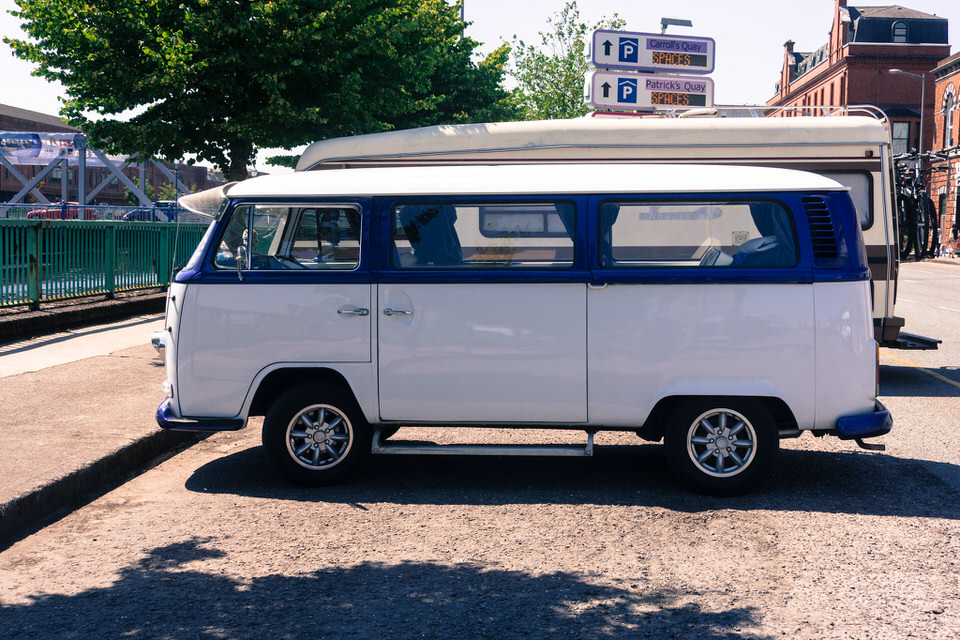 Camper Van Culture - Select Image To Learn More
 Camper Van On Manor Street In 2024 - Select Image To View Photographs
 AI Generated Image Of VW - Select Image To View Photographs
DUBLIN NORTHSIDE
CAMPER VAN CULTURE
LET MISTER SCREEN DIRECT YOU
GLOBAL INDEX OF PHOTO GALLERIES
DUBLIN SOUTHSIDE
THE URBAN CARTOGRAPHER
THE JUNE 2026 PHOTO GALLERIES
The Rise Of The Working Van Dweller - Presented By The The Urban Cartographer
Who Is Building An Experience Which Is Getting Better Day By Day