Where Capel Street Meets Little Strand St - Presented By The The Urban Cartographer
LET MISTER SCREEN ASSIST YOU
GLOBAL INDEXThe Urban Cartographer
TECHNICAL STUFFA photographic study of Dublin’s Little Strand Street. Witness the "mirror voids" where the construction of The July Hotel faces the dormant Ormond Hotel site, captured through the lens of history and street art.
EXCELLENT PICTURE THIS 2017
Where Capel Street Meets Little Strand St - Presented By The The Urban Cartographer
Where Capel Street Meets Little Strand St
Author: The Urban Cartographer
|
10. Mar 2026
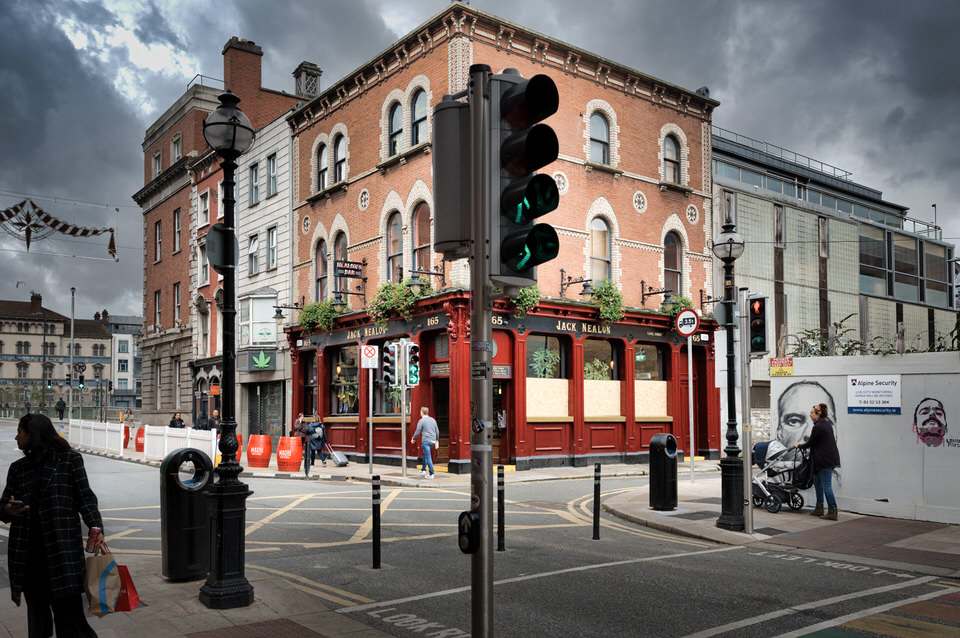
 Photographed By William Murphy - Select Image To View Photographs
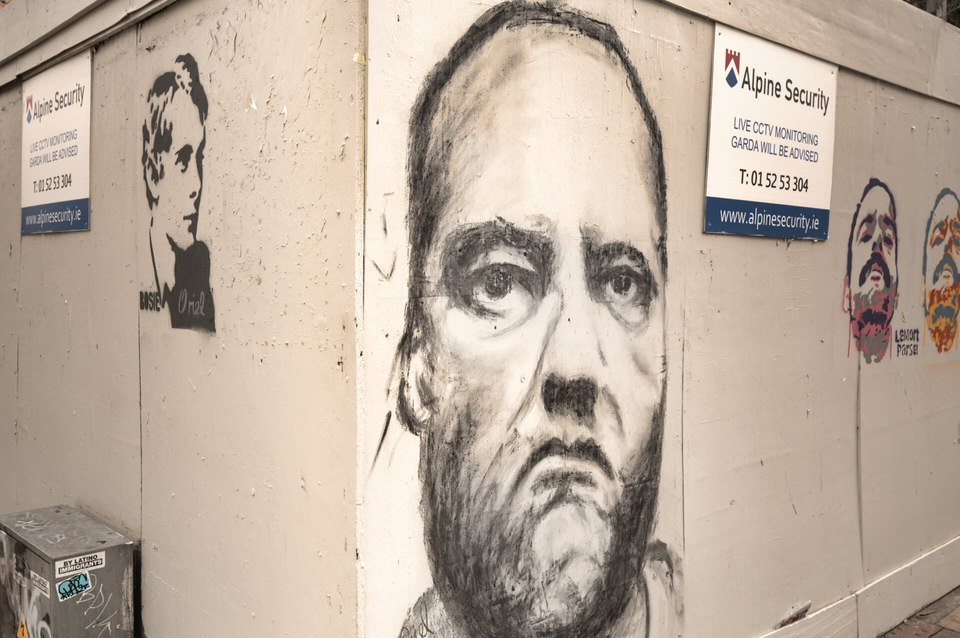
The artwork features two distinct figures from Irish literary and cultural history - Lord Alfred "Bosie" Douglas: The stencil labeled "BOSIE" is a portrait of the poet and lover of Oscar Wilde. This specific image is based on a famous 1894 photograph of Douglas.
Oscar Wilde: The large-scale charcoal-style portrait (seen on the corner) and the colourful stencils in one image appear to be stylised depictions of the iconic Dublin-born writer Oscar Wilde. The multi-colored stencils in another image use a "pop art" style to repeat his likeness with varying vibrant colours.
The artist is identified by the signature seen in several of the photos: Oriel. Oriel is a Dublin-based street artist known for stencils and wheatpastes that often highlight historical figures, Irish writers, and local characters.
The text "LeMort Parsel" next to the Wilde stencils is likely a specific title or a tag related to that particular installation.
A walk through Dublin 1 reveals a city in a state of flux. Nowhere is this more evident than the stretch where Capel Street meets the Liffey. My legacy photographs from October 2022 capture a moment of profound transition—a "before and after" story of architectural ambition and urban stagnation.
The July: Reclaiming the Working Men’s Club
At the corner of Little Strand Street, the transformation is well underway. The site of The July, a new aparthotel designed by C+W O’Brien Architects, is a lesson in complex urban weaving.
The project is not just a new build; it’s a conservation effort. It integrates the historic Dublin Working Men’s Club, a staple of the area's social history. My photos capture the building in its "chrysalis" phase—wrapped in construction hoarding that served as a temporary gallery for the street artist Oriel. The vibrant pop-art stencils of Oscar Wilde and Lord Alfred "Bosie" Douglas offered a nod to the area's literary soul, even as the work hummed behind them.
Little Strand Street: The Mirror Voids
What makes this specific corner so poignant is the dialogue between the two sides of the road. While the July site was a "void" being actively filled, directly across the narrow lane of Little Strand Street sat the back entrance to the Ormond Hotel site—a second, more stubborn vacancy.
While the July Hotel site buzzed with the late stages of construction, the Ormond remained—and remains—a haunting, dormant presence. Immoralised in the "Sirens" episode of James Joyce’s Ulysses, the original hotel was a site of cultural pilgrimage. Today, its rear facade stands as a silent witness to the activity across the street. For a time, this tiny intersection was defined by two "voids" staring each other down: one being reborn through scaffolding, and the other trapped in a Joycean limbo.
A Street of Two Halves
From the gritty "Danger: Razor Wire" signs to the sleek visions of C+W O’Brien, these images document a neighbourhood redefining itself. Capel Street—recently pedestrianised and named one of the world's coolest streets—is a place where you can still see the joins between the 18th-century redbricks and the 21st-century glass.
As the scaffolding eventually comes down at The July, these photographs serve as a record of the "in-between"—the moments when art, history, and heavy machinery all shared the same narrow corridor between two of Dublin's most storied vacant lots.
GALWAY CITY
CORK CITY AND COUNTY
GLOBAL MENU
DUBLIN SOUTHSIDE
DUBLIN NORTHSIDE
URBAN CARTOGRAPHER
EXCELLENT PICTURE THIS 2017
Where Capel Street Meets Little Strand St - Presented By The The Urban Cartographer
Who Is Building An Experience Which Is Getting Better Day By Day