The Liffey River Walk Is A Journey Through Longmeadows - Presented By The The Urban Cartographer
LET MISTER SCREEN ASSIST YOU
GLOBAL INDEXThe Urban Cartographer
TECHNICAL STUFFExplore the history and current status of the Liffey River Walk from the National War Memorial Gardens to Chapelizod. Originally designed by Sir Edwin Lutyens in the 1930s, the site is currently undergoing a major transformation with the construction of the Commemorative Bridge, due for completion in 2027. Learn about the Longmeadows heritage, restricted daylight access, and seasonal flooding risks on this iconic Dublin riverside route.
EXCELLENT PICTURE THIS 2017
The Liffey River Walk Is A Journey Through Longmeadows - Presented By The The Urban Cartographer
The Liffey River Walk Is A Journey Through Longmeadows
Author: The Urban Cartographer
|
21. Mar 2026
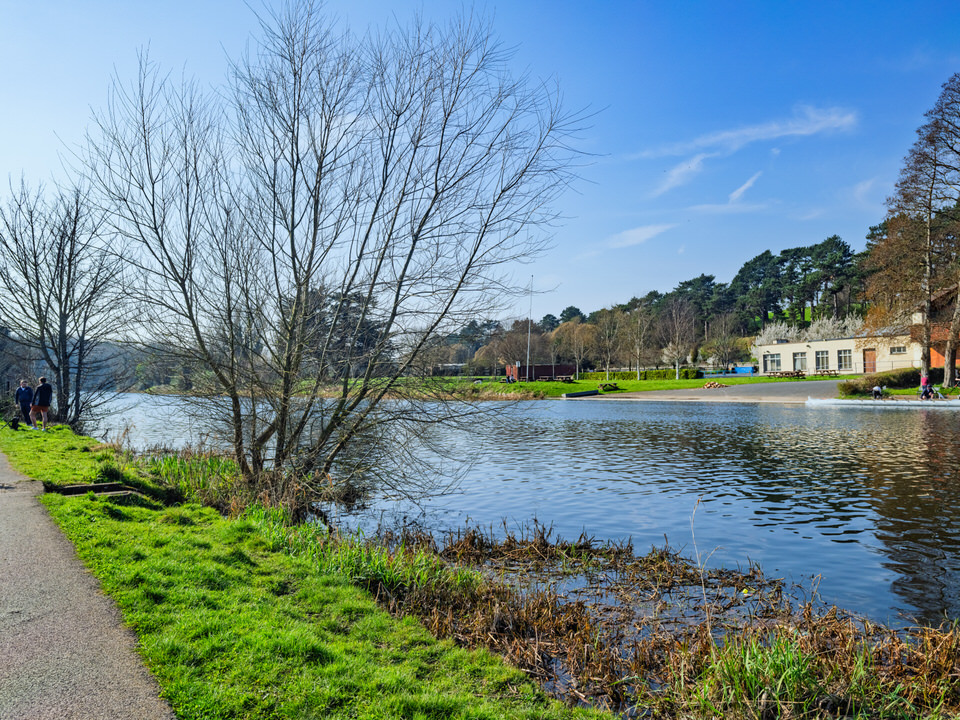
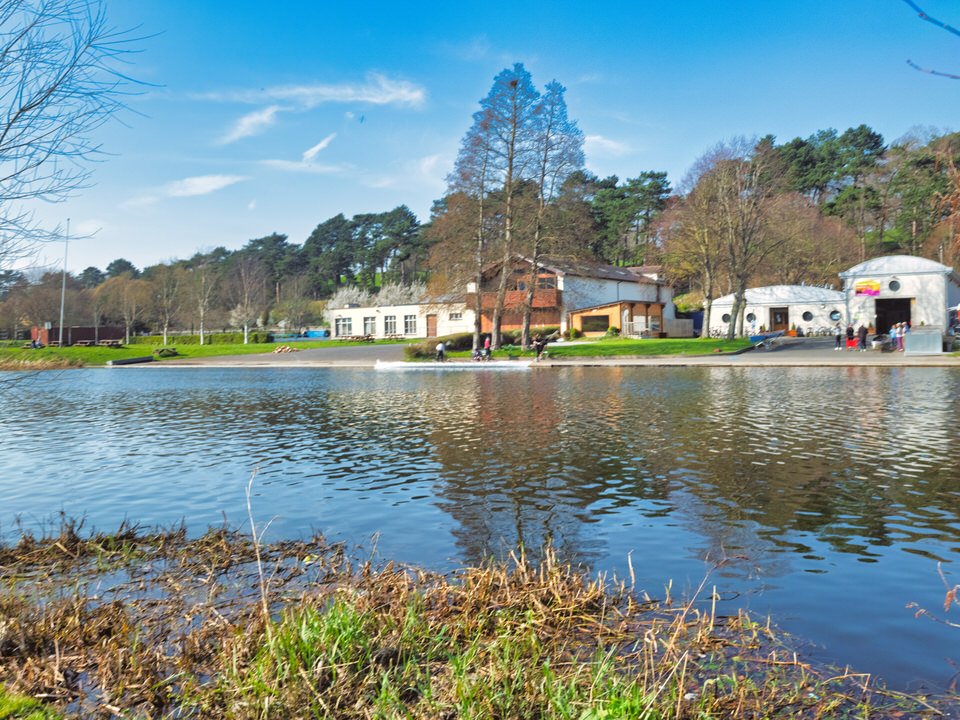 Photographed By William Murphy - Select Image To View Photographs
The riverside stretch connecting the Irish National War Memorial Gardens in Islandbridge to the village of Chapelizod is one of Dublin’s most historically layered landscapes. Known as the Longmeadows Walk, this southside path offers a tranquil escape that feels remarkably removed from the urban bustle.
History and the Lutyens Vision
Unlike many of Dublin’s major parks, which originated as enclosed private aristocratic estates, the lands at Longmeadows were primarily common meadows and fields. In 1929, the Irish government designated this site for a national memorial to honour the 49,400 Irish soldiers who died during the First World War.
The gardens were designed by the celebrated British architect Sir Edwin Lutyens. His master plan was highly ambitious, intended to create a symmetrical link between the formal sunken gardens and the Phoenix Park across the river. While the gardens were largely completed by 1938, a key element of the design—the bridge—remained unbuilt for nearly a century due to a lack of funding and shifting political priorities.
The Commemorative Bridge: Current Status
For those visiting in early 2026, the area near the riverbank remains a major construction site. The long-anticipated Commemorative Bridge (designed by Ritchie Studio) is currently under development by the Office of Public Works (OPW) and John Sisk & Son.
Completion Date: Construction is scheduled to finish in the first quarter of 2027.
Current Activity: Works are focused on the southern abutment and the northern pier on Chapelizod Road. Activities include archaeological monitoring—essential given the area’s history as a Viking burial site—and the installation of deep foundations.
Impact on Access: Temporary footpath diversions are in place along the south bank to facilitate heavy machinery and sewer diversion works.
Access and Environment
Access to this route is limited to daylight hours. The National War Memorial Gardens are managed by the OPW and typically open at 08:00 on weekdays (10:00 on weekends), closing at sunset. While the walk provides a vital link for the local community, it is not a 24-hour thoroughfare, and the new bridge is expected to follow these restricted hours upon its 2027 opening.
The path is also prone to seasonal flooding. As it occupies the natural flood plain of the Liffey, heavy rainfall or high tides frequently cause the river to burst its banks at the Longmeadows stretch. The design of the new bridge and surrounding infrastructure has been engineered to withstand "one-in-a-hundred-year" flood events, ensuring the path remains a resilient part of Dublin’s active travel network.
I purchased a Fujifilm GFX in May 2025 but I have not had many opportunities to use it so I decided to use it for a week before deciding if I will use it when I visit Galway at Easter. Today and yesterday I noticed some issues.
It sounds like I am encountering a challenge that is common with high-resolution medium format systems, but there are a few specific factors regarding the Fujifilm GFX100RF (the fixed-lens 35mm f/4 model) that might explain why I am seeing this, especially with trees.
1.Lack of IBIS and "Micro-Blur"
The GFX100RF is unique in the 100MP lineup because it does not have In-Body Image Stabilisation (IBIS).
The 100MP factor: On a sensor with such high pixel density, even the tiniest vibration (shutter shock or slight hand tremor) is magnified.
Why trees? Trees and leaves are "high-frequency" detail. Any micro-motion blur will show up there first, making them look "mushy" or "hazy" while a smooth surface like a wall might still look fine.
The Top of the Image: If you are hand-holding, a common physical "pivot" motion occurs where the top or corners of the frame move more than the centre, leading to localised softness.
2.Lens Field Curvature & The "F/4 Compromise"
The 35mm f/4 lens on the GFX100RF is a marvel of compactness, but to achieve that size on a medium format sensor, Fujifilm relies on heavy digital corrections.
Field Curvature: Most lenses don't focus on a perfectly flat plane; they focus on a slightly curved one. If you focus on a tree in the center, a tree at the top edge might actually be slightly outside the plane of focus.
Edge Softness: While reviewers generally praise the lens, some users have noted that the very edges (the top and corners) require stopping down to f/8 or f/11 to match the biting centre sharpness. If you’re shooting wide open at f/4, the periphery will naturally be softer.
3.The "Fuji Foliage" & Software Processing
There is a long-standing discussion in the Fuji community regarding how software (especially Adobe Lightroom) handles fine green details (leaves/branches).
The "Worm" Effect: Sometimes, sharpening algorithms struggle with the fine lattice of branches against a sky, creating a painterly or unsharp look.
Clarity Settings: Some users find that the in-camera "Clarity" setting adds a processing delay and can occasionally create a hazy halo around fine details like leaves.
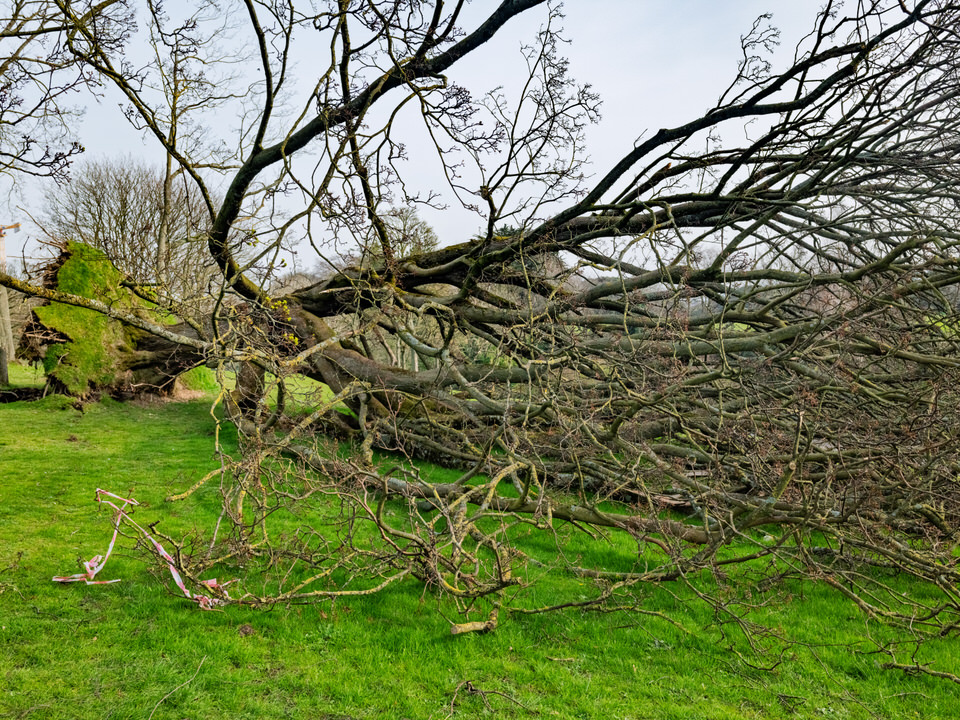 The Fallen Tree - Select Image To View Photographs
GALWAY CITY
CORK CITY AND COUNTY
GLOBAL MENU
DUBLIN SOUTHSIDE
DUBLIN NORTHSIDE
URBAN CARTOGRAPHER
EXCELLENT PICTURE THIS 2017
The Liffey River Walk Is A Journey Through Longmeadows - Presented By The The Urban Cartographer
Who Is Building An Experience Which Is Getting Better Day By Day