Last Days Of Donnybrook Circle K - Presented By The Urban Cartographer
LET MISTER SCREEN ASSIST YOU
GLOBAL INDEXThe Urban Cartographer
TECHNICAL STUFFA chance encounter on the E2 bus led to a photography mission at Circle K Donnybrook. This post explores the rise of "fuel deserts" in Dublin, the tragic history of house collapses on Bolton Street, and the controversial hotel developments replacing essential city services.
EXCELLENT PICTURE THIS 2017
Last Days Of Donnybrook Circle K - Presented By The Urban Cartographer
Last Days Of Donnybrook Circle K
Author: Urban Cartographer
|
19. Jan 2026
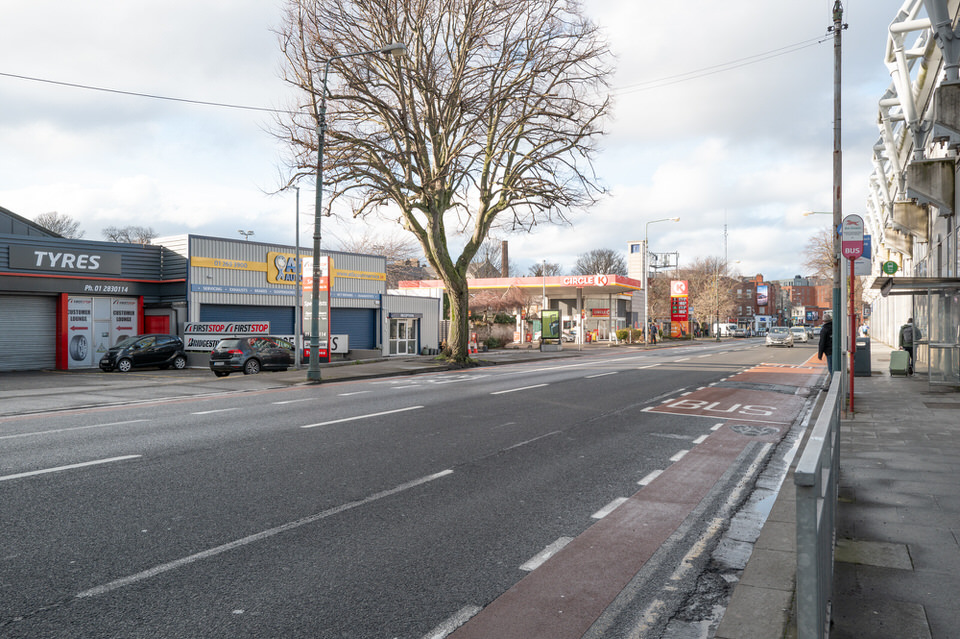
Photographed By William Murphy
As someone who documents the shifting layers of our built environment, my interest was immediate. I hopped off the bus to see for myself. I found the business still fully operational, but I photographed it for the record. In this town, when the whispers start, the "For Sale" signs aren't far behind. The Planning Reality Once home, I dug into the facts behind the "ten-storey" gossip. The ladies on the bus weren't far off regarding the ambition for this site. For years, this corner has been a lightning rod for planning disputes. Key Details of the New Development: The Operator: The site will become the first Irish location for Bob W, a tech-driven hospitality operator from Finland. The Scale: A seven-storey building (including a setback at the sixth floor) over a basement. Capacity: 143 bedrooms. Ground Floor: A restaurant, café, and terrace intended to create an "active" street front—a far cry from the current petrol forecourt. A History of Rejected Ambitions Located directly opposite Energia Park (Donnybrook Stadium), this site has been a fueling station for decades, rebranding from Topaz to Circle K in 2018. For over 20 years, developers have viewed it as an "underutilised" trophy site. Its history is a timeline of failed land-grabs: 2002: A four-storey block was proposed. It was Rejected for being out of character with the village. 2008: An 11-storey mixed-use plan was submitted. It was Refused outright. 2010: A seven-storey plan reached the planning board. It was Rejected again. 2021–2025: Several 12-storey "Build-to-Rent" attempts were made. These were ultimately Quashed in the High Court. The residents, led by the Eglinton Residents’ Association, have fought a long-running battle against the "Manhattanisation" of Donnybrook. Critics argue that replacing essential services with "aparthotels" creates a transient population rather than a sustainable community. The Rise of the "Fuel Desert" As I researched the Donnybrook site, the penny finally dropped regarding my own neighbourhood. I’ve lived on Bolton Street for over thirty years. Looking at the maps of disappearing services in Donnybrook made me look at my own front door in a new light. When I first moved here, the area was dotted with service stations—essential urban nodes. Today, they have vanished. We are witnessing the creation of "fuel deserts" in the heart of Dublin. For those of us in the city centre, the simple act of refuelling now requires a trek to Phibsborough or further afield. A Dark History: Take the site down the street where the new Bolton Hotel is rising. Before it was a Texaco, it was the site of the 1963 house collapse at 20 Bolton Street, which claimed the lives of Leo and Mary Maples. The city constantly paves over its own scars; first with petrol, then with beds. The Trojan Horse of Convenience There is a bitter irony in how these garages vanished. They didn't just disappear; they evolved themselves out of existence. I remember when they began to offer everything: deli counters, hot rolls, and dry-cleaning. At the time, it felt like progress. But these "super-forecourts" acted as a Trojan Horse. Their 24-hour reach slowly bled the life out of the small, independent grocers. Now, the garages themselves are being demolished because the land is worth more as "yield" than as a service. We are left in a vacuum: the local shops are gone, and the stations that killed them are now being erased too. The Vanishing Pumps: Where to Refuel Now? Thirty years ago, the area surrounding Bolton Street and Constitution Hill was served by small, independent stations. Today, for anyone living in the "inner" North City, the options have shrunk to a few congested outposts: Circle K, Hart’s Corner (Phibsborough): Roughly 1.5km north. This is the primary destination for locals but suffers from frequent congestion. Applegreen, Parnell Road/SCR: Roughly 3km away. This requires a significant trek across the Liffey. Circle K, Cabra Road: Roughly 2.5km away. Final Thoughts My photographs of the Donnybrook Circle K capture a business that is, for now, still part of the community fabric. But history suggests that once a site is marked for "redevelopment," its functional life is effectively over. Whether this is "progress" or not, we are losing the basic infrastructure that makes a city liveable for its permanent residents. The ladies on the bus might have been a bit early on the closing date, but they were spot on about one thing: the landscape is shifting beneath our feet.
Select Image To Visit The Photo Gallery: High Noon At The Donnybrook Circle K
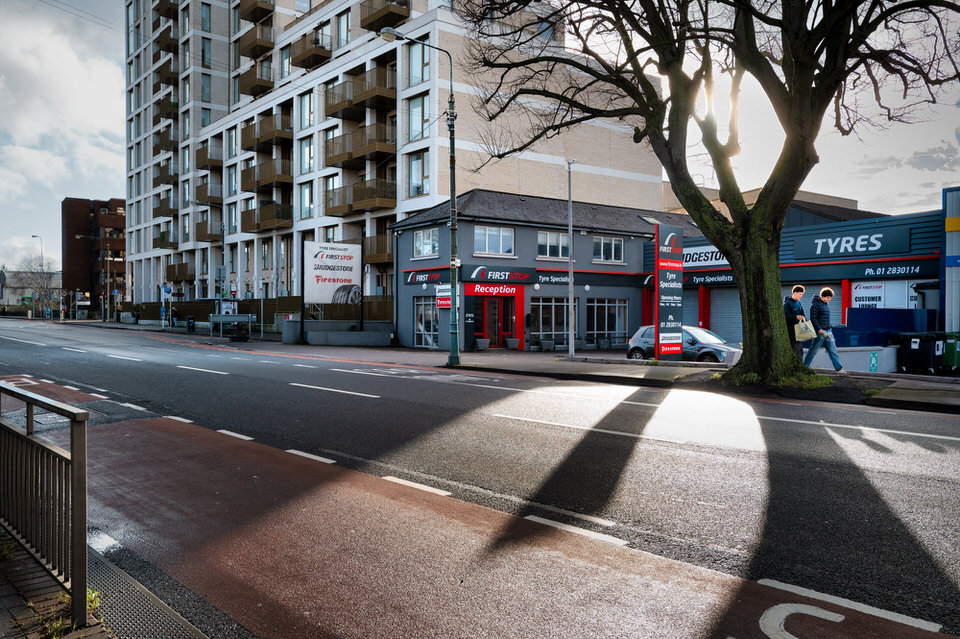
Note - The Circle K redevelopment site in Donnybrook includes the land adjacent to it where Atlas Autoservice is located, with both properties sharing boundaries and being part of a larger site being redeveloped for a mixed-use project including an aparthotel. The site's description mentions Atlas as a boundary to the south, indicating its integration into the overall land parcel being developed beyond the existing fuel station.
It started with a bit of eavesdropping on the E2 bus. Two ladies were in deep conversation about the Circle K at the corner of Brookvale Road. "It’s finishing today," one remarked, "and they’re planning to build a ten-storey hotel."
GALWAY CITY
CORK CITY AND COUNTY
GLOBAL MENU
DUBLIN SOUTHSIDE
DUBLIN NORTHSIDE
URBAN CARTOGRAPHER
EXCELLENT PICTURE THIS 2017
Last Days Of Donnybrook Circle K - Presented By The Urban Cartographer
Who Is Building An Experience Which Is Getting Better Day By Day