Lansdowne Stadium Under Construction As Seen From North Wall 4 April 2009 - Presented By The The Urban Cartographer
LET MISTER SCREEN ASSIST YOU
GLOBAL INDEXThe Urban Cartographer
TECHNICAL STUFFA historical look at the transformation of Dublin's iconic Lansdowne Road stadium during its 2009 reconstruction phase, alongside the history of Irish rugby's evolution from the amateur era to becoming a world-class professional powerhouse.
HIGH DEFINITION IMAGES
Lansdowne Stadium Under Construction As Seen From North Wall 4 April 2009 - Presented By The The Urban Cartographer
Lansdowne Stadium Under Construction As Seen From North Wall 4 April 2009
Author: The Urban Cartographer
|
10. Jun 2026
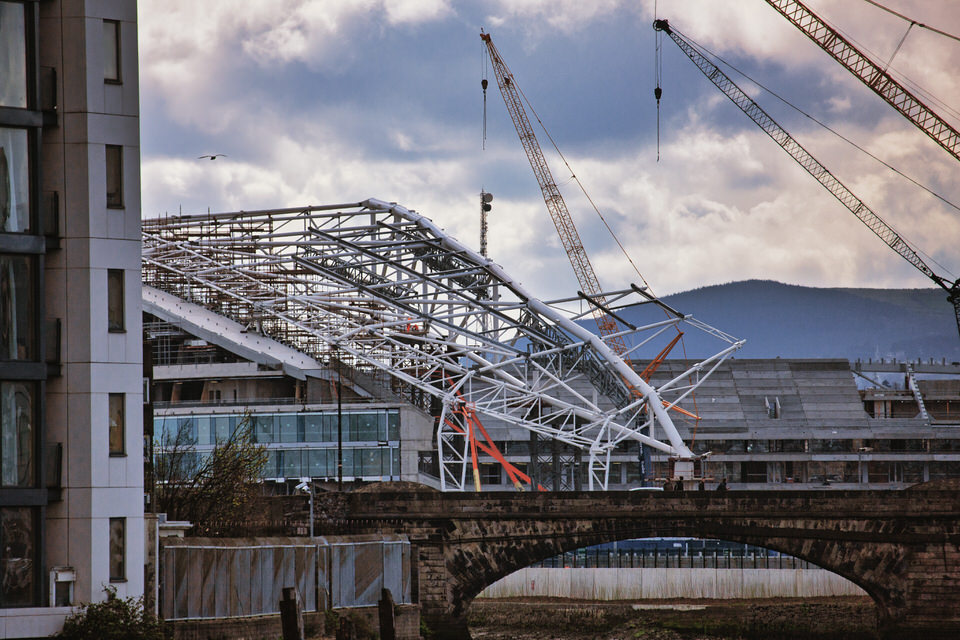
I Was Very Disappointed By My Rather Expensive Canon 1DsIII Back in April 2009 I was more than surprised that I could photograph the construction of the new stadium at Lansdowne from the North Wall. The Historic Grounds of Lansdowne Road Before its demolition in 2007, Lansdowne Road was the oldest operational international rugby stadium in the world. Its sporting heritage dates back to 1872, when Henry William Dunlop founded the Irish Champion Athletic Club on the site. The very first international rugby match on the grounds took place in 1878, featuring Ireland against England. For well over a century, the stadium grew into an idiosyncratic piece of Dublin's urban fabric. It was a venue defined by its character: the roar of the crowd, the proximity of the stands to the pitch, and the Dublin commuter railway line running directly beneath the West Stand. However, by the dawn of the 21st century, the historic ground's mixture of uncovered terracing and outdated structural facilities meant it could no longer meet modern international standards. The 2009 Transformation: Rising from the Dust The final international rugby match at the old ground took place in December 2006, after which demolition began to make way for a state-of-the-art €410 million arena: the Aviva Stadium. By April 2009, the project was at a critical structural phase. The old terraces were entirely gone, replaced by a massive grid of sweeping structural steel. Photographing this from the North Wall highlights just how much the stadium dominates the local topography; the enormous main trusses were being hoisted into place to support the undulating, translucent polycarbonate skin designed to maximize daylight whilst minimizing the shadow cast on surrounding residential properties. The distinctive low dip in the North Stand was specifically designed to prevent blocking sunlight to the nearby houses on Lansdowne Road. The stadium officially opened its doors in May 2010. The Rise of Irish Rugby: From Amateurism to World Class The structural metamorphosis of Lansdowne Road perfectly mirrored the spectacular rise of Irish rugby on the pitch. The Amateur Era to Professional Transition The Provincial Powerhouse Model The turning point came when the Irish Rugby Football Union (IRFU) made a definitive strategic decision: they chose to centrally contract players and focus investment into the four traditional provinces—Leinster, Munster, Ulster, and Connacht. Instead of letting the club game fragment, the provincial teams were transformed into professional powerhouses. This strategy yielded phenomenal success: Munster captured the imagination of the country by winning the Heineken Cup in 2006 and 2008. Leinster established a golden era of tactical excellence, capturing multiple European titles starting in 2009. Achieving World-Class Status This elite provincial system served as a direct assembly line for a golden generation of national players. Under the stewardship of astute tactical minds and fueled by world-class high-performance centres, Ireland transformed from unpredictable underdogs into a relentless, structurally disciplined global power. By the time the new stadium opened, Ireland had captured the 2009 Grand Slam. In the years that followed, the national team achieved consistent Six Nations titles, historic series wins in the Southern Hemisphere, multiple victories over the New Zealand All Blacks, and prolonged spells sitting at Number 1 in the World Rugby Rankings. The world-class arena on Lansdowne Road finally had a world-class team to match.
Lansdowne Stadium Under Construction As Seen From North Wall 4 April 2009
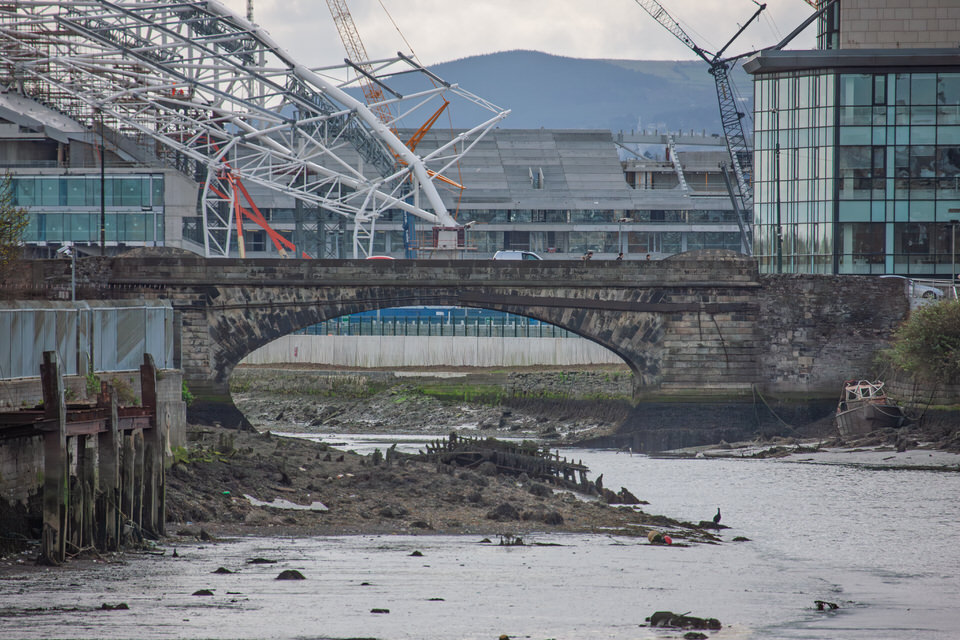 Lansdowne Road Stadium - Select Image To View Photographs
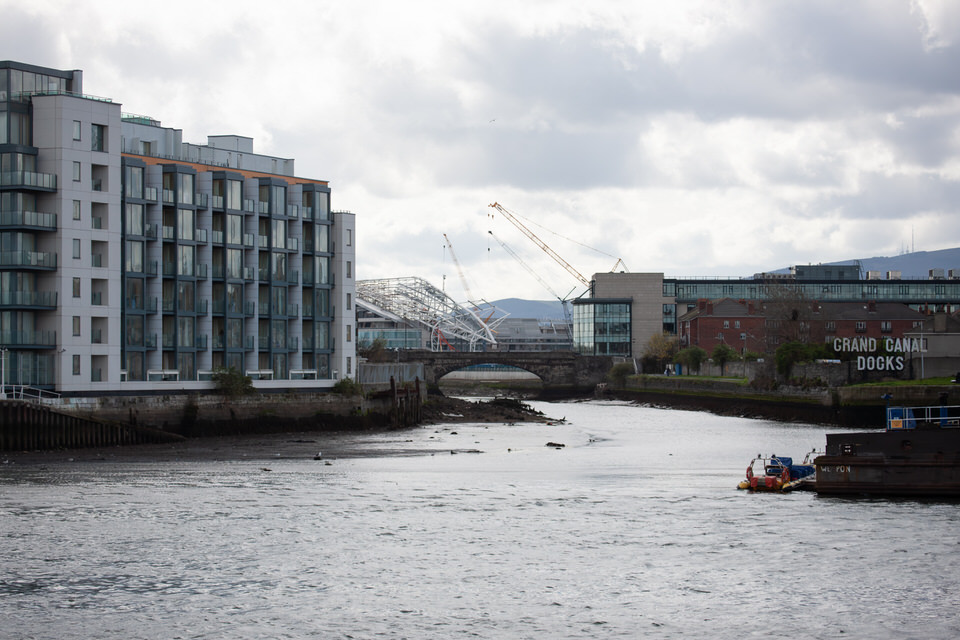 Lansdowne Road Stadium - Select Image To View Photographs
HI-RES PHOTO GALLERY
I USED A CANON 1DsIII
LET MISTER SCREEN DIRECT YOU
GLOBAL INDEX OF PHOTO GALLERIES
DUBLIN SOUTHSIDE
THE URBAN CARTOGRAPHER
HIGH DEFINITION IMAGES
Lansdowne Stadium Under Construction As Seen From North Wall 4 April 2009 - Presented By The The Urban Cartographer
Who Is Building An Experience Which Is Getting Better Day By Day