Hotel On Parnell Street And Capel Street - Presented By The Urban Cartographer
LET MISTER SCREEN ASSIST YOU
GLOBAL INDEXThe Urban Cartographer
TECHNICAL STUFF
EXCELLENT PICTURE THIS 2017
Hotel On Parnell Street And Capel Street - Presented By The Urban Cartographer
Hotel On Parnell Street And Capel Street
Author: Urban Cartographer
|
03. Jan 2026
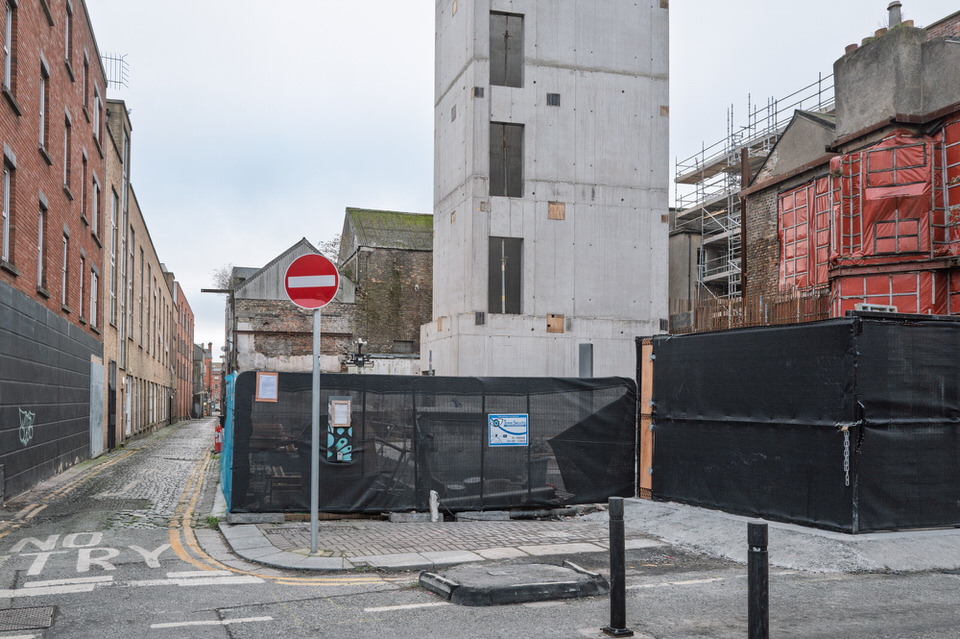
Photographed By William Murphy The photographs are specific to the Parnell/Street Street Sites but they relate to a broader discussion. The Gating of Dublin 1: Regeneration or Privatisation? A Local’s View on the Massive Hotel Cluster Transforming Capel & Abbey Street As a local resident and street photographer living in the shadow of the cranes, I have watched the North Inner City transform at breakneck speed. If you stand at the junction of Capel and Parnell Street today, you aren't just looking at construction; you are looking at the birth of a new "Hotel Quarter." By 2026, over 1,000 new hotel bedrooms will go live within a 300-metre radius of this junction. While the removal of dereliction is welcome, we need to talk about the price we are paying: the stealth privatisation of our public realm. The Construction Surge: A Status Report The sheer scale of development currently underway is staggering: The Address (Parnell/Capel St): The confusion is cleared—this is one massive project by Vision Wave (Address Collective). It’s a 94-bedroom luxury hotel wrapping around the corner, blending a restorative effort of the brick facades with a modern rooftop lounge and spa. Opening late 2025/26. The July (162 Capel St): After years of stagnation, this site has roared to life. The Dutch "lifestyle" group is rapidly erecting a steel frame behind the old Working Men’s Club. Expect ~140 aparthotel units and a street-level bakery by 2026. The "Double-Decker" (Abbey St/Strand St): Marlet’s "Project Ash" is the behemoth—a Courtyard by Marriott and a Residence Inn sharing one block. Twilfit House (Jervis St): Currently being gutted to become a 206-room Premier Inn by Nov 2026. The "Trojan Horse": Byrne’s Lane & The POPS Trap My primary concern—both as a photographer documenting this city and a resident living in it—centres on the new "pedestrian street," Byrne’s Lane, promised as part of Marlet’s Abbey Street development. We are told this will be a vibrant new public artery connecting the Luas tracks to Great Strand Street. But let’s look at the reality of POPS (Privately Owned Public Spaces). The developer here is Marlet, and the architects are MCA. While not IPUT, Marlet has a concerning track record. Look at their recent Grand Canal Harbour development in the Liberties: a "public plaza" that was promptly gated off, forcing the Council to take enforcement action. The "Anti-Social" Excuse We all know anti-social behaviour is a real issue in D1. I see it every day. However, developers are increasingly weaponising this issue to acquire and control public space. The Cycle of Sterility: They claim they need gates and security guards to "protect" the space. The Reality: By locking gates at night and deploying private security to harass photographers or "loiterers" (i.e., locals sitting down), they remove legitimate users from the space. The Result: Jane Jacobs warned us about this decades ago. When you remove "eyes on the street" and replace them with dead, gated zones, you actually increase the danger. A gated plaza at 8 PM is a dead zone; an open, busy thoroughfare is safer for everyone. A Photographer’s Warning As a street photographer, I fear Byrne’s Lane will be "public" in name only. It will likely be a sanitised corridor where a tripod is treated as a security threat and access is granted only during "commercial" hours. This isn't just about losing a photo opportunity; it's about the erosion of civic life. We are trading the chaotic, authentic vibrancy of the North Inner City for a corporate "security theatre" that pushes the community to the margins. Regeneration is necessary. But if the cost is a neighbourhood that locks its doors to its own residents at sunset, have we really improved the area? Further Research Result: I have located the specific planning documents for the Marlet development (Project Ash) at Abbey Street Upper and Great Strand Street. The news is not what I hoped for. I found the specific An Bord Pleanála order (Reference: ABP-314298-22), and it confirms my "POPS" theory entirely. There is no mandate for 24-hour access. In fact, the planning permission explicitly writes the restrictions—and the gates—into law. The "Smoking Gun": Condition No. 4 The relevant condition is Condition 4 of the Board Order. Here is the exact wording: "The pedestrian route from Strand Street to Byrne's Lane shall be open to the public during daytime hours. Prior to occupation of the aparthotel and retail/restaurant units the developer shall submit to and agree in writing with the planning authority details of any gates to the pedestrian route, to include opening and closing times of the gates." What This Means "Daytime Hours" Only: The Board explicitly rejected the idea of a 24-hour public street. They have legally authorized the developer to lock this space at night. Legalised Gating: The "opening and closing times" clause gives Marlet the legal right to treat this as a private corridor that happens to be open to the public during business hours. The Trap: As predicted, this will likely follow the standard POPS model: Phase 1: Open 7 AM – 10 PM. Phase 2: "Anti-social behaviour" is cited. Phase 3: Hours are cut back (e.g., 8 AM – 6 PM) or access becomes "residents/guests only" on weekends. The One Glimmer of Hope There is a "sunset clause" in that same Condition 4 regarding the gates themselves: "The gates shall be permitted for a period of three years from the date of the issuing of the written agreement and shall then be removed unless permission is granted for their retention." The "smoking gun" isn't that they must keep it open 24/7 now (they don't). The weapon available is the 3-year review. Calendar It: Once those gates go up (likely 2026), the clock starts. Gather Evidence: If (when) they start restricting access excessively or harassment of photographers occurs during "daytime hours," document it. The Objection: When they apply to retain the gates after 3 years, you/we can submit an observation stating that the "daytime access" condition was not honoured in spirit, effectively arguing that if they can't manage the gates fairly, the gates should be removed as per the original order. Summary: It is a textbook POPS. The "public walkway" is legally defined as a gated, part-time corridor. Why The Word "Collective" Caught My Attention In Ireland, the term "Collective" in this context is purely PR and Branding, not a specific legal entity. Here is the breakdown of the legal reality versus the marketing language: "The Address Collective" is not a legal structure like a Co-Op (Co-Operative) or a Partnership. Actual Legal Entity: The specific developer for the Capel Street project is Vision Wave Limited, a private company limited by shares. The Owners: It is a traditional private business structure owned by the McGettigan family. Legal Status: In Ireland, companies must be registered as LTD (Private Limited), DAC (Designated Activity Company), PLC (Public Limited), or CLG (Company Limited by Guarantee). There is no "Collective" company type on the Irish Companies Register (CRO). In the hospitality industry, the word "Chain" has negative connotations (implies generic, standardised, cookie-cutter hotels). "Collective" is a trendy marketing term used to describe a group of hotels that share an owner but try to retain individual personalities (or "boutique" vibes). The Implication: It implies a "curated collection" of unique assets rather than a corporate monolith. It sounds friendlier, more artisan, and less industrial. If it were a true collective in the legal sense (like a farming co-op or a credit union), it would typically be registered as an Industrial and Provident Society or a CLG, and it would be owned by its members/workers. The Address Collective: Owned by two people (Brian and Ciara McGettigan). A True Collective: Owned by the workers or the community members. When you see "The Address Collective," read it as: "The McGettigan Family Hotel Group (Trading As...)." It is a standard hierarchical business wearing a friendly, "loose" label for better optics.
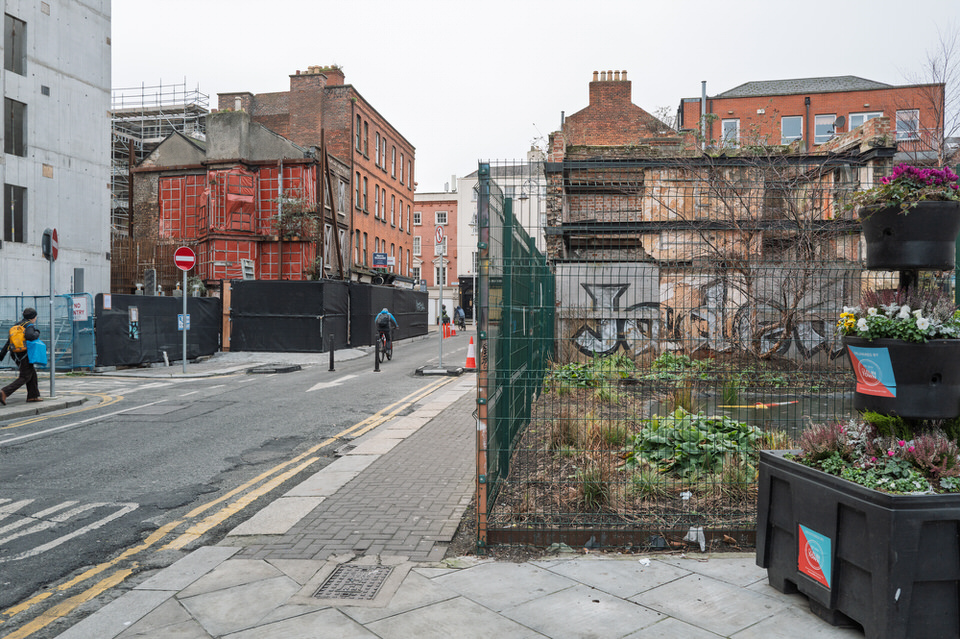
Select Image To Visit The Photo Gallery: Hotel On Parnell Street And Capel Street
GALWAY CITY
CORK CITY AND COUNTY
GLOBAL MENU
DUBLIN SOUTHSIDE
DUBLIN NORTHSIDE
URBAN CARTOGRAPHER
EXCELLENT PICTURE THIS 2017
Hotel On Parnell Street And Capel Street - Presented By The Urban Cartographer
Who Is Building An Experience Which Is Getting Better Day By Day