Great Expectations Poster Campaign - Presented By The Urban Cartographer
LET MISTER SCREEN ASSIST YOU
GLOBAL INDEXThe Urban Cartographer
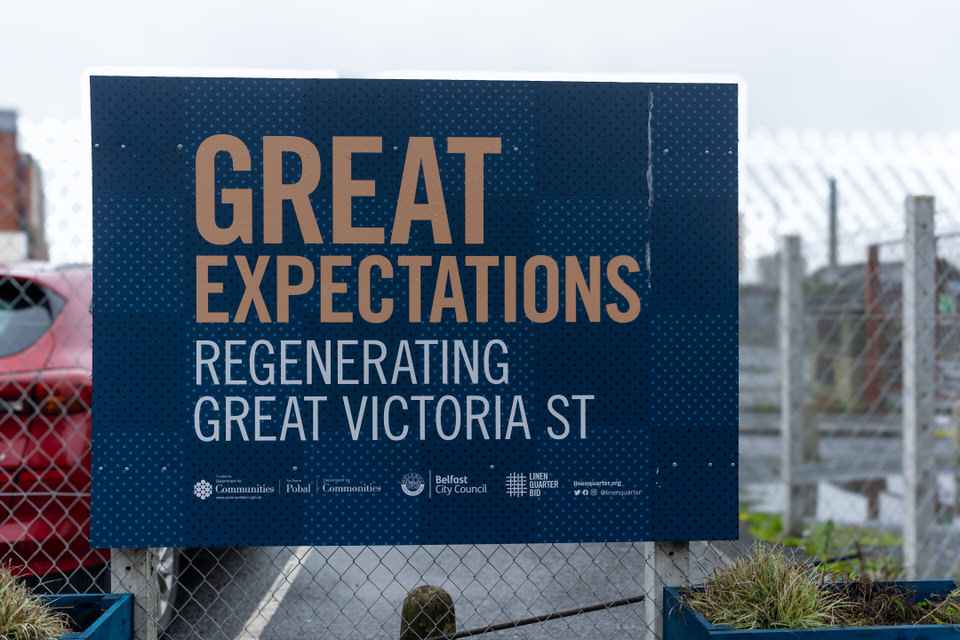
TECHNICAL STUFFThe "Great Expectations" campaign in Belfast is a strategic regeneration project by the Linen Quarter BID to revitalise Great Victoria Street. Aimed at supporting the new £340m Belfast Grand Central Station and Weavers Cross development, the campaign uses murals and streetscape enhancements to restore the historic "Golden Mile." This initiative addresses urban dereliction while connecting the modern transport hub with local communities like Sandy Row.
EXCELLENT PICTURE THIS 2017
Great Expectations Poster Campaign - Presented By The Urban Cartographer
Great Expectations Poster Campaign
Author: Urban Cartographer
|
05. Feb 2026
Photographed By William Murphy - Select Image To View Photographs
Select Image To Visit The Photo Gallery: Great Expectations Poster Campaign
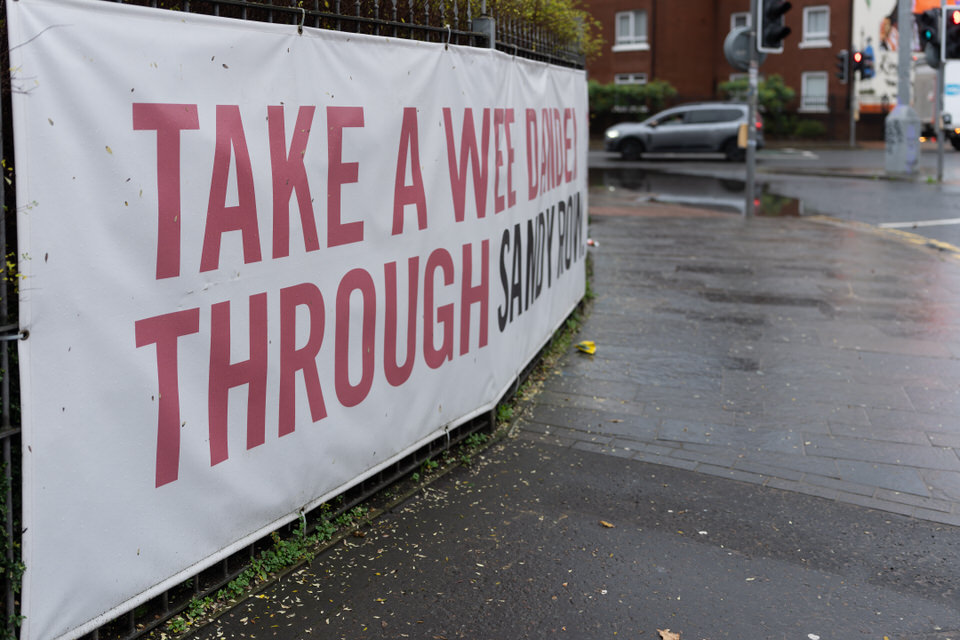
In Belfast, the large-scale poster and mural campaign you are seeing is part of the "Great Expectations" project. This initiative is a streetscape enhancement scheme specifically designed to bridge the gap between the city’s historic past and its massive infrastructure future, namely the new Belfast Grand Central Station and the surrounding Weavers Cross district.
The Campaign: "Great Expectations"
The campaign, led by the Linen Quarter Business Improvement District (LQ BID) in partnership with Belfast City Council and the Department for Communities, uses high-impact visual art to mask urban decay and build excitement.
Visual Strategy: The campaign involves vibrant vinyl wraps on derelict buildings, large-scale hoardings, and massive murals—most notably the 32-metre high mural on the side of the Holiday Inn.
Purpose: Its primary goal is to "put the 'Great' back into Great Victoria Street." For decades, this area (once famously known as the Golden Mile) suffered from significant dereliction. The campaign acts as a "placeholder for progress," making the area more attractive to tourists and private investors while construction is ongoing.
The Sandy Row Connection: The redevelopment is sensitive to the fact that it sits adjacent to the historic Sandy Row community. The campaign aims to ensure this working-class neighbourhood is not left behind, using storyboards to celebrate local history and "architectural heritage" to create a sense of belonging amidst the modern glass-and-steel changes.
Why was it needed?
The campaign and the redevelopment were necessitated by three main factors:
Outdated Infrastructure: The old Great Victoria Street Station and Europa Buscentre were operating far beyond their intended capacity. The new Grand Central Station is a £340 million investment designed to handle up to 20 million journeys annually, acting as the primary gateway for the island.
Economic Decline: Since the 1990s, the lower end of Great Victoria Street saw a "creeping dereliction." The campaign is a psychological tool to signal that the area is "open for business" again, aiming to attract £1 billion in investment over the next decade.
Social Connectivity: Historically, major transport hubs in Belfast acted as barriers. The redevelopment includes Saltwater Square, a new public realm designed to physically and socially reconnect the city centre with the Sandy Row and Grosvenor Road communities.
Below are the specific historical landmarks and cultural sites featured in the campaign:
Location: 116 Great Victoria Street.
Significance: Featured on the vinyl wraps of Park House, this landmark was designed by W. J. Barre, the architect behind the Albert Clock and Ulster Hall. Opened in 1868, it served as a specialised hospital for nearly 150 years. The campaign uses its image to remind passers-by of the street’s "architectural pedigree".
Location: 122–126 Great Victoria Street.
Significance: The site currently covered by hoardings once housed the city’s first synagogue. Its most famous congregant was Sir Otto Jaffe, the German-born linen merchant who became the Lord Mayor of Belfast. The storyboards celebrate this multicultural history, linking the Jewish community's contribution to the city's industrial success.
Location: 121 Great Victoria Street.
Significance: This specific mural celebrates Belfast’s punk heritage. This address was once the home of Terri Hooley’s famous record store and label, which famously released The Undertones' "Teenage Kicks." The campaign highlights this as a site of "cultural rebellion" that put Belfast on the global music map during the 1970s and 80s.
Location: Adjacent to the Transport Hub.
Significance: While these buildings are still standing, the "Great Expectations" vinyls (particularly those on Fanum House) feature stylistic references to them. They represent the "Golden Mile’s" peak as an entertainment district—the Opera House being an ornate Late Victorian theatre and the Crown being a world-famous gin palace owned by the National Trust.
Significance: Several murals, including the "Flying High" artwork, feature sea waders like the Arctic Tern and Lapwing. These are not just decorative; they are "environmental landmarks" that reference the geography of the area before development. The land between Sandy Row and the Lagan was originally marshland along the Blackstaff River, which now runs in a culvert directly beneath the feet of the people viewing the posters.
Significance: The posters often feature archival imagery of the original 1848 terminal. This is used to provide context for why the new Grand Central Station is needed—it is essentially returning the city to its Victorian-era status as a premier railway hub, but on a 21st-century scale.
GALWAY CITY
CORK CITY AND COUNTY
GLOBAL MENU
DUBLIN SOUTHSIDE
DUBLIN NORTHSIDE
URBAN CARTOGRAPHER
EXCELLENT PICTURE THIS 2017
Great Expectations Poster Campaign - Presented By The Urban Cartographer
Who Is Building An Experience Which Is Getting Better Day By Day