Little Ship Street And Werburgh Street - Presented By The The Urban Cartographer
LET MISTER SCREEN ASSIST YOU
GLOBAL INDEXThe Urban Cartographer
TECHNICAL STUFFExplore the hidden history of Dublin’s Little Ship Street and Werburgh Street. From the "Defence of the Castle" art panels to 1,000-year-old Viking discoveries at the Werburgh Street dig, discover how a medieval sheep market became a military stronghold and a modern archaeological treasure trove.
EXCELLENT PICTURE THIS 2017
Little Ship Street And Werburgh Street - Presented By The The Urban Cartographer
Little Ship Street And Werburgh Street
Author: The Urban Cartographer
|
09. Mar 2026
 Photographed By William Murphy - Select Image To View Photographs
Just around the corner on Werburgh Street sits Leo Burdock, Dublin's oldest fish and chip shop - est. 1913. Known for its "Hall of Fame" featuring everyone from Bruce Springsteen to U2, it is a culinary landmark in its own right. It is one of the few places in the world where you can stand in a 10th-century Viking footprint, look at an 18th-century barracks, and eat from a 20th-century institution all at once.
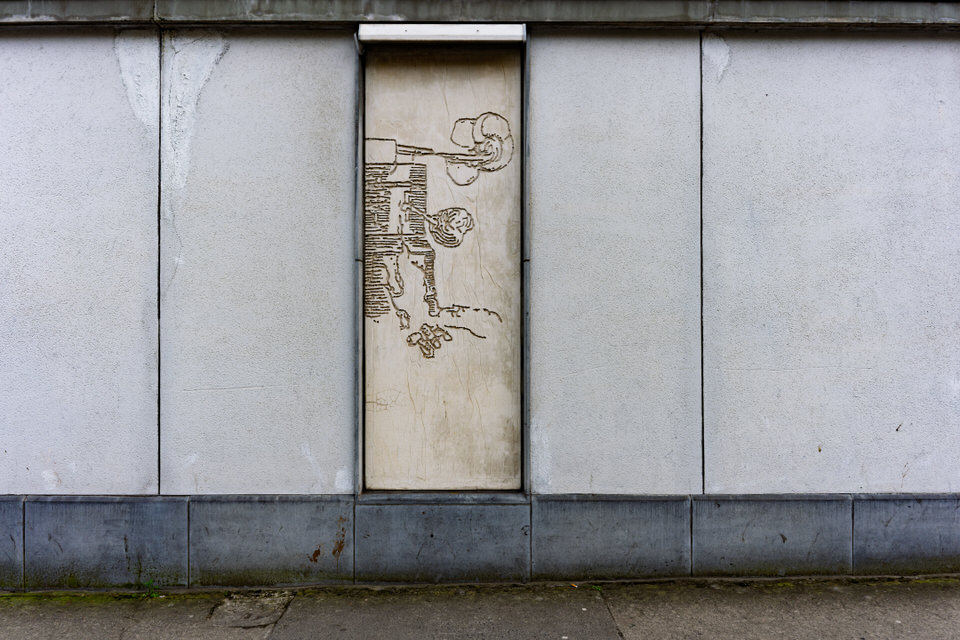
The Panels: ‘The Defence of the Castle’
The illustrated panels lining the street are not modern street art in the traditional sense; they are a commissioned artistic installation designed to animate a "dead" space while honouring the site’s military legacy.
Subject Matter: The panels depict various scenes from the 17th and 18th centuries, focusing on the Ship Street Barracks and the strategic defence of Dublin Castle. They feature musketeers, cannon crews, and architectural elevations of the fortress.
Aesthetic: Executed in a "woodcut" or engraving style, the artwork is designed to mimic the historical prints of the 1600s and 1700s.
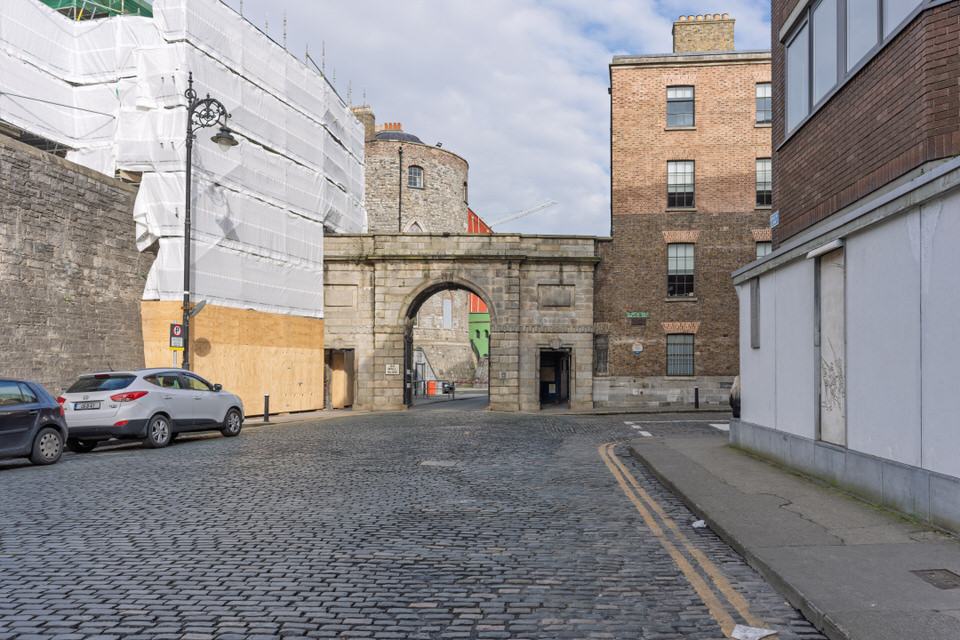
The "Sheep" Connection: Interestingly, the street’s name is a linguistic corruption. Originally Sheep Street (Sráid na gCaorach), it was the site of a livestock market held outside the city walls. By the 18th century, the name had morphed into "Ship Street"—a misunderstanding that explains why we now see nautical and military themes rather than livestock!
The Historic Dig at Werburgh Street
The junction where Little Ship Street meets Werburgh Street represents one of the most significant active archaeological projects in Dublin: the Werburgh Street Strategic Development Area.
The Pole Gate: This junction was the site of the Pole Gate, a primary medieval entrance to the city. Excavations are currently seeking the foundations of the original gatehouse and the associated Pole Tower.
The "Black Pool": The site acts as an archaeological "sink." Because it was waterlogged by the River Poddle (which still flows in a culvert beneath your feet), organic materials such as Viking wood, leather, and textiles have been perfectly preserved for over 1,000 years.
Le Pole Square: Recent development of the Dublin Royal Convention Centre revealed the remains of St Michael le Pole church and its round tower. This area is intended to become a public plaza that "daylights" these medieval ruins for the public.
Little Ship Street Today
Little Ship Street is a unique "time capsule" where Dublin’s layers collide. On one side stands the Chief State Solicitor’s Office; on the other, the Medieval City Wall remains hidden behind commemorative panels.
GALWAY CITY
CORK CITY AND COUNTY
GLOBAL MENU
DUBLIN SOUTHSIDE
DUBLIN NORTHSIDE
URBAN CARTOGRAPHER
EXCELLENT PICTURE THIS 2017
Little Ship Street And Werburgh Street - Presented By The The Urban Cartographer
Who Is Building An Experience Which Is Getting Better Day By Day