City Quay December 2025 - Presented By The Urban Cartographer
LET MISTER SCREEN ASSIST YOU
GLOBAL INDEXThe Urban Cartographer
TECHNICAL STUFFDiscover how Belfast’s new urban landscape is changing everything from wildlife behaviour to iconic tourist views. Explore the "anvil" foraging techniques of gulls at City Quays and the controversial "Great Wall of Queen’s Island" that is hiding the Titanic Belfast museum from the city skyline.
EXCELLENT PICTURE THIS 2017
City Quay December 2025 - Presented By The Urban Cartographer
City Quay December 2025
Author: Urban Cartographer
|
11. Feb 2026
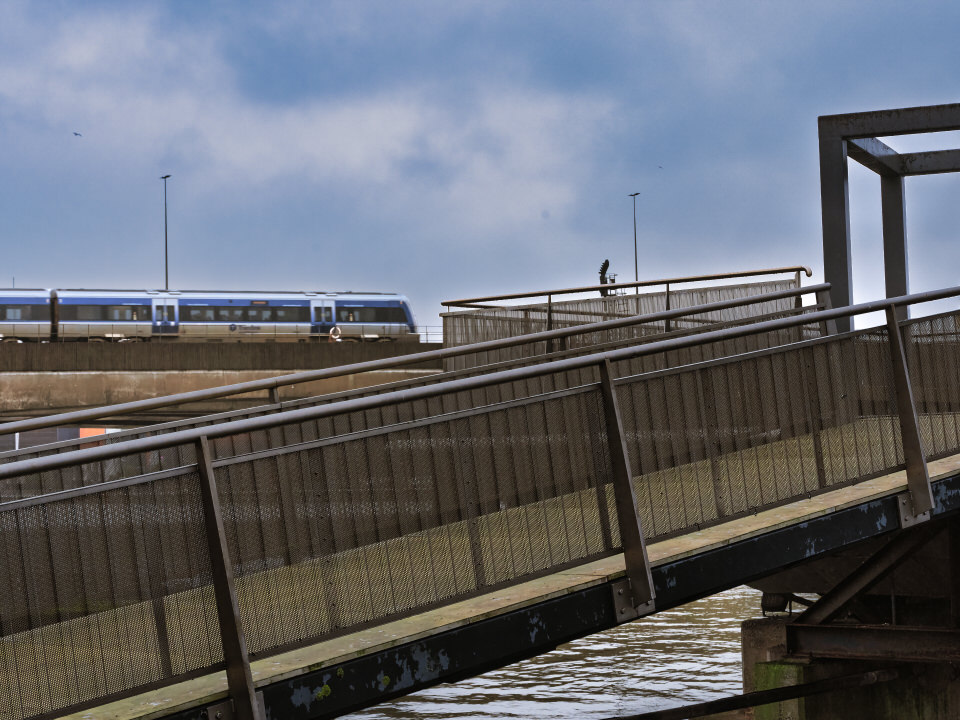
Select Image To Visit The Photo Gallery: City Quay December 2025
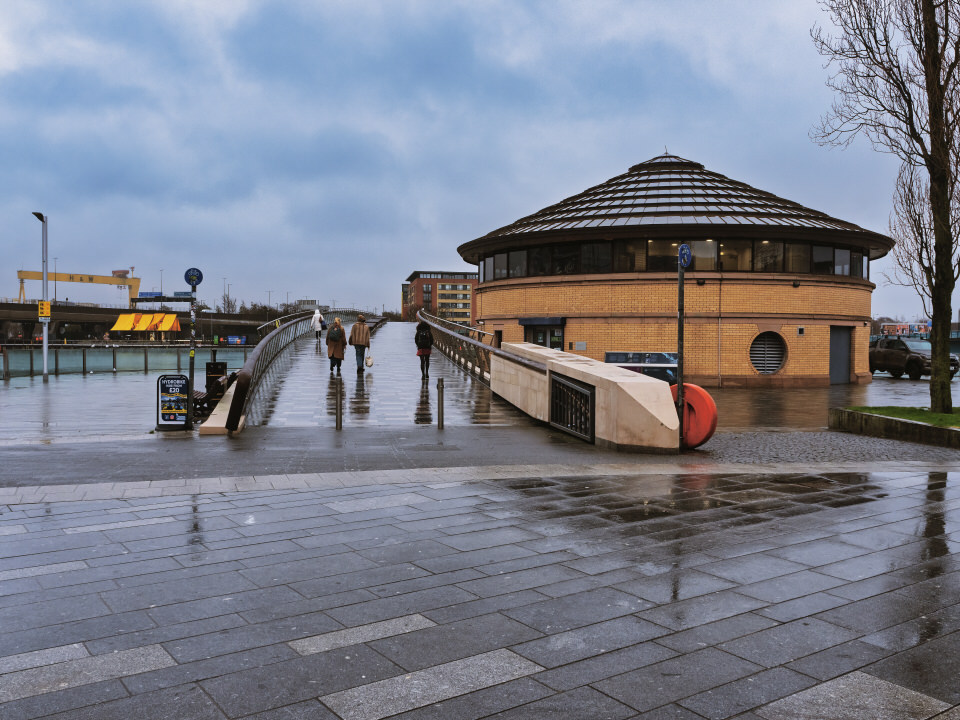 Photographed By William Murphy - Select Image To View Photographs
The waterfront at City Quays has become a fascinating intersection of urban evolution and natural opportunism. On a recent visit, I witnessed a transformation that reflects both the remarkable intelligence of our local wildlife and a somewhat controversial shift in Belfast’s architectural identity.
If you stroll along the riverfront, you will likely notice a carpet of broken shells littering the pavement. Far from being debris washed up by storms, these are the remains of meals "processed" by gulls and crows. These birds have identified the smooth, hard concrete of City Quays and the Titanic Quarter as the ultimate "anvil."
Several species in Belfast have mastered the art of using gravity and modern infrastructure to bypass the defensive armour of shellfish:
Gulls (Herring and Lesser Black-backed): These are the primary "shell-bombers." They ascend to a specific height—usually 3 to 5 metres—and drop molluscs onto the pavement. If the shell doesn't shatter on the first attempt, they repeat the process until the "goopy innards" are exposed.
Hooded Crows: These highly intelligent birds are common along the Lagan. Crows are notoriously selective, often choosing only the largest shells. These provide a better caloric return and are paradoxically easier to shatter on impact.
Oystercatchers: Though they typically use their powerful, chisel-like bills to pry shells open, these frequent residents of Belfast Lough will readily utilise hard man-made surfaces when available.
The reason this behaviour is so prevalent at City Quays comes down to energy efficiency and cultural transmission:
Predictable Hardness: Birds are sophisticated enough to understand that dropping a shell on soft mud or grass is a waste of effort. The uniform, non-absorbent "smoothness" of new concrete ensures maximum impact force.
Learned Behaviour: This is a culturally transmitted skill. Once one bird discovers that the "new grey ground" near the river acts as an effective nutcracker, others observe and imitate the technique.
The "Drop-Catch" Play: Observation in May 2026 reveals younger Herring Gulls engaging in "drop-catch" behaviour—diving to catch a dropped shell before it hits the ground. Whether this is practice for foraging or pure play, it showcases the high intelligence of our local avian population.
While the birds are adapting to the city's growth, the growth itself is obscuring Belfast’s most famous landmark. Between May and December 2025, a startling transformation occurred. The iconic Titanic Belfast—the £97 million aluminium-clad masterpiece designed to be the city’s shimmering silhouette—has effectively been erased from the skyline for those walking the City Quays.
The Great Wall of Queen’s Island
In early 2025, standing at City Quays offered a panoramic view of the museum’s geometric hulls. By late December, that vista was replaced by a wall of concrete and glass.
The primary culprit is The Loft Lines, a massive residential development featuring blocks reaching up to 18 storeys. Coupled with the new Hamilton Dock Hotel and the rising tower of City Quays 4, the museum has been systematically hemmed in. What was once a landmark defining the horizon is now a "hidden gem"—with "hidden" being the operative word.
The Risk of Losing "The Shot"
Belfast’s tourism relies heavily on its maritime legacy. Statistics from 2024 and 2025 show that international visitors (outside the UK and Ireland) represent only about 12% of overnight trips. To grow this demographic, Belfast needs to protect its world-class assets.
International tourists travel for "the shot"—the iconic image seen on Instagram or in brochures. By allowing high-density residential blocks to sever the visual link between the city centre and the Titanic Quarter, planners have traded a public aesthetic for private square footage.
A Failure of Vistas
Unlike London, where "protected vistas" ensure St Paul’s Cathedral remains visible from specific vantage points, Belfast’s protections focus largely on the historic Harland & Wolff cranes. Titanic Belfast, a 21st-century icon, was left vulnerable.
As the city builds a wall between its visitors and its heritage, the experience becomes increasingly claustrophobic. To see the museum in its wider context now, one must climb a mountain or look through the glass of the Victoria Square Dome. Belfast may be gaining much-needed housing, but it is losing its face.
GALWAY CITY
CORK CITY AND COUNTY
GLOBAL MENU
DUBLIN SOUTHSIDE
DUBLIN NORTHSIDE
URBAN CARTOGRAPHER
EXCELLENT PICTURE THIS 2017
City Quay December 2025 - Presented By The Urban Cartographer
Who Is Building An Experience Which Is Getting Better Day By Day