Cherry Blossoms In St Stephens Green - Presented By The The Urban Cartographer
LET MISTER SCREEN ASSIST YOU
GLOBAL INDEXThe Urban Cartographer
TECHNICAL STUFFExplore the history and changing seasons of cherry blossoms in Ireland. Discover how the "May blossoms" of the 1950s have shifted to early April due to rising temperatures, and learn about the ancient native Wild Cherry protected under Brehon Law.
EXCELLENT PICTURE THIS 2017
Cherry Blossoms In St Stephens Green - Presented By The The Urban Cartographer
Cherry Blossoms In St Stephens Green
Author: The Urban Cartographer
|
12. Apr 2026
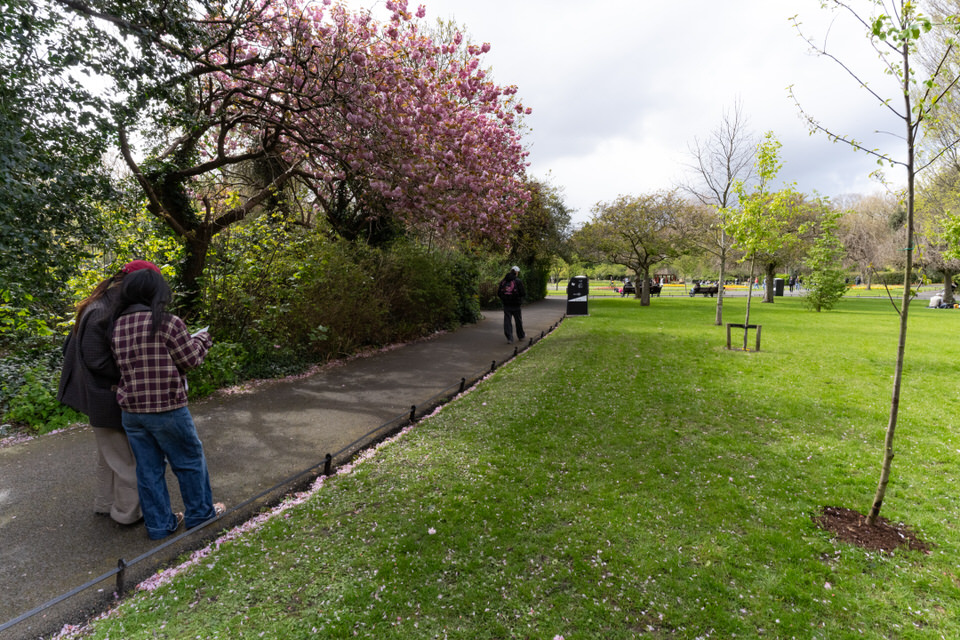
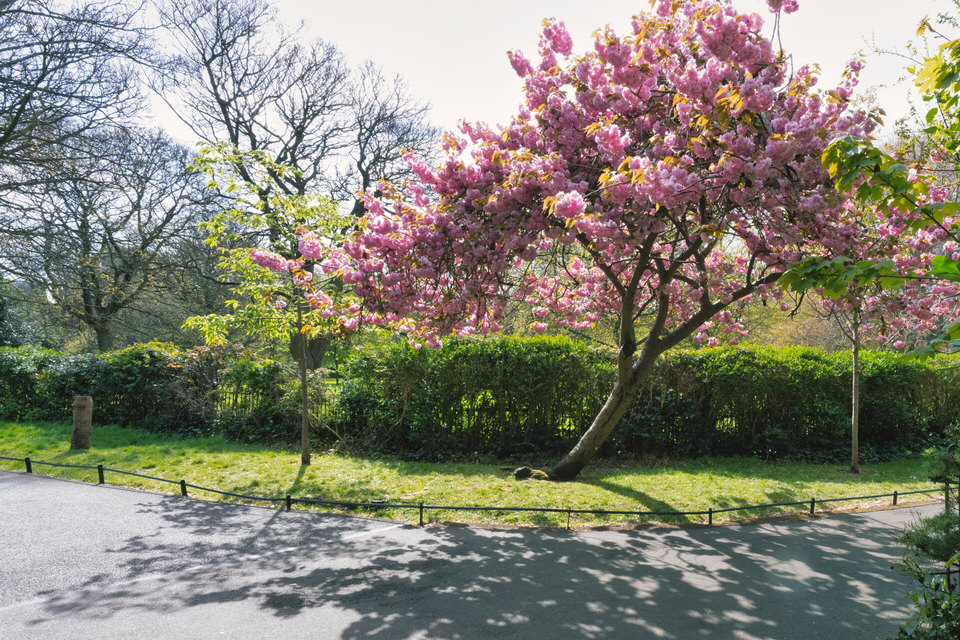 Cherry Blossoms - Select Image To View Photographs
The Changing Rhythm of Irish Cherry Blossoms - The cherry blossom, or sakura, is a beloved herald of spring in Ireland. While these clouds of pink and white petals feel like a timeless part of the Irish landscape, their history and the timing of their arrival have shifted significantly over the decades.
A Brief History of Cherries in Ireland
The presence of cherry trees in Ireland is a tale of two different lineages: the ancient and the ornamental.
The Native Wild Cherry
Long before the manicured gardens of the 20th century, the Wild Cherry (Prunus avium), also known as the "Gean," was a staple of the Irish countryside. In early Gaelic society, it was a tree of high status. Under the ancient Brehon Laws, the Wild Cherry was classified as a "Commoner of the Wood." It was protected by law, and anyone caught cutting one down without permission faced stiff penalties. Its white blossoms and bitter fruit have been a part of the Irish ecosystem for millennia.
The Japanese Introduction
The showy, double-petalled ornamental varieties that line suburban streets today—such as the deep pink Kanzan or the delicate Yoshino—are more recent arrivals. These were introduced to Irish estates in the late 19th and early 20th centuries. However, their ubiquity across Ireland surged during the post-war housing booms of the 1950s and 60s, when they became the "must-have" tree for new suburban gardens in Dublin, Cork, and Belfast.
The Shifting Calendar: From May to April
There is a distinct memory for many who grew up in the mid-20th century of cherry blossoms being a feature of May. This association was grounded in the climatic reality of the time. In the 1950s, cooler spring averages meant that the "peak bloom" often coincided with the beginning of May.
Today, that calendar has been significantly compressed. Phenology—the study of the timing of natural events—shows a clear trend toward earlier flowering in Ireland.
The 1950s Baseline: Traditionally, peak bloom occurred in early to mid-May due to stable, cooler seasonal transitions.
The Modern Reality: In the 2020s, the peak frequently occurs between late March and mid-April.
Why are they blooming earlier?
Research indicates that cherry blossoms in Western Europe are now flowering approximately 10 to 14 days earlier than they did seventy years ago. This is primarily driven by rising mean temperatures and milder winters.
Cherry trees rely on a "heat sum"—a cumulative amount of warmth—to break their winter dormancy. Because Irish Februaries and Marches are now consistently warmer, the trees are "tricked" into blooming sooner. While this provides an earlier splash of colour, it leaves the blossoms vulnerable to late-season frosts, which can turn the delicate petals brown overnight.
Where to Witness the Display
To catch the modern Irish blossom season, one must now start looking shortly after St Patrick’s Day. Key locations for a spectacular display include:
Trinity College Dublin: Iconic displays in the heart of the city.
Herbert Park, Ballsbridge: Home to one of the largest concentrations of cherry trees in the capital, usually peaking in April.
The National Botanic Gardens: A premier spot to compare the ancient native varieties with exotic Japanese cultivars.
The Zeiss Batis 18mm Lens
The Zeiss Batis 18mm f/2.8: A Modern Classic for High-Resolution Photography
Acquiring a Zeiss Batis 18mm f/2.8 for €900 represents a significant value proposition in today's market. Originally retailing for nearly €1,500, this lens remains a standout performer for those transitioning from older Batis glass or seeking a lightweight, ultra-wide companion for high-resolution bodies like the Sony A1 MkII.
While the industry has trended toward faster apertures and specialised "GM" optics, the Batis 18mm offers a distilled Zeiss experience: exceptional sharpness, vibrant colour, and that signature "3D pop" in contrast.
Known Issues and Long-Term Reliability
The Batis line is generally robust, but several years of field use have revealed a few documented quirks to keep in mind:
OLED Display Longevity: The most common point of failure is the electronic OLED display on the lens barrel. Over time, these can dim or fail. Fortunately, this is purely cosmetic; the lens continues to autofocus and function perfectly even if the screen goes dark.
Rubber Texture: The smooth rubber focus ring can become "tacky" or attract dust in humid or hot environments. Periodic cleaning with a damp microfiber cloth is recommended to maintain the grip.
Vignetting at f/2.8: This lens has heavy native vignetting wide open. While modern Sony cameras correct this automatically for JPEGs, RAW shooters will see dark corners that require a lens profile correction in post-processing.
Weather Sealing: The lens features a blue rubber gasket at the mount and is rated for dust and moisture resistance. However, it is designed for light drizzle rather than immersion or heavy downpours.
Comparing the Batis 18mm to Current Top-End Optics
The landscape for ultra-wide lenses has changed significantly since the Batis 18mm debuted. Here is how it stacks up against modern alternatives:
Vs. the Sony 20mm f/1.8 G
The Sony 20mm is over a full stop faster (f/1.8 vs f/2.8) and is often cited for having more clinical, edge-to-edge sharpness. However, the Batis is 330g compared to the Sony’s 373g and offers a wider field of view that is significantly more impactful for architectural and tight interior work.
Vs. the Sony 14mm f/1.8 GM
The 14mm GM is the king of wide-angle resolution, but it comes with a bulbous front element that requires expensive rear-gel filters. The Batis 18mm utilises a standard 77mm filter thread, making it much more practical for landscape photographers who rely on screw-on circular polarisers or ND filters.
Vs. the Zeiss Loxia 21mm f/2.8
The Loxia is the Batis's manual-focus sibling. While the Loxia is built like a tank and produces world-class 10-point sunstars, the Batis offers the convenience of autofocus and a wider perspective. On a 50MP sensor like the A1 MkII, the Batis holds its own in the centre, though the Loxia often shows slightly more refined corner performance.
Performance on the Sony A1 MkII
Pairing the Batis 18mm with a high-resolution sensor is where the lens truly shines. Even though it is an older design, it resolves 50MP quite well, particularly when stopped down to f/4 or f/5.6.
Key Optimisation Tips:
Internal Corrections: Ensure "Lens Compensation" is set to Auto for Shading and Distortion. The Batis 18mm relies on these digital profiles to achieve its best look.
AF-C Compatibility: While the Batis uses an older motor than the newest Sony linear actuators, it remains fast and accurate for most landscape and street photography applications.
The Verdict
The Batis 18mm is a specialised tool that prioritises portability and colour rendering over raw aperture speed. At a sub-€1000 price point, it is an excellent investment for photographers who want the "Zeiss Look" without the weight or the price tag of more modern, bulkier alternatives.
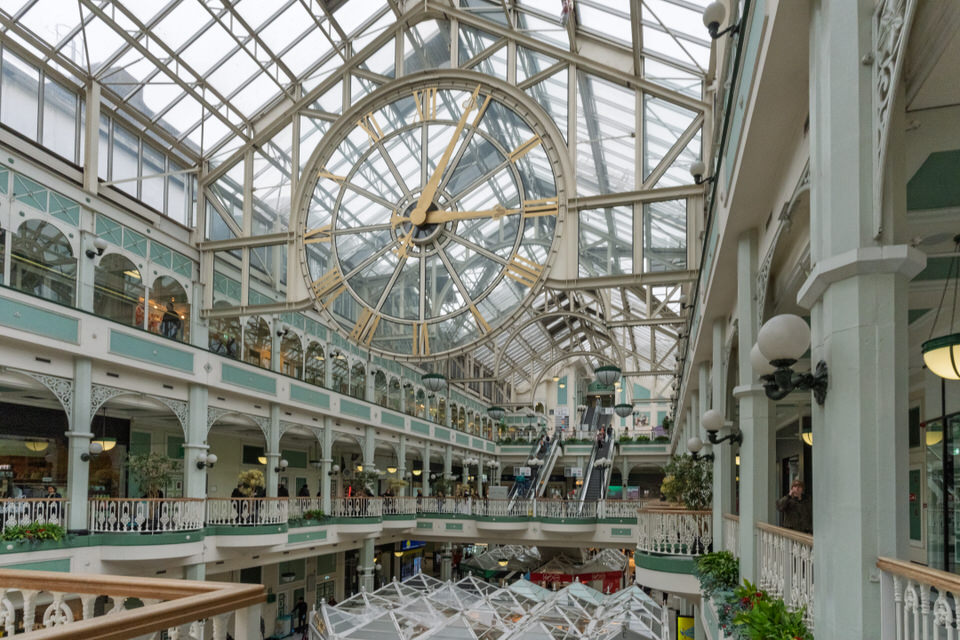 St Stephens Green Shopping Centre - Select Image To View Photographs
VIEW HI-RES PHOTOGRAPHS
CORK CITY AND COUNTY
ABOUT CHERRY BLOSSOMS
GLOBAL INDEX OF PHOTO GALLERIES
GALWAY CITY
THE URBAN CARTOGRAPHER
EXCELLENT PICTURE THIS 2017
Cherry Blossoms In St Stephens Green - Presented By The The Urban Cartographer
Who Is Building An Experience Which Is Getting Better Day By Day