Custom House Attack Memorial - Presented By The Urban Cartographer
LET MISTER SCREEN ASSIST YOU
GLOBAL INDEXThe Urban Cartographer
TECHNICAL STUFFDiscover the history behind the Custom House Memorial in Dublin. We explore the rugged bronze sculpture by Breton artist Yann Renard-Goulet, depicting the mythical figure of Éire and the tragic 1921 burning of the Custom House.
EXCELLENT PICTURE THIS 2017
Custom House Attack Memorial - Presented By The Urban Cartographer
Custom House Attack Memorial
Author: Urban Cartographer
|
06. Jan 2026
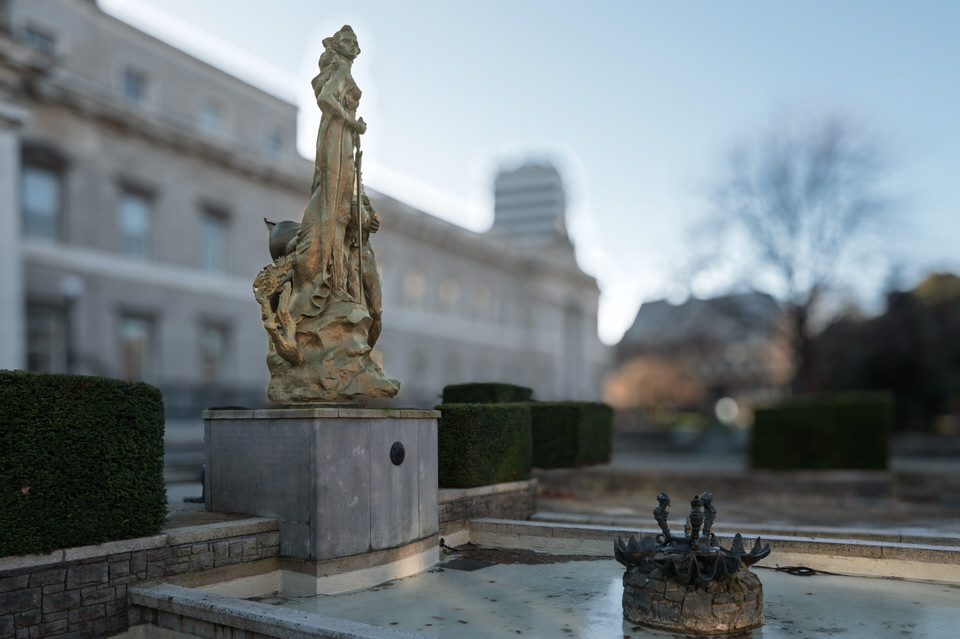
Photographed By William Murphy Walking the north bank of the Liffey, the Custom House dominates the skyline with its cool, classical Portland stone. It is a masterpiece of 18th-century architecture, an icon of administrative order. Yet, standing in the gardens just off Beresford Place, a dark, rugged shape cuts a stark contrast against that pale, orderly façade. This is the Memorial to the Custom House Attack, a bronze sculpture that demands attention not through grace, but through raw, emotional power. A Tribute to Struggle Unveiled in 1956, the monument commemorates one of the most significant and dramatic events of the Irish War of Independence. On 25 May 1921, the IRA seized and burned the Custom House to the ground. The operation was a symbolic strike against the heart of the British local government in Ireland. It was a propaganda victory, but it came at a heavy cost; five volunteers were killed, and over eighty were captured. The sculpture depicts Éire (the personification of Ireland) as a towering, mythical female figure. She stands defiant, supporting a slumping, dying soldier. It is a sombre scene, capturing the tragic price paid for the independence that the burning of the Custom House helped to hasten. The Breton Connection Visitors often struggle to place the artistic style of the monument. It lacks the smooth, idealized lines of Victorian statues. That is because it is the work of Yann Renard-Goulet (1914–1999), a Breton sculptor. Goulet was a Breton nationalist who fled to Ireland to escape death sentences in France (collaborating with the Nazis against the French Resistance during WWII, though he always maintained his actions were solely for Breton independence). He eventually became an Irish citizen and a professor of sculpture at the Royal Hibernian Academy. His style was heavily influenced by Modernism and Impressionism. If you look closely (or try to photograph it!), you will notice the surface is not smooth. It is deeply textured, rough, and agitated. Goulet wasn't interested in carving perfect buttons on a uniform; he wanted the bronze itself to look like it was in turmoil, mirroring the chaotic violence of the burning building and the political upheaval of the time. A Study in Contrasts The location of the monument is key to its impact. It stands in the pleasant, landscaped gardens that wrap around the north, east, and west of the Custom House. The juxtaposition is striking: the building is a symbol of Imperial control, rigid geometry, and cool logic. The statue, placed directly in its environs, is a symbol of rebellion, organic movement, and fiery passion. For photographers, the statue is notoriously elusive. The dark bronze drinks up the light, and Goulet’s rough texture often hides in the shadows of the Custom House. But perhaps that is fitting. It is a memorial to a confusing, smoky, and dark day in Dublin’s history—a moment of destruction that paved the way for a new nation. Why is the sculpture so hard to photograph? I am not alone in finding this particular monument difficult to capture; there are three specific reasons why my photos (and many online) appear to lack detail: The Artistic Style (Impressionism): The sculptor, Yann Renard-Goulet, did not use a "Classical" or "Realist" style where facial features and clothing are carved with smooth, crisp precision. Instead, he used a rough, textured, Impressionist technique. The surface is intentionally uneven and pitted to convey raw emotion and energy rather than physical perfection. Even if you were standing right next to it, you would not see "fine detail" in the traditional sense—you would see rough marks from the sculptor's tools. The Material (Patina): The bronze used is quite dark and has developed a heavy, matte patina over time. Dark bronze absorbs light rather than reflecting it. Without strong, direct light hitting the front of the statue, the camera sensor struggles to pick out the subtle highs and lows of the texture, rendering it as a dark silhouette. High Contrast Environment: The Custom House behind the statue is made of pale Portland stone, which is very bright. Cameras often expose for the bright building, leaving the dark statue in the foreground underexposed (in shadow).
Select Image To Visit The Photo Gallery: Custom House Attack Memorial
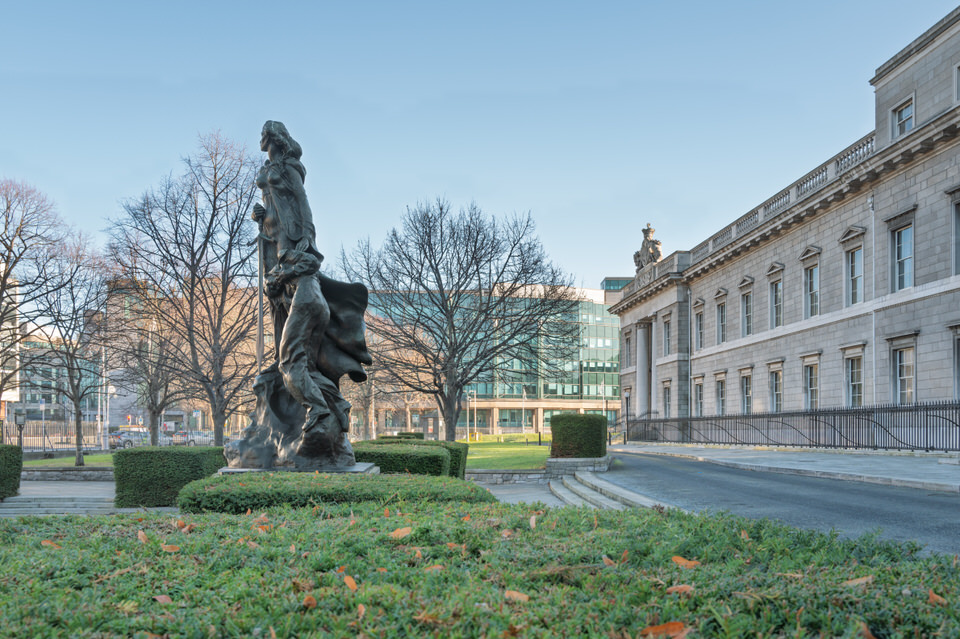
Custom House Attack Memorial
GALWAY CITY
CORK CITY AND COUNTY
GLOBAL MENU
DUBLIN SOUTHSIDE
DUBLIN NORTHSIDE
URBAN CARTOGRAPHER
EXCELLENT PICTURE THIS 2017
Custom House Attack Memorial - Presented By The Urban Cartographer
Who Is Building An Experience Which Is Getting Better Day By Day