Anchored Void by Michael Warren - Presented By The William Murphy
LET MISTER SCREEN ASSIST YOU
GLOBAL INDEXThe Urban Cartographer
TECHNICAL STUFFExplore the evocative world of Michael Warren’s "Anchored Void" within the Kilkenny Castle Estate. Discover the history and inspiration behind one of Ireland’s leading site-specific sculptors, from the Viking-inspired forms of Dublin’s Wood Quay to the light-filled memorials of Wexford.
EXCELLENT PICTURE THIS 2017
Anchored Void by Michael Warren - Presented By The William Murphy
Anchored Void by Michael Warren
Author: William Murphy
|
27. Feb 2026
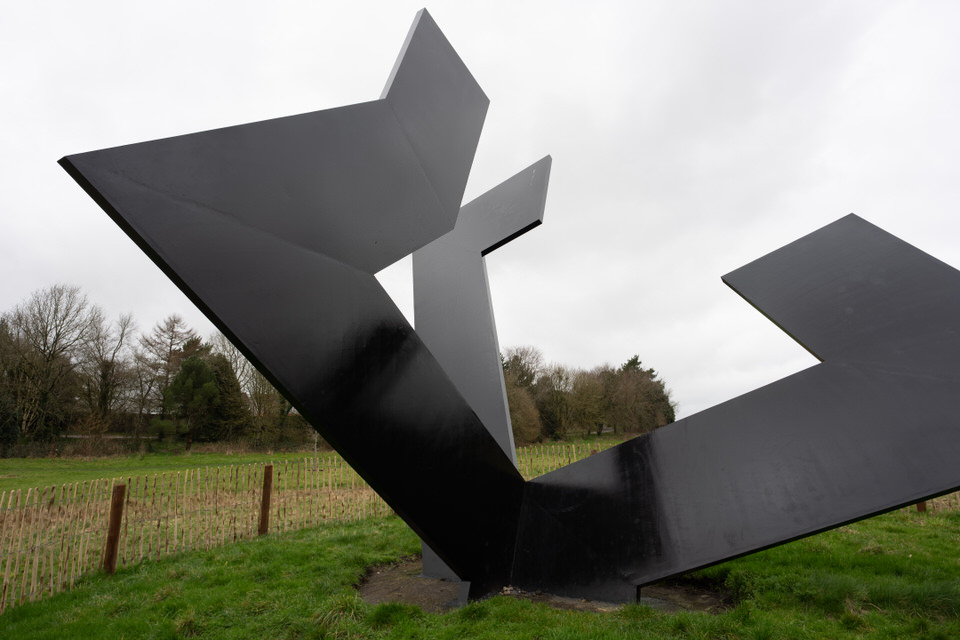
Photographed By William Murphy - Select Image To View Photographs
Select Image Below To Visit The Photo Gallery: Anchored Void by Michael Warren
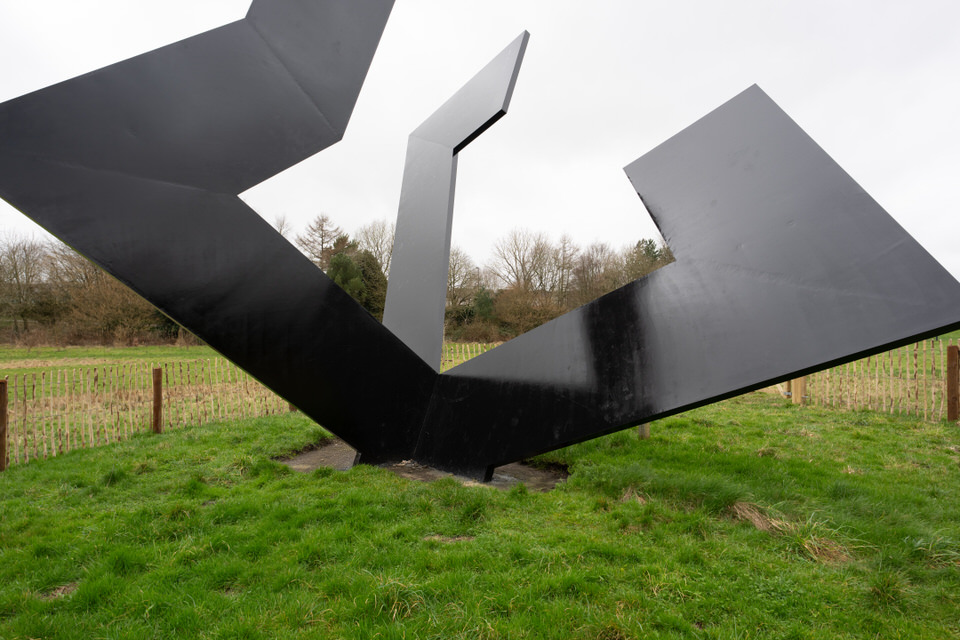
Visiting Kilkenny often feels like a pact with the rain, regardless of whether it is May or August. Given that this year has seen almost persistent rainfall since December, my trip this week felt like a significant gamble. Fortunately, the weather held, with rain falling only under the cover of night. While extensive flooding and waterlogged ground had curtailed access to much of the estate, my primary objective—Michael Warren’s Anchored Void—remained surprisingly accessible. The long grass that usually guards the sculpture had been cleared, allowing for an unconstrained approach, though keeping my camera lens dry remained a persistent challenge.
I had encountered this piece in various travel guides under the titles Anchored Void and Void Anchored, yet it remained elusive until I stumbled upon it while exploring a quieter, less-traversed corner of the Kilkenny Castle grounds in 2021.
About the Artist: Michael Warren
Born in 1950 in Gorey, County Wexford, Michael Warren is one of Ireland’s most pre-eminent sculptors, renowned for his site-specific public art. His aesthetic journey began under the tutelage of Oisín Kelly at St Columba’s College, followed by formal studies at the Bath Academy of Art and Trinity College, Dublin. Between 1971 and 1975, he refined his craft at the Accademia di Brera in Milan. Today, he continues to live and work in his native Wexford.
A Legacy of Form and Meaning
Warren’s work is characterised by a "complex balance of meanings matching a delicate, though massive, balance of substance." This signature style is visible in several high-profile installations across Ireland:
Wood Quay, Dublin: Situated before the Civic Offices, his sweeping timber sculpture evokes the powerful grace of a Viking ship—a nod to the site’s Norse heritage. It serves as a vertical reflection of the River Liffey’s horizontal sweep as it meets the bay.
Tulach a’ tSolais (Mound of Light): Created with Roland Tallon as a memorial to the 1798 Rebellion, this hollowed-out hill contains two curved oak forms illuminated by a single slot of natural light. Despite its abstract nature and the fraught political history of the rebellion, it has become a cherished local landmark.
Dinn Righ, Leighlinbridge: Located at the northern entrance to this County Carlow village, Warren’s sculpture depicts the ancient thrones of the Kings of South Leinster, marking their historic seat at the "Hill of the Kings."
Warren’s work often invites what he describes as the "useful ambiguity of abstraction." While pieces like his Gateway in Dún Laoghaire proved polarising—eventually being returned to the artist—his contribution to the Irish landscape remains a profound exploration of how heavy materials can achieve a sense of weightless, poetic silence.
GALWAY CITY
CORK CITY AND COUNTY
GLOBAL MENU
DUBLIN SOUTHSIDE
DUBLIN NORTHSIDE
URBAN CARTOGRAPHER
EXCELLENT PICTURE THIS 2017
Anchored Void by Michael Warren - Presented By The William Murphy
Who Is Building An Experience Which Is Getting Better Day By Day