Sony A1 MK2 - Presented By The William Murphy
LET MISTER SCREEN ASSIST YOU
GLOBAL INDEXThe Urban Cartographer
TECHNICAL STUFF
EXCELLENT PICTURE THIS 2017
Sony A1 MK2 - Presented By The William Murphy
Sony A1 MK2
Author: William Murphy
|
13. Aug 2025
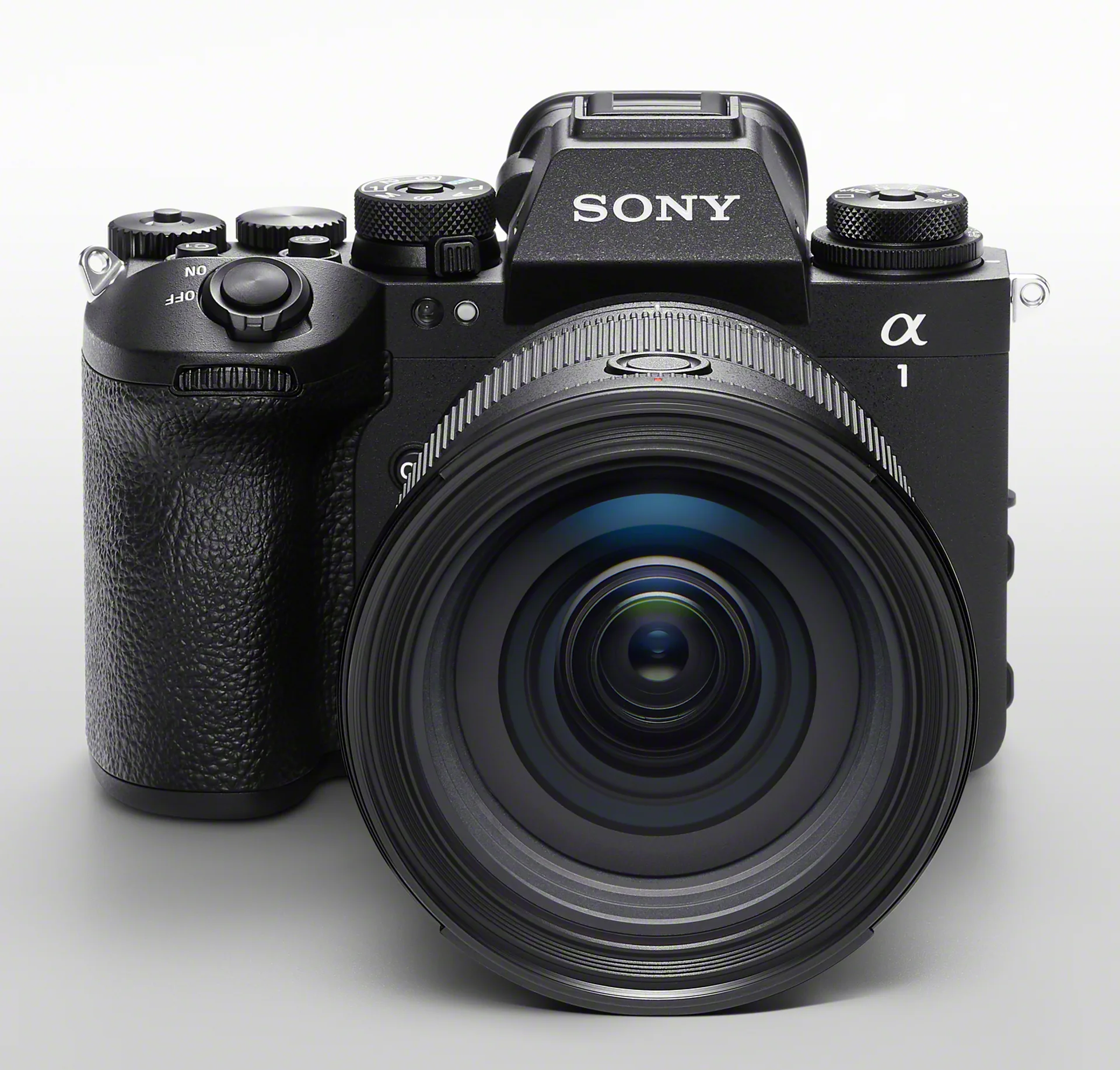
Analysis of the Sony Alpha 1 II: Flagship Capabilities, Technical Refinement, and System Recommendations The Sony Alpha 1 II (ILCE-1M2) represents the second generation of Sony’s apex mirrorless platform, meticulously engineered to serve the professional hybrid market. This camera is designed explicitly to be the uncompromising flagship, consolidating the high-resolution requirements of commercial and editorial photography—achieved through its 50-megapixel sensor—with the supreme speed mandated by high-end sports and wildlife photojournalism, offering continuous shooting speeds up to 30 frames per second (fps). The A1 II retains the foundational identity of its predecessor but integrates crucial technological advancements first deployed in subsequent, lower-tiered platforms, such as the Alpha 7R V and the Alpha 9 III. Key evolutionary upgrades are not focused on a dramatic change in sensor technology but rather on profound improvements in usability, stability, and intelligent processing power. These enhancements include a substantial upgrade to the In-Body Image Stabilisation (IBIS), the adoption of a fully articulated rear screen, dedicated AI processing for subject recognition, and refined body ergonomics. Initial professional commentary often positions the A1 II as "the camera that the original a1 should have been," primarily due to its corrected ergonomic flaws and the implementation of contemporary processing technology. The camera was introduced to the market at a significant premium, with a body-only launch price of USD $6,499.99, translating to approximately £6,300 in the UK market. This elevated price point positions the A1 II distinctly above several comparable high-resolution and high-speed competitors, such as the Nikon Z8 and the Canon EOS R5 Mark II. Market Strategy and the Price Premium The analysis of the A1 II’s market placement reveals a deliberate strategic framework supporting its cost. Sony's ability to command a higher price is attributable to both established brand hierarchy and a tactical segregation of features across its professional product lines. Specifically, some commentary suggests that Sony maintains constraints on certain video specifications in the A1 II to prevent internal competition with the company's dedicated FX cinema line. More significantly, the A1 II occupies a unique technological niche by successfully consolidating 50MP resolution with 30fps burst capture capability and virtually eliminated rolling shutter effects. This specific combination—high resolution and hyper-speed in one chassis—is not currently matched by direct competitors’ price-equivalent models (such as the Z8 or R5 II). The platform is engineered for maximum operational efficiency where high-resolution output and speed are non-negotiable, particularly for photojournalism and commercial work. Therefore, the high cost reflects not just the component expenditure but also the strategic value placed on offering this non-compromised feature consolidation to professional photographers whose needs span the entire spectrum of still and video capture. The A1 II's technical architecture is defined by its ability to manage immense data throughput, marrying high-resolution output with continuous high-speed capture. The 50.1MP Stacked Exmor RS Sensor At the heart of the camera is a full-frame (35.9 x 24 mm) Stacked CMOS sensor, retaining the 50.1-megapixel effective resolution (8640 x 5760 maximum resolution) of its predecessor. This stacked sensor type is crucial for enabling the high readout speeds necessary for 30fps shooting and minimal rolling shutter distortion. The native sensitivity range spans ISO 100 to 32000, which can be expanded to 50–102400. While the sensor hardware remains largely the same as the A1, Sony indicates that the updated image processing engine provides subtle improvements in image quality, particularly at mid-to-high sensitivities. These gains are likely realised through enhanced in-camera noise reduction algorithms applied to JPEGs and processed RAW files. Processing Power and Computational Speed A foundational enhancement is the inclusion of a dedicated AI processor, technology inherited from the A7R V and similar to that found in the A9 III. This unit elevates the camera’s computational capacity, taking on advanced tasks such as real-time subject recognition and tracking. The processing architecture facilitates an exceptional rate of 120 focus and exposure calculations per second. This rate ensures that even during demanding, high-speed continuous shooting at 30fps, the autofocus system maintains extremely high accuracy and reliability, particularly when tracking subjects that move rapidly or unpredictably. Shutter Mechanism and Continuous Shooting The camera features a maximum mechanical shutter speed of 1/8000 second, supplemented by an electronic shutter capable of 1/32000 second. The stacked sensor design permits an exceedingly rapid sensor readout speed of just 3.8 milliseconds (ms) in photo mode. This speed is so high that it virtually eliminates the rolling shutter artefacts that previously plagued electronic shutters, solidifying the electronic shutter as a fully viable and often preferred option for capturing high-speed action and silent shooting. The maximum burst rate of 30.0 fps, with full AF tracking, is a headline specification. However, the 30fps rate is subject to a vital constraint: it is exclusively available when shooting in the lossy compressed RAW file format. For professional workflows that mandate the highest image integrity, utilising the lossless compressed RAW format restricts the continuous shooting speed to 20.0 fps. Data Flow and Connectivity Data storage is managed via dual slots that accommodate both CFexpress Type A cards and UHS-II SD cards. For professional deployment where immediate delivery is paramount, a critical workflow acceleration feature is the integrated 2.5Gbps wired LAN port. This represents a significant speed increase compared to the 1000BASE-T port found on the original Alpha 1, dramatically reducing the time required for photojournalists and sports agencies to transfer large image files wirelessly or over a network. The combination of 120 AF calculations per second, the rapid 3.8ms sensor readout, and the 2.5Gbps LAN port demonstrates Sony's focus on optimising the entire professional workflow chain from initial capture to final delivery. The engineering choice to focus on minimising latency across the capture-to-transmission process confirms the A1 II's design mandate as a hyper-efficient tool where speed in transmission is considered just as crucial as speed in capture. A primary area of improvement in the A1 II is the substantial refinement of its handling and physical configuration, addressing long-standing professional requests regarding usability. Body Design and Handling The A1 II adopts ergonomic features proven in the A9 III, including a newly refined grip that offers better purchase, alongside a subtly updated custom button layout. The camera body measures 136 x 97 x 83 mm and has a weight of 743 grammes, including batteries. For extended high-volume shooting, the camera is compatible with the optional VG-C5 vertical grip accessory, which accommodates two NP-FZ100 batteries and provides duplicate controls, including the new C5 button. Viewfinder and Display Configuration The electronic viewfinder (EVF) retains the class-leading 9.44M-dot Quad-XGA OLED panel with 0.90x magnification. A significant operational improvement is achieved through processing updates: the viewfinder can now operate at 120fps at full resolution, overcoming the limitation of the A1, which required a noticeable resolution drop to maintain high refresh rates. A comfortable, deep viewfinder eyecup is also included as standard, enhancing comfort during prolonged use. Most notably, the rear display has been upgraded to a fully articulated 3.2-inch screen (2,095,104 dots) mounted on a tilt-out cradle. This finally resolves a major ergonomic deficiency of the original A1’s tilt-only screen, providing the flexibility essential for videographers, portrait photographers working at various angles, and photojournalists requiring discreet composition. In-Body Image Stabilisation (IBIS) The stability system has undergone a major overhaul. The A1 II features a newly redesigned 5-axis IBIS system rated for up to 8.5 stops of correction in the centre of the frame, with 7 stops confirmed at the periphery (measured using a new CIPA metric). This capability represents a substantial three-stop improvement over the A1’s 5.5-stop rating. For video capture, Sony has introduced dedicated stabilisation modes. These include 'Dynamic Active' mode, which increases stabilisation effectiveness by up to 20% compared to the standard 'Active' mode, and a 'Framing Stabilizer' mode, which aims to maintain the composition of the frame as consistently as possible when filming handheld. The dramatic increase to 8.5 stops of IBIS is a pivotal functional enhancement, especially critical for a high-resolution 50MP camera. High pixel density sensors are highly sensitive to micro-shake; the improved IBIS directly counteracts this, allowing professionals to achieve reliably sharp images when handholding at significantly slower shutter speeds in challenging low-light conditions. This capability fundamentally expands the camera's utility, reducing reliance on heavy support gear for static or low-speed fluid shooting environments. IV. Advanced Autofocus and Professional Workflow Features The A1 II leverages its new AI processing unit to deliver state-of-the-art performance in complex, fast-moving scenarios, coupled with workflow features that significantly boost capture reliability. AI Subject Recognition and AF Efficacy The core autofocus system now features automatic subject detection. This allows the camera to instantly and seamlessly transition between tracking various targets—including humans, animals, birds, vehicles, and insects—without manual mode switching, which is a substantial gain in efficiency for professionals covering dynamic scenes. Sony reports specific, measurable performance improvements derived from the new AI processing, claiming an approximate 30% enhancement in eye detection reliability for animals and humans, and a 50% boost specifically for bird eye detection. Real-world testing corroborates these claims, showing that the AF is exceptionally effective, maintaining focus perfectly on a subject's eye, even when shooting rapid bursts at shallow apertures like f/1.4. Focus Precision and Operational Nuances To facilitate highly precise control, the A1 II introduces Extra Small (XS) spot focus area options. These surgical focus points are invaluable when the target is obscured or viewed through narrow gaps, such as focusing on a race car driver's eyes through a helmet visor. Despite the general excellence, the experience of professional users switching to the A1 II platform highlights an important caveat in chaotic environments. While the tracking system is incredibly tenacious when locked, the highly automated nature of the AI tracking can become momentarily "confused" or less reliable in extremely dense, cluttered environments, for example, during a corner kick in football. Some action photographers, therefore, report reverting to traditional single-point AF with cautious tracking settings to guarantee critical capture reliability, suggesting that while the AI system is generally superior, a dependency on tested manual AF control remains a necessity in the most chaotic, non-repeatable scenarios. Game-Changing Stills Functionality The A1 II incorporates several software features critical for high-stakes professional photography: Pre-Capture: This feature allows the camera to continuously buffer images before the shutter button is fully depressed. The user can set the pre-release capture window from 0.03 up to 1 second, recording a maximum of 30 frames. This capability is indispensable for capturing unpredictable, decisive moments in wildlife and sports where human reaction time is insufficient. Focus Bracketing: The addition of focus bracketing addresses a feature gap from the original A1. This feature is crucial for landscape, macro, and product photography, enabling complex focus stacking for maximum depth of field. Noise Reduction Composite RAW: This is a multi-shot mode designed to align and combine captured images without shifting the sensor position. Its purpose is not to boost resolution but rather to significantly improve the signal-to-noise ratio at the pixel level, making it ideal for high-resolution, low-light portraiture or static studio scenes. Video Capabilities and Professional Workflow Integration The video specification is robust, offering formats including XAVC S, XAVC HS, and XAVC S-I. The camera is capable of 8K 30p (oversampled from 8.6K) and 4K 120p recording, the latter with a minor 1.1x crop factor. Video features have been enhanced with the inclusion of the highly sought-after S-Cinetone profile and support for importing up to 16 custom LUTs, streamlining colour grading and integration into existing cinema workflows. Furthermore, the introduction of 1/48 and 1/96 second shutter speed options facilitates easier adherence to the cinematic 180-degree shutter rule for common European frame rates. Moving beyond technical specifications, the real-world utility and reliability of the A1 II can be assessed through the synthesis of feedback from early adopters and professional users. General Performance and Value Perception The prevailing sentiment among users is that the A1 II is a "Beast of a camera" and an exceptionally capable hybrid device. It has validated its performance gains, with users reporting noticeably enhanced autofocus in complex, fast-moving scenarios. One significant discovery reported by professional action photographers relates to the synergy between the A1 II's 50MP resolution and the latest G Master (GM) lenses. The high data capture capacity allows photographers to entirely abandon the use of 1.4x teleconverters for reaching distant subjects. Instead, they can shoot with the bare prime lens and crop the high-resolution file in post-production, achieving superior sharpness and dramatically faster autofocus speeds than were possible with a teleconverter attached. This operational shift fundamentally changes gear selection and on-site workflow for sports and wildlife specialists. Operational Challenges and Reliability Concerns While performance is generally praised, two practical concerns have emerged from professional feedback: Battery Life: The official CIPA rating stands at 420 shots per charge when using the EVF, or 520 with the LCD. When compared to competitors with integrated grips, such as the Nikon Z9 (rated at 700 shots), the A1 II’s rating is notably lower. Although CIPA ratings typically underestimate real-world performance—especially during burst shooting—the comparative figure indicates that high-volume action photographers will require the optional vertical grip and/or multiple spare batteries to cover long events. Thermal Management: For video professionals, the A1 II demonstrates acceptable thermal management, managing to record 4K 100p footage for approximately 85 minutes before automatic thermal shutdown occurred. Crucially, the camera showed rapid recovery, allowing subsequent short clips to be recorded almost immediately, indicating that while it may not offer unlimited recording, its thermal design is robust for sustained professional work. Critical Data Integrity Risk A severe reliability concern has been reported by professionals: catastrophic card write failures during high-speed, high-bitrate shooting, particularly when using 4K 120fps video and stills bursts. These failures resulted in the silent, unannounced loss of substantial footage and images—including non-repeatable moments like a championship victory. Issues were reported surrounding the dual card slot recognition, even when using approved, high-speed CFexpress Type A cards. This issue suggests that a $6,500 flagship camera, marketed on absolute reliability, carries a material risk related to data throughput integrity. The extremely high data rates generated by 50MP at 30fps and high-bitrate video appear to occasionally overwhelm the data management system across the CFexpress Type A slots. This necessitates that users of the A1 II must view approved media lists and firmware updates—which have addressed write issues—not as discretionary advice, but as critical preventative measures for maintaining the integrity of irreplaceable professional data. The 50-megapixel resolution of the Sony A1 II is an unforgiving benchmark, demanding the highest possible optical quality to avoid a system bottleneck. Only the best modern G Master (GM) optics or equivalent premium third-party glass should be considered to maximise the camera's performance in terms of sharpness, AF speed, and resolution retention across the frame. Must-Have Lenses: The Professional Trinity and Essential Action Glass These lenses form the essential core kit for any professional hybrid shooter utilising the A1 II platform. Standard Workhorse Zoom: Sony FE 24-70mm f/2.8 GM II The second generation of this standard professional zoom is indispensable. Its improved corner-to-corner sharpness is mandatory for resolving the full detail of the 50MP sensor, and its reduced weight and faster optical configuration make it an extremely versatile, high-quality substitute for multiple prime lenses. Professional Telephoto Zoom: Sony FE 70-200mm f/2.8 GM OSS II This lens is non-negotiable for events, weddings, and sports. The Mark II version’s optical excellence, substantial weight reduction, and significantly faster internal focussing mechanism provide responsiveness that perfectly complements the A1 II's advanced AF system. Dedicated Action Prime: Sony FE 300mm f/2.8 GM OSS For specialists in sports, bird, and wildlife photography, the 300mm f/2.8 GM provides exceptional sharpness and lightweight handling. As noted by professionals, pairing this lens with the A1 II’s high resolution often negates the need for a 1.4x teleconverter. The resultant cropped image quality and AF speed are superior, making this prime a critical tool for maximum performance. Desirable Specialist Lenses: Maximising Discipline-Specific Output These lenses cater to specific disciplines, offering maximum performance and creative flexibility when the professional budget allows for specialisation. Portraiture Excellence Primes The 85mm focal length is the industry standard for classical portraiture. The Sony FE 85mm f/1.4 GM II is a premier choice, offering spectacular sharpness and subject isolation. For maximum compression and background separation, the Sony FE 135mm f/1.8 GM is highly regarded among portrait specialists. Ultra-Wide Specialist Glass For landscape, architecture, and interior photography, extreme wide-angles are essential. The Sony FE 16-35mm f/2.8 GM II serves as the optimal everyday wide-angle zoom. For ultra-wide and astrophotography, the Sony FE 12-24mm f/2.8 GM provides unprecedented coverage and speed, while the Sony FE 14mm f/1.8 GM prime is also lauded for stellar performance in low-light wide-field scenes. Flexible Super-Telephoto Zooms For wildlife and general distant subjects, the Sony FE 100-400mm f/4.5-5.6 GM OSS offers excellent quality and versatility. A highly cost-effective and capable alternative for maximum reach is the Sony FE 200-600mm f/5.6-6.3 G, which remains a favourite among wildlife enthusiasts for its internal zoom and high performance. Versatile Low-Light Primes The Sony FE 35mm f/1.4 GM is considered the classic environmental storytelling lens. For maximum light-gathering capability and subject isolation in general usage and low-light environments, the Sony FE 50mm f/1.2 GM delivers unparalleled performance, serving as an exceptional ‘nifty fifty’ for the highest-tier body. The fundamental commitment to high-end optics is non-negotiable for the A1 II. The considerable financial outlay for the camera body must be complemented by the corresponding investment in G Master optics. Utilising lesser quality lenses will create an optical bottleneck, compromising the resolving power and speed advantages the A1 II is designed to provide, thereby diminishing the very benefits this high-end platform is intended to deliver. The Sony Alpha 1 II successfully fulfils its mandate as the definitive flagship professional hybrid camera. By retaining the high-resolution, high-speed core of its predecessor and integrating the latest developments in AI processing, stabilisation, and ergonomics, the A1 II stands as a masterpiece of technological refinement. The camera's upgrades—the 8.5-stop IBIS, the fully articulated screen, the dedicated AI chip enabling pre-capture and superior autofocus tracking—address every major professional critique of the original model. It delivers unparalleled performance by balancing the demands of high-resolution image quality with professional-grade speed, making it the premier choice for professionals whose work seamlessly integrates demanding stills and high-specification video capture. However, the A1 II operates in an area of extreme performance that highlights the inherent challenges of data management. The reported instances of critical card write failures, resulting in data loss during maximum-capacity shooting, are a significant operational concern that users must mitigate through scrupulous adherence to media compatibility and timely firmware updates. Ultimately, the A1 II represents a necessary, albeit costly, evolution. Its capabilities are justified only for professionals who absolutely require its unique combination of 50-megapixel resolution and 30fps continuous capture, supported by a mandatory commitment to the highest echelon of E-mount optics, such as the G Master series. For this demanding professional segment, the A1 II offers a hyper-efficient, non-compromised tool designed to excel in the most critical and fast-paced assignment environments.I. Introduction and Market Positioning
II. Core Technical Specifications and Speed Architecture
III. Enhanced Ergonomics and Stabilisation: The Usability Update
V. Professional and User Feedback Synthesis
VI. E-Mount Lens System Recommendations
VII. Conclusion
GALWAY CITY
CORK CITY AND COUNTY
GLOBAL MENU
DUBLIN SOUTHSIDE
DUBLIN NORTHSIDE
URBAN CARTOGRAPHER
EXCELLENT PICTURE THIS 2017
Sony A1 MK2 - Presented By The William Murphy
Who Is Building An Experience Which Is Getting Better Day By Day