Saint Patrick Banned Snakes From Ireland - Presented By The The Urban Cartographer
LET MISTER SCREEN ASSIST YOU
GLOBAL INDEXThe Urban Cartographer
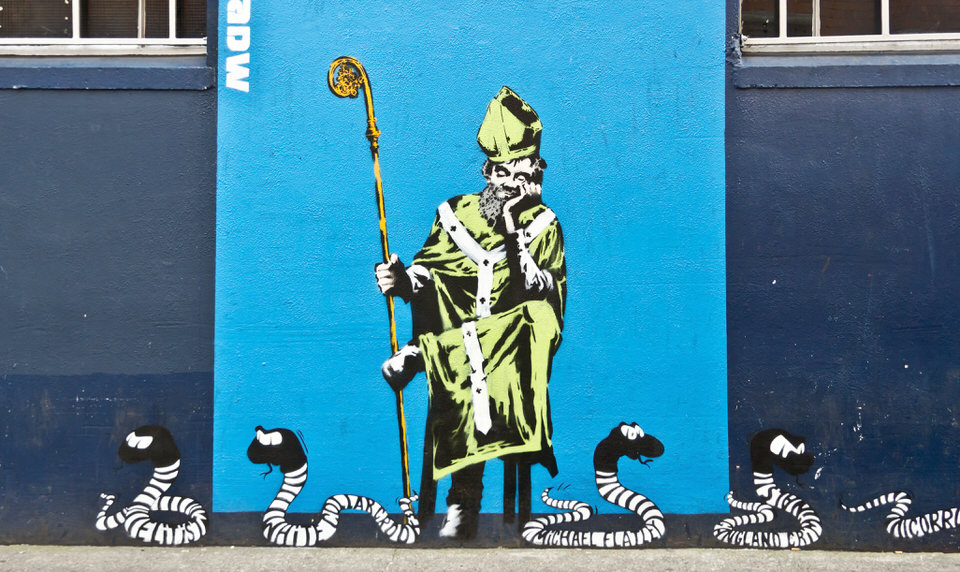
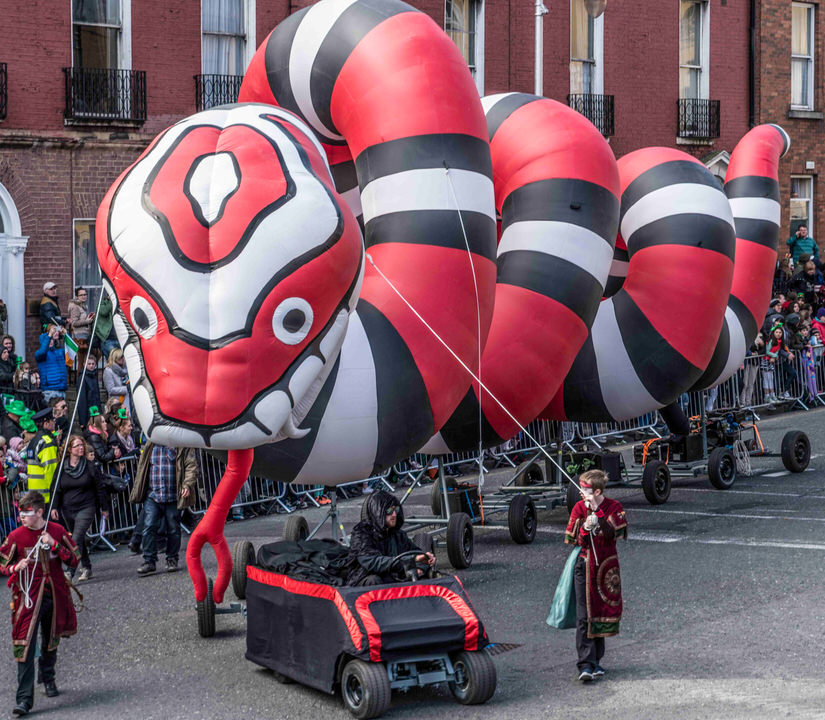
TECHNICAL STUFFBanishing the Serpents From Modern Ireland - A major part of the legend of St Patrick is that he drove all snakes out of Ireland forever. Of course this is probably just a metaphor for the fact that he drove out pagan beliefs and rituals, which are commonly associated with snakes.
EXCELLENT PICTURE THIS 2017
Saint Patrick Banned Snakes From Ireland - Presented By The The Urban Cartographer
Saint Patrick Banned Snakes From Ireland
Author: The Urban Cartographer
|
17. Mar 2026
 Photographed By William Murphy - Select Image To View Photographs
Banishing the Serpents From Modern Ireland - A major part of the legend of St Patrick is that he drove all snakes out of Ireland forever. Of course this is probably just a metaphor for the fact that he drove out pagan beliefs and rituals, which are commonly associated with snakes.
Banishing the Serpents From Modern Ireland
I like this modern representation of the legend associated with St. Patrick. I especially like the reference to Michael Flatley (see the writing on the snakes). A major part of the legend of St Patrick is that he drove all snakes out of Ireland forever. Of course this is probably just a metaphor for the fact that he drove out pagan beliefs and rituals, which are commonly associated with snakes.
Happy St Patrick's Day! As we find ourselves in the heart of the 2026 celebrations, Dublin has once again transformed into a sea of emerald, though the city’s relationship with this holiday has evolved far beyond the quiet religious observance of centuries past.
St Patrick’s Day 2026: The "Roots" Celebration
This year, the festival's theme is "Roots," a concept designed to explore identity, heritage, and the shared stories that ground the modern Irish community. Led by Grand Marshal Vogue Williams, the 2026 National Parade is a massive production featuring 12 large-scale floats and over 3,000 participants.
What makes 2026 standout is the increased focus on inclusivity. The festival has introduced "Relaxed Parade Spaces" for neurodivergent attendees and expanded wheelchair-accessible viewing, ensuring the "roots" of the celebration reach everyone.
The Performers and Marching Bands
The 2026 parade features a high-energy mix of local talent and international visitors, particularly from the US and Scotland. Here are some of the key groups taking part:
Local Ensembles - Clondalkin Youth Band (the lead band), Macnas, Spraoi, Bui Bolg, Artastic, and Show CoMotion.
US Marching Bands - The Ohio State University Marching Band, University of Illinois "Marching Illini," Campo Verde High School (Arizona), and Coppell High School (Texas).
Additional US Bands - Watertown High School (Wisconsin), Cedar Rapids Metro (Iowa), South Jones High School (Mississippi), and Pendleton Heights (Indiana).
International - Morrison’s Academy Pipe Band (Scotland).
Special Entries - The Rotunda Hospital (celebrating its first-ever parade appearance with a float by ArtFX).
The Evolution of the Celebration
Historically, St Patrick’s Day in Ireland was a "dry" religious holiday. Up until the 1970s, pubs were actually required by law to close on March 17th. The day consisted of morning Mass and a small family meal—a far cry from the multi-day international festival we see today.
The "modern" parade format actually originated in the United States (specifically New York City in 1762) amongst the Irish diaspora. Ireland didn't host its first official state-sponsored festival until 1996, when the government sought to use the holiday as a way to showcase Irish culture and boost tourism.
The "St Patrick’s Blue" Mystery
It might feel like heresy to say it while surrounded by green wigs and shamrocks, but the original colour associated with St Patrick was blue.
Why Blue? Early depictions of the saint show him in blue vestments. The colour "St Patrick’s Blue" (a sky-blue shade) was the official colour of the Order of St Patrick, an 18th-century order of knighthood. Blue was also historically linked to Irish sovereignty in mythology and the 16th-century Irish coat of arms.
The Shift to Green: The change was largely political. During the Great Irish Rebellion of 1641 and later the 1798 Rebellion, the United Irishmen adopted green as a symbol of republicanism and a rejection of British influence. The green shamrock became a secret badge of rebellion, famously immortalised in the song "The Wearing of the Green." As the "Emerald Isle" nickname gained traction in poetry and the Catholic nationalist movement grew, green firmly supplanted blue as the national hue.
GALWAY CITY
CORK CITY AND COUNTY
GLOBAL MENU
DUBLIN SOUTHSIDE
DUBLIN NORTHSIDE
URBAN CARTOGRAPHER
EXCELLENT PICTURE THIS 2017
Saint Patrick Banned Snakes From Ireland - Presented By The The Urban Cartographer
Who Is Building An Experience Which Is Getting Better Day By Day